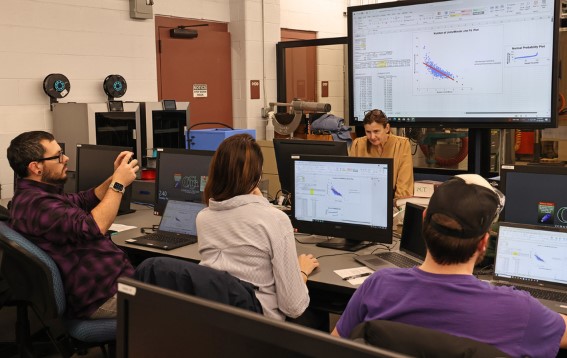
The Massachusetts Institute of Technology (MIT) has rolled out an ambitious plan to spread manufacturing education far beyond its Cambridge campus. Through a new certificate programme called TechAMP — under the broader Initiative for New Manufacturing (INM) — MIT is collaborating with colleges nationwide to train workers in modern production principles, equipping them to advance their careers and help their firms boost productivity. The first cohort of over 70 learners has already begun training at partner institutions.
I’m writing about this because the shift in focus—from purely academic learning to practical, industry-oriented education—is critical for the future of manufacturing worldwide. Many people dismiss manufacturing as old-school work, but MIT’s approach aims to create a new cadre of “technologists” — individuals who understand not just a single task, but systems, workflows, and process optimisation. For students, young engineers, or industry workers, this opens up a realistic pathway where formal education and on-the-ground skills combine. It also shows how top global institutions are rethinking education to meet real-world economic demands.
What Is TechAMP and Why It Matters
TechAMP is a 12-month certificate programme that blends online lectures by MIT faculty, hands-on lab training at community colleges, and interactive simulations. It has been designed to serve as a bridge between traditional “technician” and “engineer” roles — offering workers a chance to build deeper understanding of manufacturing systems, process controls, workflow management, automation, robotics, and other key production fundamentals.
The goal is to create a workforce that can think beyond simple tasks: one that can analyse workflows, suggest process improvements, and contribute to better productivity and innovation. For companies, this means having staff capable of identifying waste, improving efficiency, and adapting to newer technologies — while for workers, it offers upskilling, career mobility, and better job prospects. The idea is comparable to how nurse practitioners fill a gap between nurses and doctors — giving more responsibility, broader training, and higher value.
How MIT is Taking Manufacturing Education Nationwide
Rather than limiting this training to its own campus, MIT has partnered with multiple community colleges and institutions across the United States. This “hub-and-spoke” model allows workers from different regions — including those without four-year degrees — to access quality manufacturing education. The first cohort already includes more than 70 participants enrolled at institutions ranging from small colleges to innovation centres.
Courses cover a mix of core manufacturing principles and specialisations like:
- Mechatronics
- Automation programming
- Robotics
- Machining
- Digital manufacturing
- Design fundamentals
This flexibility ensures that even smaller manufacturers or firms with older equipment can benefit without requiring massive infrastructure upgrades.
Broader Goals under the Initiative for New Manufacturing
TechAMP is only one part of a larger, institute-wide push by MIT to revitalise manufacturing. The Initiative for New Manufacturing aims to:
- Reimagine manufacturing technologies and systems for modern needs
- Improve productivity and working conditions through human-centred design
- Support industries such as semiconductors, energy systems, biotech, automotive and healthcare
- Train workers of diverse educational backgrounds to become industry-ready
By doing so, MIT seeks to transform manufacturing into a forward-looking, sustainable, and competitive sector — rather than one stuck in outdated methods.
What This Means for India (And Other Countries)
Although TechAMP currently works with U.S. institutions, the philosophy behind it offers valuable lessons globally — including for countries like India. Many Indian industries struggle with outdated manufacturing processes and lack of skilled workforce. A model like TechAMP could help upskill workers, bridge the gap between technical workers and engineers, and make manufacturing jobs more attractive and future-ready.
For students and young professionals, embracing such skill-oriented education — along with degrees — may improve employability and open up stable career paths. It reinforces the idea that manufacturing is not a fallback job, but a meaningful, respectable profession with potential for innovation and growth.