JOIN WHATSAPP
STORIES

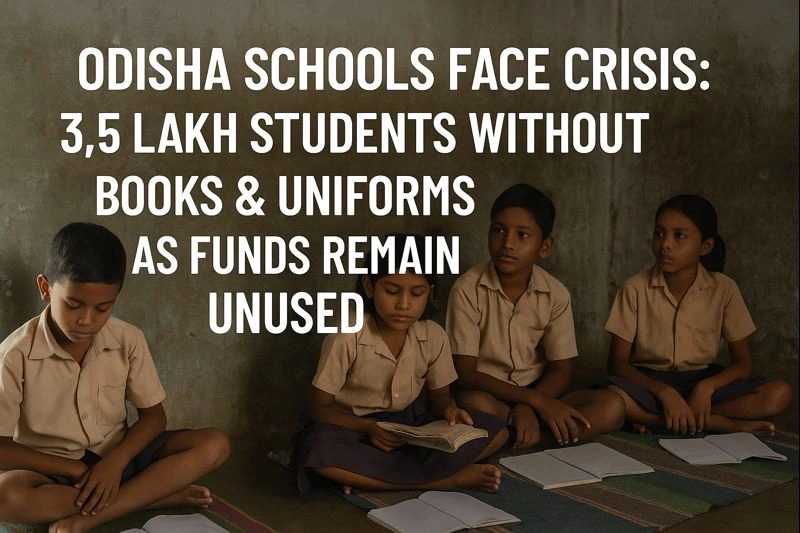
Odisha Schools Face Crisis: 3.5 Lakh Students Without Books & Uniforms as Funds Remain Unused

Odisha Schools Face Crisis: 3.5 Lakh Students Without Books & Uniforms as Funds Remain Unused

Odisha’s school system is facing a serious gap in basic learning support, with nearly 3.5 lakh students still waiting for their uniforms and textbooks—almost a year after the academic session began. What makes the situation even more concerning is that a large portion of the Samagra Shiksha funds meant for these essentials has remained unspent, leaving students without the most basic resources they need for schooling. The issue has been flagged in official reports, highlighting deep administrative delays and planning gaps.

Access to textbooks and uniforms is not just a formality for government school children; it directly impacts attendance, confidence, learning levels and dropout rates. When thousands of students—especially those from economically weaker families—do not receive essential learning materials on time, it widens the learning gap and undermines the efforts to improve education under the NEP. This situation in Odisha is a reminder of how policy intentions and ground realities often fail to align. It is important to break down the facts so that students, parents and educators can understand what is happening and why timely delivery of resources matters so much in school education.

What the Reports Reveal

According to the findings discussed, several critical issues have emerged:

  • Around 50 percent of Samagra Shiksha funds for 2023–24 remained unused.
  • Uniforms and textbooks were delayed by nearly one year, affecting lakhs of students.
  • Schools struggled to run basic academic activities due to late material distribution.
  • Students from tribal and rural regions were the most affected.

These delays create gaps in teaching plans, reduce student engagement and even affect enrolment.

Why Uniforms and Books Matter

For many students studying in government schools in Odisha:

  • Uniforms help maintain equality among students.
  • Textbooks are the only learning material available to them at home.
  • Timely distribution affects attendance and exam preparation.

A year-long delay means an entire academic cycle has passed without proper resources.

Unspent Funds: A Major Concern

The Samagra Shiksha Abhiyan is designed to strengthen school education with proper budgeting. However, the report shows:

  • Funds meant for children with special needs were not fully used.
  • Infrastructure improvements were halted due to pending utilisation certificates.
  • Several schools lacked adequate monitoring and financial planning support.

This raises questions about governance and priorities within the state’s education system.

Impact on Students and Schools

The consequences of delays are visible in:

  • Lower attendance in early months of the session
  • Drop in learning outcomes due to shortage of books
  • Demotivation among teachers who struggle with lesson planning
  • Higher dropout risks in vulnerable areas
  • Parents losing trust in school support systems

For children in remote villages, the absence of uniforms and books is often the difference between attending school and staying at home.

What Needs Immediate Attention

To prevent such issues in the future, education experts point to a few essential steps:

  • Timely approval and release of funds
  • Faster procurement processes for uniforms and textbooks
  • Strengthening district-level monitoring
  • Independent audits with strict timelines
  • Transparent utilisation reporting

These steps are crucial if the state wants to align its school system with NEP goals.
Leave a Comment

End of Article

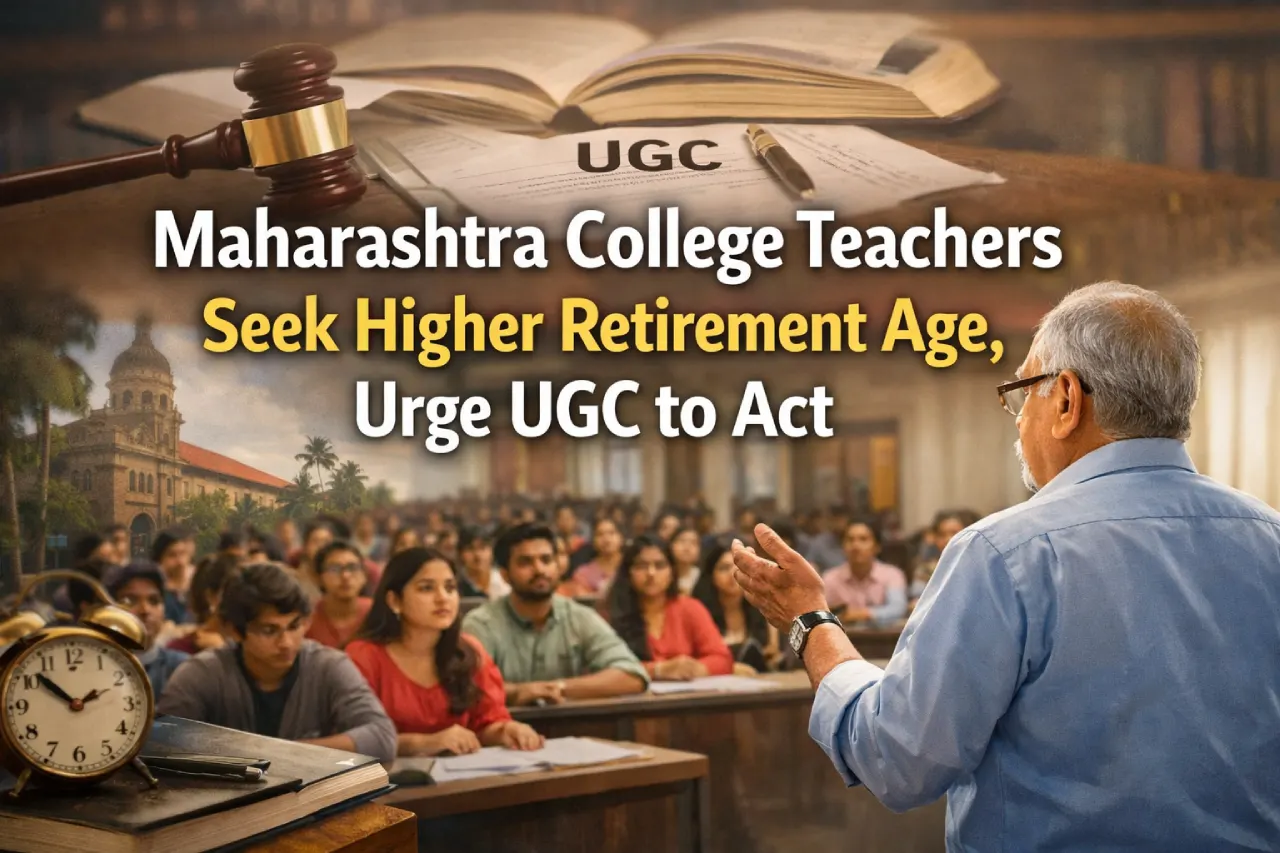
Maharashtra College Teachers Seek Higher Retirement Age, Urge UGC to Act

Maharashtra College Teachers Seek Higher Retirement Age, Urge UGC to Act

Teachers from colleges across Maharashtra have urged the University Grants Commission to raise the retirement age for teaching faculty from the current 60 years to 65 years. The demand has been made by teachers’ associations who argue that experienced educators are being forced to retire too early, even as colleges continue to face staff shortages. They believe extending the retirement age will help retain academic expertise and improve teaching quality in higher education institutions.

I am writing about this issue because it affects not just teachers, but also students and the overall higher education system. At a time when universities are struggling with vacant posts and delayed recruitments, losing senior faculty creates gaps in teaching, research, and mentorship. The demand also raises a larger question about how India values experience in academia and whether policy needs to evolve with changing life expectancy and professional capability.

What Maharashtra Teachers Are Demanding

Teachers’ bodies have formally requested UGC to revise the retirement age for college and university teachers to 65 years, bringing it in line with several central institutions. They argue that many educators remain academically active and physically fit well beyond 60.

According to them, forcing retirement at 60 leads to a loss of institutional memory and teaching continuity.

Why Teachers Want the Age Limit Raised

Teachers say the demand is based on practical realities. Many colleges face:

  • Acute shortage of qualified faculty
  • Delays in permanent recruitment
  • Heavy teaching loads on existing staff

Extending the retirement age would offer immediate relief without additional recruitment costs.

Comparison with Central Institutions

In several central universities and institutions, teachers are allowed to work up to 65 years, and in some cases even longer through re-employment. Maharashtra teachers feel this creates inequality between state and central institutions.

They believe a uniform retirement policy across the country would be fairer and more effective.

Impact on Students and Academic Quality

Senior teachers often play a key role in mentoring young faculty, guiding research scholars, and maintaining academic standards. Their early retirement disrupts this balance and places extra pressure on junior staff.

Students, especially at postgraduate and research levels, are among the biggest losers.

Concerns About Youth Employment

Some critics argue that extending retirement age could limit opportunities for younger aspirants. Teachers’ associations counter this by saying vacant posts already exist and recruitment processes are slow, so extending service will not block new jobs.

They stress that experience and new talent should coexist.

What UGC’s Role Will Be

UGC has the authority to frame regulations related to service conditions in higher education. Any change in retirement age would require policy review and coordination with state governments.

Teachers are hopeful that the commission will consider the request seriously.

Leave a Comment

End of Article

Loading more posts...