JOIN WHATSAPP
STORIES

Deputy Chief Minister Eknath Shinde Urges Public Representatives to Prioritize Citizens’ Issues and Strengthen People-Centric Governance

Deputy Chief Minister Eknath Shinde Urges Public Representatives to Prioritize Citizens’ Issues and Strengthen People-Centric Governance

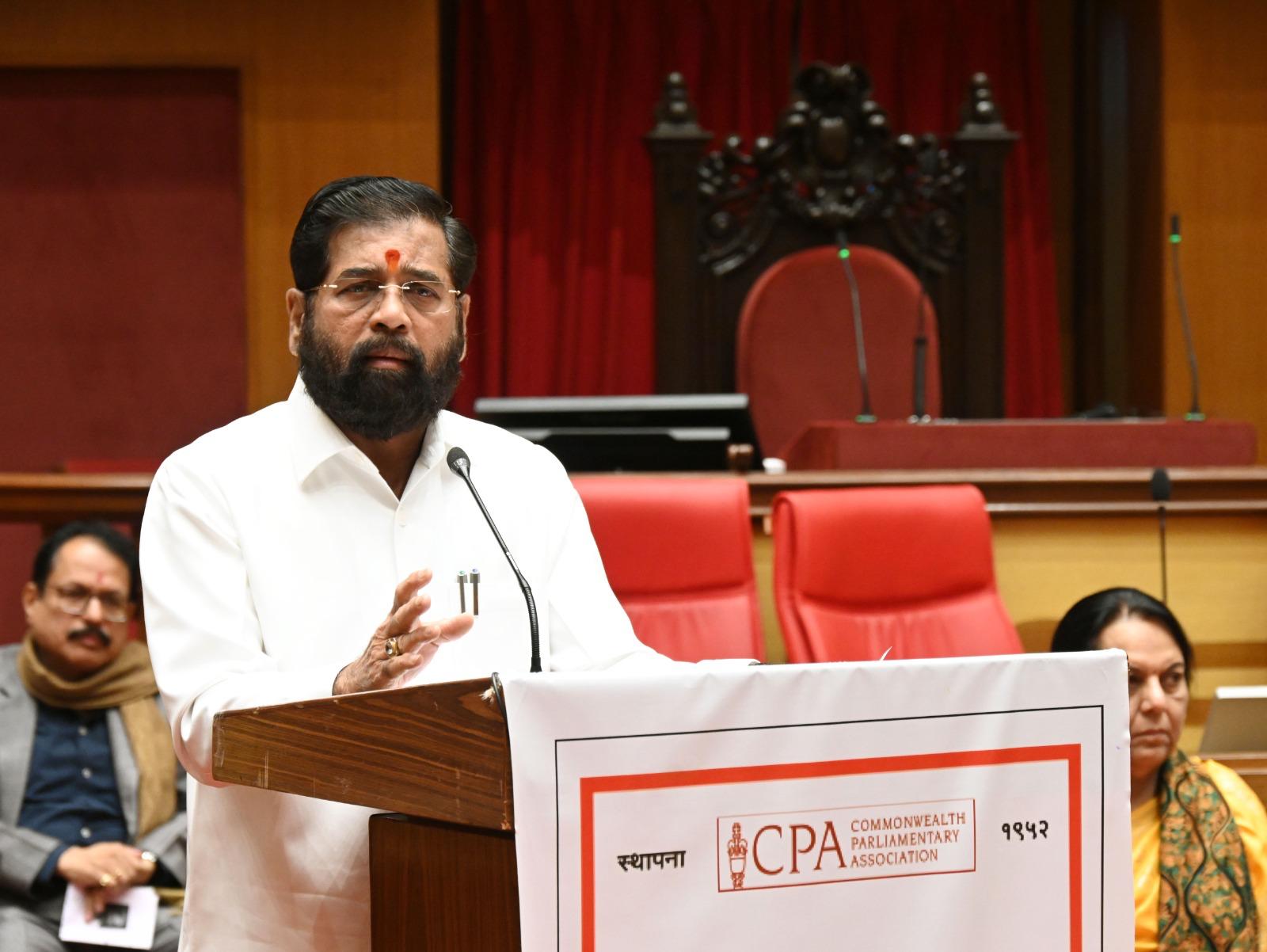
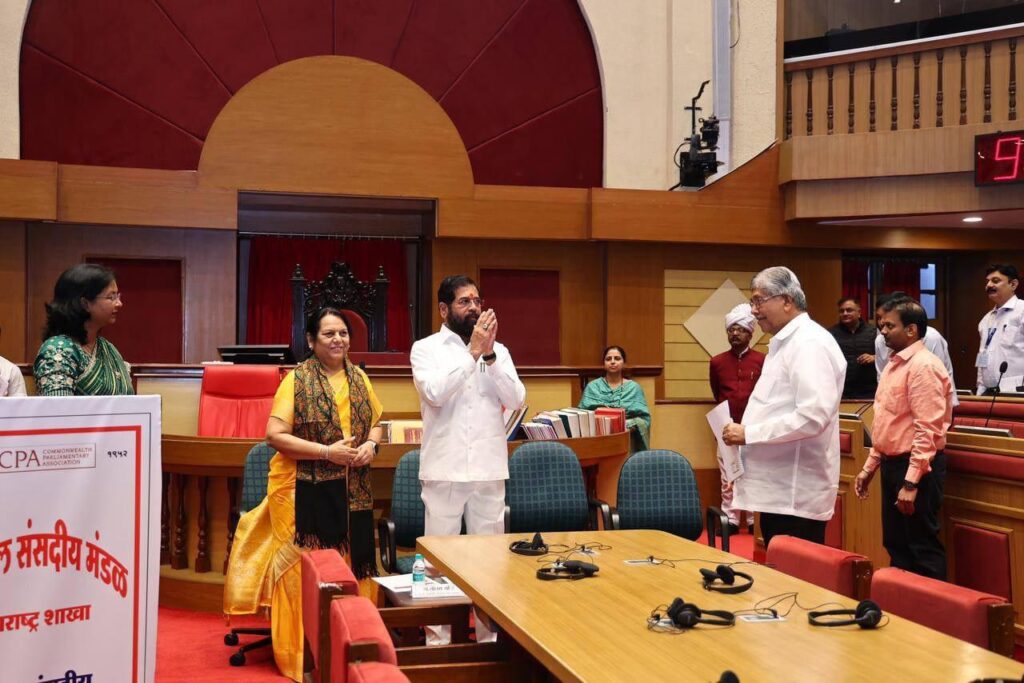
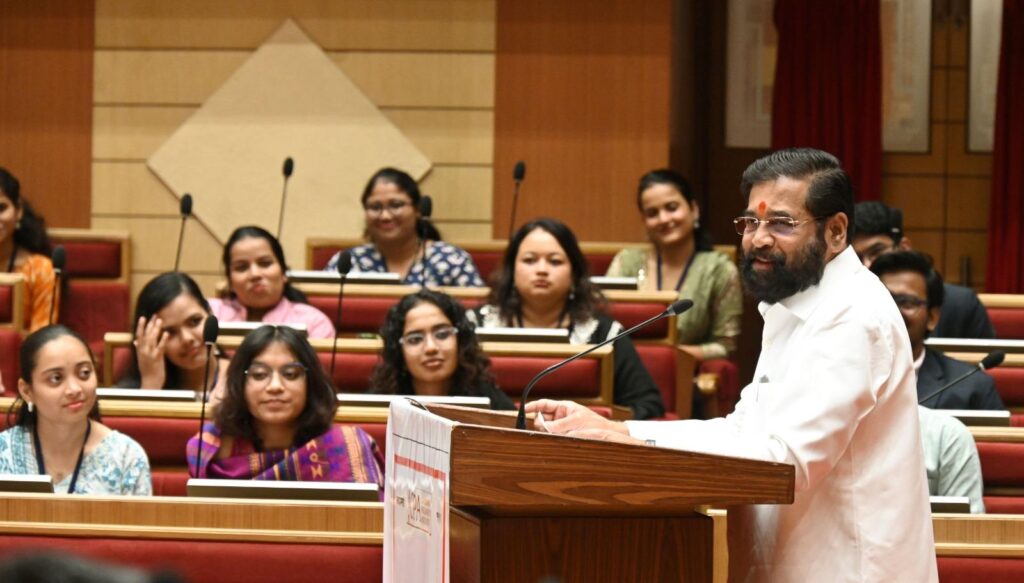
Deputy Chief Minister Eknath Shinde on Thursday emphasized the need for elected representatives to place citizens’ concerns at the center of governance and to remain prepared to amend laws whenever necessary to serve public interest. He was speaking at a session organized by the Commonwealth Parliamentary Association on “Responsibilities of Public Representatives Towards Their Constituencies and the Constitutional Platform Available Through the Legislature.”

Addressing members in the Legislative Council hall, Shinde said that the mandate received from the people must be treated as a continuous reminder of responsibility. “Citizens have elected us with trust. Their concerns, hardships, and expectations should guide our every decision. If required, elected representatives must be willing to go beyond administrative red tape and bring changes to laws to deliver timely solutions,” he stated.
Deputy Chief Minister Eknath Shinde Urges Public Representatives to Prioritize Citizens’ Issues and Strengthen People-Centric Governance

Shinde described democracy as a sacred bridge between the people and their representatives. “Democracy is a flowing river that connects both ends—citizens and lawmakers. Keeping this river clean, active, and beneficial for public welfare is the duty of both the government and the administration,” he remarked, adding that he still considers himself a student of public life, learning from people every day.

Reviewing the government’s recent welfare initiatives, the Deputy Chief Minister highlighted schemes such as the Mukhyamantri Majhi Ladki Bahin Yojana, free higher education for girls, the Balasaheb Thackeray Aapla Dawakhana, and the Jeevandayi health scheme offering treatment assistance up to ₹5 lakh. He also shared that the Chief Minister’s Medical Assistance Cell has supported nearly 80,000 patients with aid worth about ₹450 crore in the past two and a half years. Additionally, around five crore citizens have benefited from the Shasan Aplya Dari (Government at Your Doorstep) initiative.
Deputy Chief Minister Eknath Shinde Urges Public Representatives to Prioritize Citizens’ Issues and Strengthen People-Centric Governance

Shinde also acknowledged the strong parliamentary traditions upheld by past Presiding Officers including G. V. Mavalankar, V. S. Page, R. S. Gavai, Jayant Tilak, and Arun Gujarathi. He noted that such leadership helped preserve the dignity and impartiality of the legislature, rising above party lines.

Reflecting on his own political journey—from a grassroots worker to a public leader—Shinde said his commitment has always been to the “common man” and that resolving public issues remains his top priority.

The event was attended by Legislative Council Deputy Chairperson Dr. Neelam Gorhe and Legislature Secretary Meghna Talegaonkar. The session was moderated by Nilesh Madane, while the vote of thanks was delivered by Secretary Talegaonkar.

Leave a Comment

End of Article

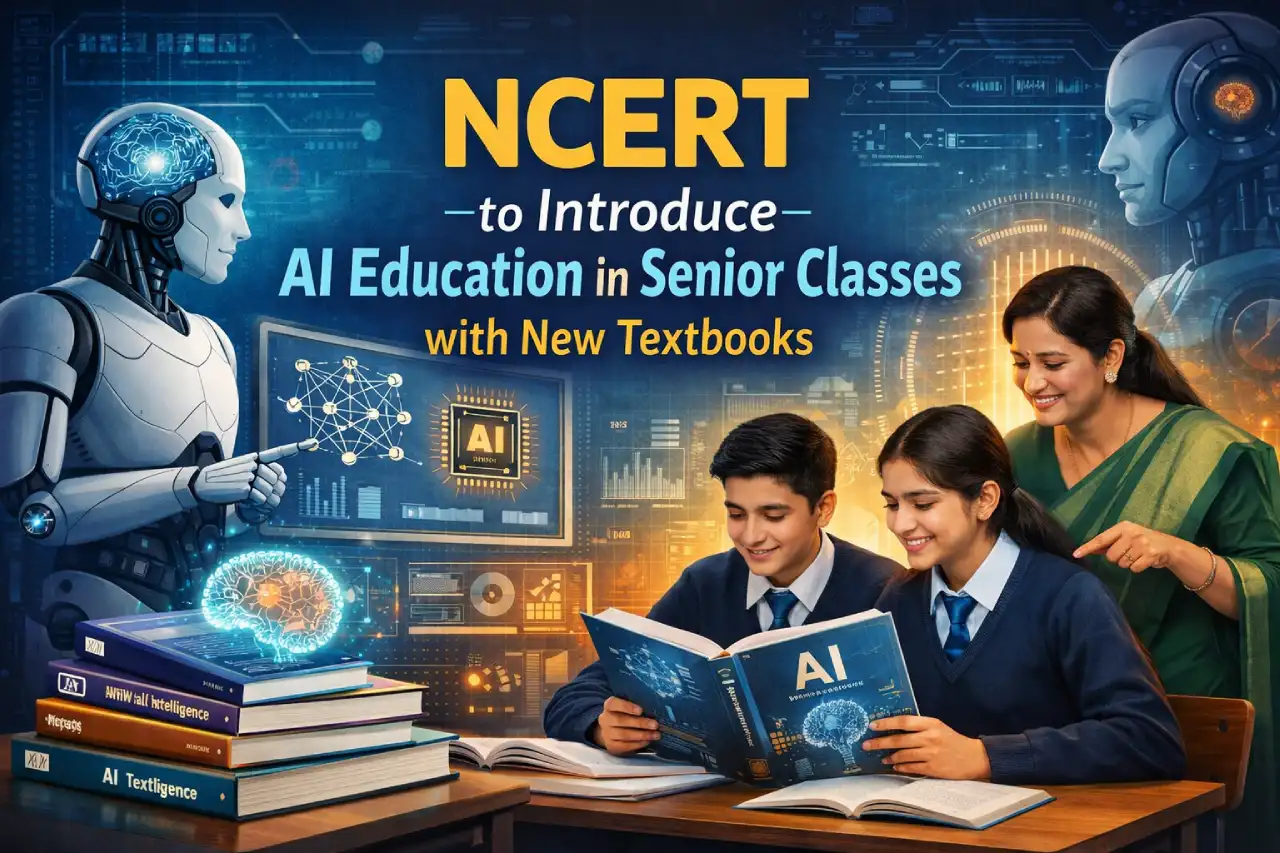
NCERT to Introduce AI Education in Senior Classes with New Textbooks

NCERT to Introduce AI Education in Senior Classes with New Textbooks

The National Council of Educational Research and Training has taken a major step towards modernising school education by constituting a dedicated team to develop Artificial Intelligence textbooks for Classes 11 and 12. The move is aimed at introducing students to AI concepts in a structured and age-appropriate manner. According to officials, the textbooks will focus on building foundational understanding, practical awareness, and ethical use of AI, keeping in line with India’s evolving education and technology goals.

I am writing about this development because Artificial Intelligence is no longer a niche subject limited to higher education or specialised careers. It is already shaping daily life, careers, and future job markets. Introducing AI at the senior secondary level ensures that students are not just passive users of technology but informed learners who understand how it works. This step also signals a shift in school education from rote learning towards skills that matter in the real world.

Why NCERT Is Introducing AI Textbooks

NCERT’s decision comes at a time when AI is influencing almost every sector, from healthcare and finance to education and governance. The idea is to familiarise students early with emerging technologies so they are better prepared for higher studies and future careers.

By developing dedicated textbooks, NCERT aims to move beyond short modules and offer a clear, well-designed curriculum.

What the AI Textbooks Are Expected to Cover

The upcoming textbooks for Classes 11 and 12 are expected to include:

  • Basic concepts of Artificial Intelligence
  • Real-life applications of AI
  • Introduction to data, algorithms, and automation
  • Ethical issues, bias, and responsible use of AI
  • Simple project-based learning and case studies

The focus will be on understanding concepts rather than heavy technical coding.

Who Is Part of the Textbook Development Team

NCERT has brought together subject experts, academicians, and technology professionals to work on the AI textbooks. This multidisciplinary approach is meant to ensure that the content is accurate, student-friendly, and aligned with global standards.

Experts will also ensure that the language and examples remain accessible to students from different backgrounds.

How This Fits into the National Education Vision

The move aligns with the broader goals of the National Education Policy, which emphasises skill-based learning, critical thinking, and exposure to emerging technologies. AI education at the school level supports the vision of creating future-ready learners.

It also encourages curiosity and problem-solving rather than memorisation.

What This Means for Students and Teachers

For students, AI textbooks open up early exposure to a high-demand field and help them make informed career choices. Teachers will receive structured material and training support, making it easier to teach a subject that is often seen as complex.

Schools may also gradually introduce practical activities linked to AI learning.

Challenges and Expectations

While the move has been widely welcomed, successful implementation will depend on teacher training, availability of resources, and clear assessment methods. NCERT will need to ensure that schools across regions can adopt the curriculum smoothly.

Balanced rollout will be key to avoiding a digital divide.

Leave a Comment

End of Article

Loading more posts...