JOIN WHATSAPP
STORIES

Career vs Job in 2025: What Young Professionals Must Understand Before Choosing

Career vs Job in 2025: What Young Professionals Must Understand Before Choosing

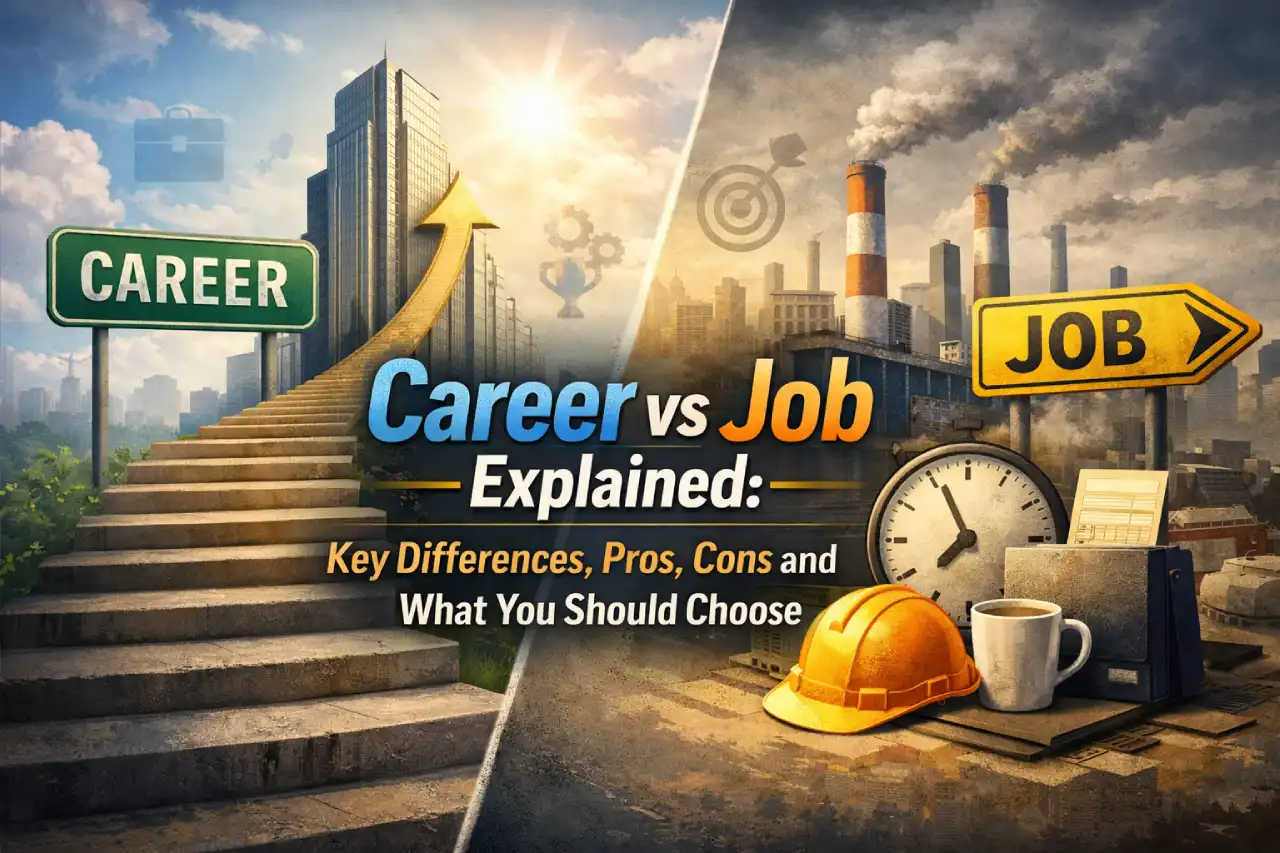
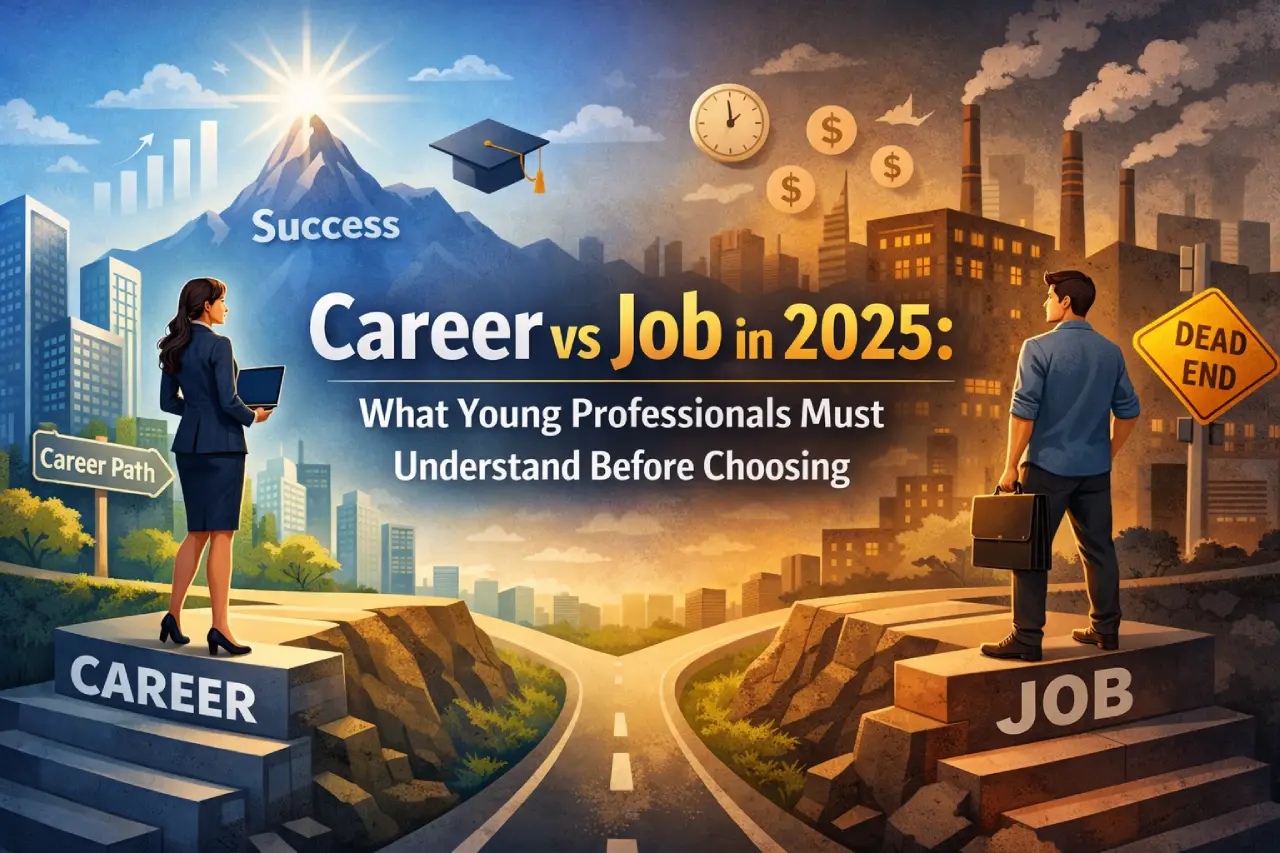
In 2025, the difference between a job and a career has become more important than ever, especially for students and early professionals trying to plan their future. A job is often seen as a role you take up to earn money, meet expenses, and gain short-term stability. A career, on the other hand, is a long-term journey built around skills, growth, learning, and purpose. With changing industries, remote work, and skill-based hiring becoming common, this distinction is no longer just theory—it affects real-life decisions.

I am writing about this because I see many young people feeling confused and anxious about their work choices. Some feel stuck in jobs they don’t enjoy, while others worry whether chasing a “career” is even practical anymore. In 2025, where layoffs, freelancing, startups, and AI-driven roles exist side by side, understanding the difference between a job and a career can help people make smarter choices. This clarity matters not only for income but also for mental peace, long-term growth, and job satisfaction. If you understand where you stand today, you can decide where you actually want to go tomorrow.

What Is a Job in Today’s Context

A job is usually a position you take to earn a salary. It may or may not align with your long-term interests.

Key characteristics of a job in 2025 include:

  • Focus on immediate income
  • Limited scope beyond assigned duties
  • Can be temporary or easily replaceable
  • Often driven by necessity rather than passion

For example, a graduate working in a call centre to pay EMIs or support family expenses is doing a job. There is nothing wrong with this, but the role may not offer long-term growth unless skills are upgraded.

What Defines a Career in 2025

A career is a series of connected roles that help you grow in a particular direction over time. It is more about progress than position.

A career usually involves:

  • Continuous learning and skill-building
  • Clear growth path over years
  • Alignment with interests or strengths
  • Better long-term stability and satisfaction

For instance, someone starting as a junior data analyst, then moving into analytics consulting or AI-driven roles, is building a career. The income may start slow, but growth compounds over time.

Career vs Job: A Simple Comparison

AspectJobCareer
Time frameShort-termLong-term
PurposeEarn moneyGrow professionally
Skill focusLimitedContinuous
Emotional connectLow to moderateUsually high
StabilityDepends on employerBuilt through expertise

Why This Difference Matters More in 2025

The job market in 2025 is skill-heavy and fast-changing. Roles can disappear, but skills stay valuable. People who focus only on jobs often struggle when industries change. Those who focus on careers adapt better because they keep learning.

Also, younger professionals today value flexibility, work-life balance, and meaning. A career allows room to shift roles within the same field, while a job often feels restrictive.

Can a Job Turn Into a Career

Yes, and this is where many people get it wrong. A job can become a career if you:

  • Learn new skills alongside work
  • Take responsibility beyond your role
  • Plan your next move instead of staying stuck
  • Use the job as a stepping stone

Many successful professionals started with ordinary jobs but treated them as learning platforms.

Leave a Comment

End of Article

Career-Ready Courses After Graduation That Lead to High-Demand Jobs

Career-Ready Courses After Graduation That Lead to High-Demand Jobs

Choosing the right path after graduation can feel confusing, especially with so many options available today. Many graduates want to move quickly into stable, well-paying jobs rather than spending years in uncertain academic routes. This is where job-oriented programmes come in. These courses are designed to build practical skills, industry exposure, and employability in a shorter time. Whether you come from science, commerce, or arts, there are focused programmes that can help you transition smoothly from college to a professional career.

I am writing about job-oriented programmes after graduation because I often see students struggle with one common question: what next. A degree alone is no longer enough in today’s competitive job market. Employers look for candidates who are trained, job-ready, and confident. Knowing about these programmes early helps graduates make informed decisions, save time, and invest their energy in courses that actually lead to employment rather than confusion or delays.

Why Job-Oriented Programmes Matter After Graduation

Job-oriented programmes focus on real-world skills that industries actually need. Unlike purely academic courses, these programmes are aligned with current market demands and often include hands-on training, internships, or project work.

They help graduates:

  • Gain practical skills quickly
  • Improve employability
  • Switch career paths if needed
  • Enter growing industries

Job-Oriented Programs After Graduation in Science Stream

Science graduates have several skill-focused options that lead directly to professional roles.

Popular choices include:

  • Data Science and Analytics
  • Artificial Intelligence and Machine Learning
  • Clinical Research and Healthcare Management
  • Biotechnology and Bioinformatics
  • Environmental Science and Sustainability

These programmes open doors to research labs, tech companies, healthcare organisations, and government projects.

Job-Oriented Programs After Graduation in Commerce Stream

Commerce graduates often look for roles in finance, management, and business operations.

Some in-demand programmes are:

  • MBA in specialised fields
  • Chartered Accountancy or Cost Management
  • Financial Modelling and Investment Banking
  • Digital Marketing and E-commerce
  • Business Analytics

These courses prepare candidates for corporate roles, startups, and financial institutions.

Job-Oriented Programs After Graduation in Arts and Humanities

Arts graduates today have more career options than ever before, especially in creative and service-based sectors.

Popular job-oriented programmes include:

  • Journalism and Mass Communication
  • Public Relations and Corporate Communication
  • Social Work and Development Studies
  • UX Writing and Content Strategy
  • Education and Training Programmes

These fields offer opportunities in media, NGOs, education, and digital platforms.

Short-Term Professional Courses with High Demand

Some programmes do not require a specific stream and focus purely on skills.

Examples include:

  • Project Management
  • Cyber Security
  • Graphic Design and UI UX
  • Human Resource Management
  • Foreign Language Certification

These short-term courses are ideal for graduates who want quick entry into the job market.

How to Choose the Right Programme

While selecting a job-oriented programme, graduates should consider their interests, industry growth, course credibility, and placement support. It is always better to choose a course that matches long-term career goals rather than short-term trends.

Speaking to mentors, industry professionals, and alumni can also help in making the right decision.

Leave a Comment

End of Article

Loading more posts...