JOIN WHATSAPP
STORIES

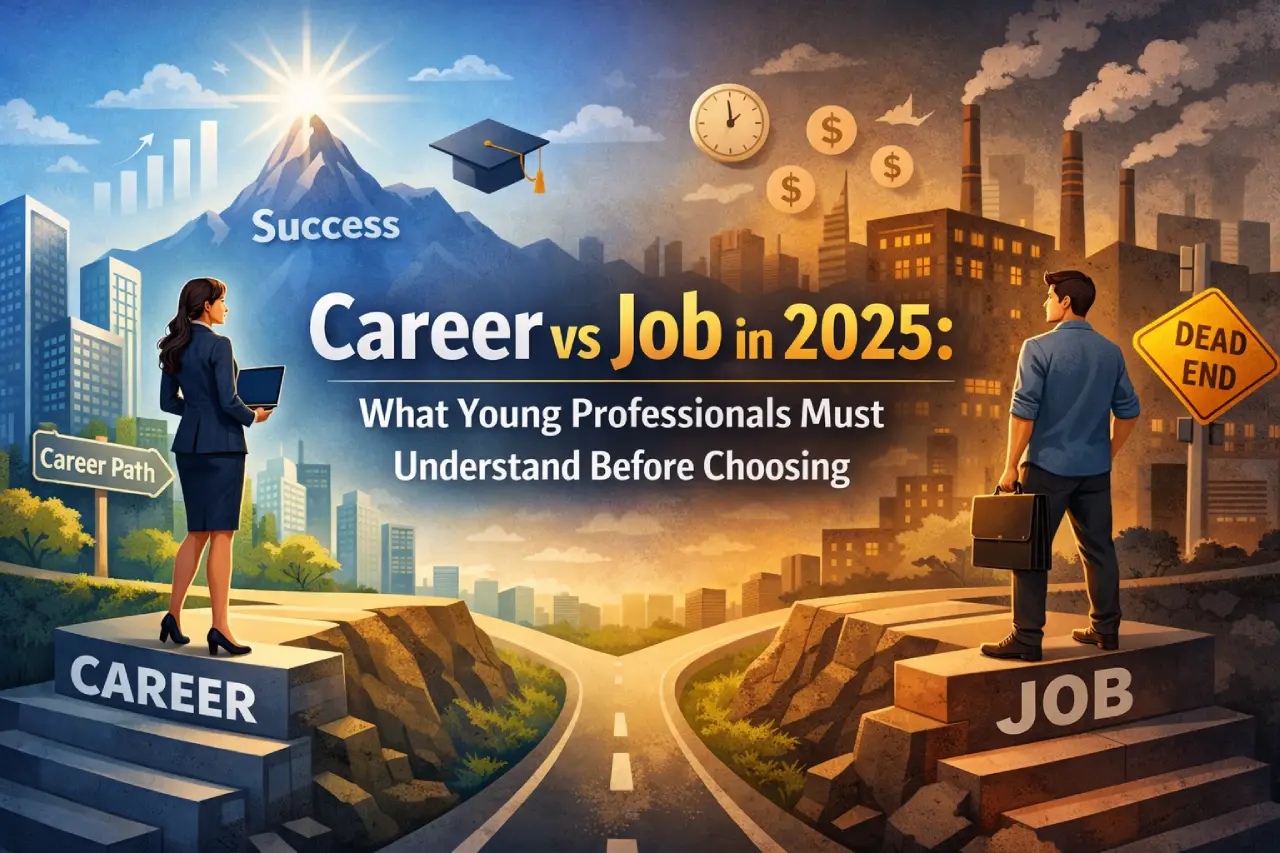
Career vs Job in 2025: What Young Professionals Must Understand Before Choosing

Career vs Job in 2025: What Young Professionals Must Understand Before Choosing

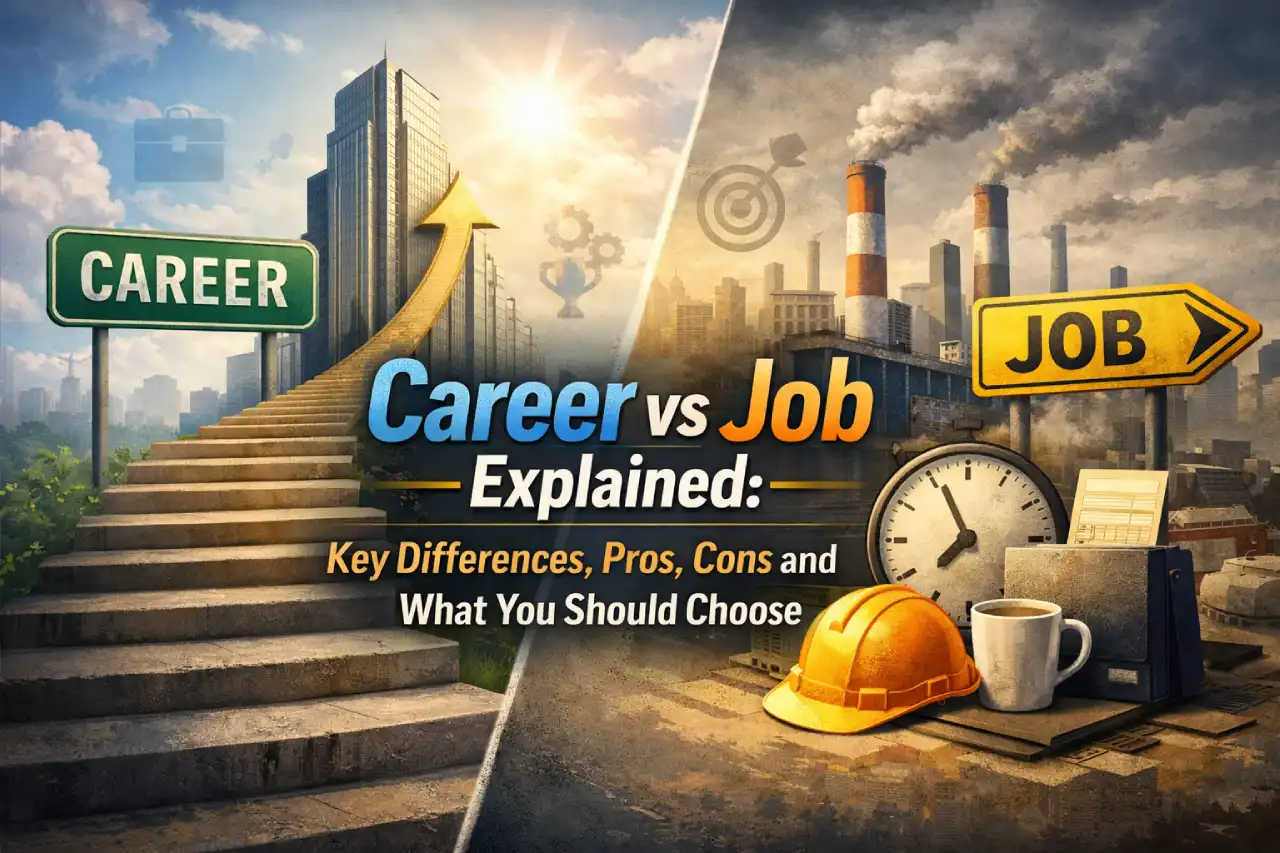
In 2025, the difference between a job and a career has become more important than ever, especially for students and early professionals trying to plan their future. A job is often seen as a role you take up to earn money, meet expenses, and gain short-term stability. A career, on the other hand, is a long-term journey built around skills, growth, learning, and purpose. With changing industries, remote work, and skill-based hiring becoming common, this distinction is no longer just theory—it affects real-life decisions.

I am writing about this because I see many young people feeling confused and anxious about their work choices. Some feel stuck in jobs they don’t enjoy, while others worry whether chasing a “career” is even practical anymore. In 2025, where layoffs, freelancing, startups, and AI-driven roles exist side by side, understanding the difference between a job and a career can help people make smarter choices. This clarity matters not only for income but also for mental peace, long-term growth, and job satisfaction. If you understand where you stand today, you can decide where you actually want to go tomorrow.

What Is a Job in Today’s Context

A job is usually a position you take to earn a salary. It may or may not align with your long-term interests.

Key characteristics of a job in 2025 include:

  • Focus on immediate income
  • Limited scope beyond assigned duties
  • Can be temporary or easily replaceable
  • Often driven by necessity rather than passion

For example, a graduate working in a call centre to pay EMIs or support family expenses is doing a job. There is nothing wrong with this, but the role may not offer long-term growth unless skills are upgraded.

What Defines a Career in 2025

A career is a series of connected roles that help you grow in a particular direction over time. It is more about progress than position.

A career usually involves:

  • Continuous learning and skill-building
  • Clear growth path over years
  • Alignment with interests or strengths
  • Better long-term stability and satisfaction

For instance, someone starting as a junior data analyst, then moving into analytics consulting or AI-driven roles, is building a career. The income may start slow, but growth compounds over time.

Career vs Job: A Simple Comparison

AspectJobCareer
Time frameShort-termLong-term
PurposeEarn moneyGrow professionally
Skill focusLimitedContinuous
Emotional connectLow to moderateUsually high
StabilityDepends on employerBuilt through expertise

Why This Difference Matters More in 2025

The job market in 2025 is skill-heavy and fast-changing. Roles can disappear, but skills stay valuable. People who focus only on jobs often struggle when industries change. Those who focus on careers adapt better because they keep learning.

Also, younger professionals today value flexibility, work-life balance, and meaning. A career allows room to shift roles within the same field, while a job often feels restrictive.

Can a Job Turn Into a Career

Yes, and this is where many people get it wrong. A job can become a career if you:

  • Learn new skills alongside work
  • Take responsibility beyond your role
  • Plan your next move instead of staying stuck
  • Use the job as a stepping stone

Many successful professionals started with ordinary jobs but treated them as learning platforms.

Leave a Comment

End of Article

Choosing the Right Stream After Class 10: Why Humanities Is a Smart Option in 2026

Choosing the Right Stream After Class 10: Why Humanities Is a Smart Option in 2026

Choosing the right stream after Class 10 is one of the most important academic decisions a student makes. For years, science and commerce have dominated this conversation, while humanities was often treated as a backup option. That thinking is slowly changing. In 2026, humanities is emerging as a strong, flexible, and future-ready stream for students who want diverse career options, creative freedom, and long-term growth beyond conventional paths.

I am writing about this topic because I see many students feeling pressured to choose streams based on marks, peer influence, or family expectations rather than genuine interest. Humanities is still misunderstood by many parents and students. This article aims to explain why humanities deserves serious consideration today, what it offers in 2026, and how students can decide if it suits their skills, interests, and career goals.

Understanding What Humanities Really Is

Humanities is not just about reading history books or writing long answers. It is a stream that focuses on understanding society, people, behaviour, governance, culture, and communication. Subjects like history, political science, geography, economics, psychology, sociology, and languages help students develop strong thinking and analytical skills.

In today’s world, where problem-solving and communication matter more than rote learning, these skills are becoming increasingly valuable.

Why Humanities Makes Sense in 2026

The job market in 2026 is changing fast. Employers are looking for people who can think independently, analyse situations, communicate clearly, and understand human behaviour. Humanities students are trained exactly in these areas.

Some key reasons humanities is relevant today include:

  • Growing demand for critical thinking and writing skills
  • Expansion of careers in policy, media, design, education, and social sectors
  • Increasing value of interdisciplinary learning
  • Less dependence on rigid, exam-heavy career paths

Humanities allows students to adapt to multiple career directions instead of locking them into one narrow track.

Career Options After Humanities

One of the biggest myths is that humanities has limited career scope. In reality, the options are wide and growing.

Students can move into areas such as:

  • Civil services and government jobs
  • Law and legal studies
  • Journalism, media, and content creation
  • Psychology and counselling
  • Education and academic research
  • Public policy, international relations, and social work
  • Design, advertising, and communications

With the right planning, humanities can open doors to both traditional and modern careers.

Humanities vs Science and Commerce

Humanities is not easier or harder than other streams, it is simply different. While science focuses on formulas and experiments and commerce focuses on numbers and markets, humanities focuses on ideas, people, and systems.

Students who enjoy reading, writing, debating, observing society, and asking “why” often feel more comfortable in humanities. Choosing a stream should be about suitability, not status.

Skills Humanities Students Develop Early

Humanities students start developing real-world skills from school itself.

These include:

  • Strong reading and comprehension ability
  • Clear written and spoken communication
  • Analytical and interpretive thinking
  • Awareness of social and global issues
  • Research and presentation skills

These skills remain useful no matter which career path the student chooses later.

Who Should Consider Humanities

Humanities is a good option for students who:

  • Are curious about society, politics, and human behaviour
  • Prefer understanding concepts over memorising formulas
  • Enjoy writing, discussion, and creative expression
  • Want flexibility in career choices
  • Are planning for competitive exams like civil services or law

From my point of view, students perform best when they study subjects they genuinely connect with, not those they are forced into.

Role of Parents in Stream Selection

Parents play a big role in stream selection, especially in India. It is important for parents to look beyond old assumptions and understand how the education and job landscape has changed. Supporting a child’s interest often leads to better academic performance and mental well-being.

Leave a Comment

End of Article

Loading more posts...