JOIN WHATSAPP
STORIES

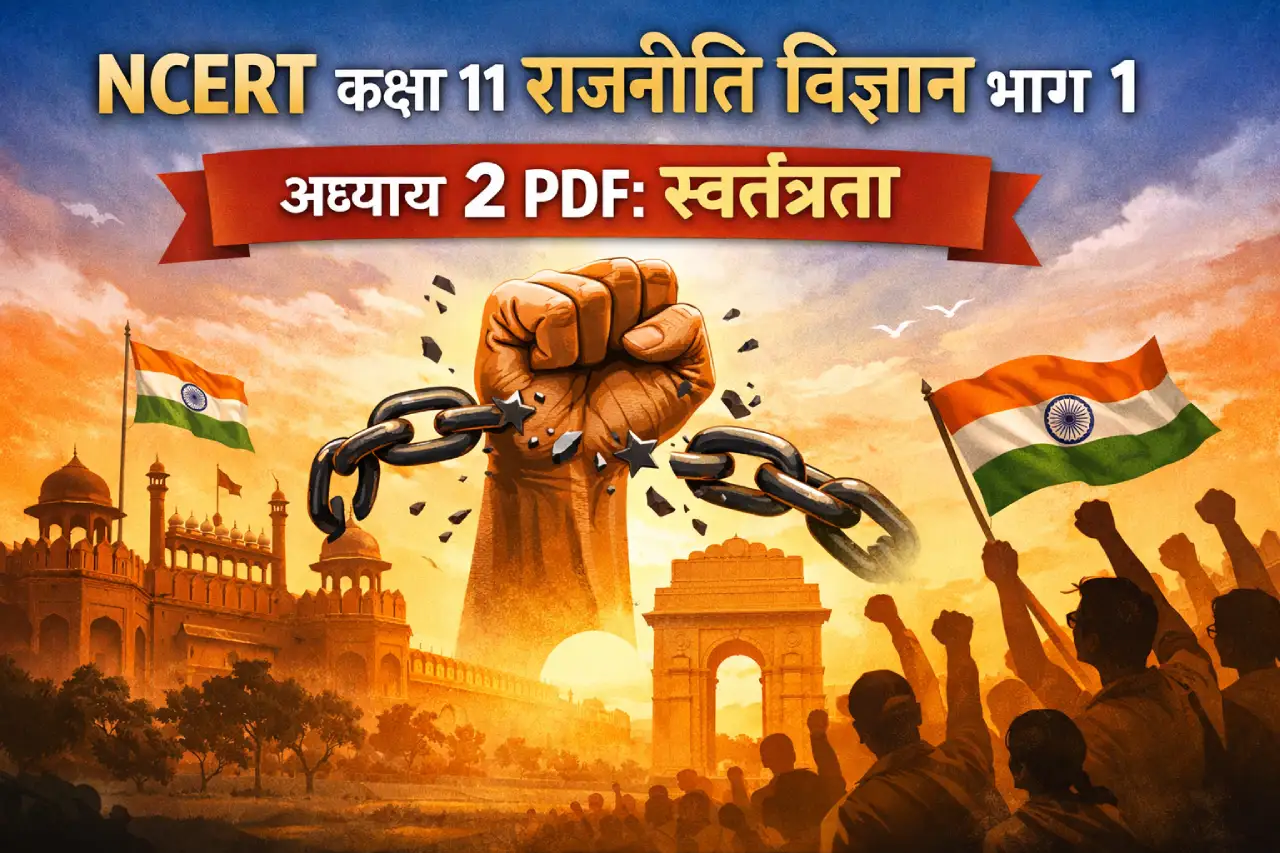
NCERT Class 11 Political Science Part 1 Chapter 2 PDF (Hindi): स्वतंत्रता

NCERT Class 11 Political Science Part 1 Chapter 2 PDF (Hindi): स्वतंत्रता

Chapter 2 of Class 11 Political Science Part 1 (Hindi Medium), स्वतंत्रता, deals with the idea of freedom and how it shapes political life and personal choices. This chapter explains what freedom really means, the different ways it is understood, and why it is considered a core value in democratic societies. It goes beyond the simple idea of “doing whatever one wants” and looks at freedom as a balance between individual choice and social responsibility.

This chapter helps learners understand why freedom cannot exist without rules, why one person’s freedom cannot harm another’s, and how societies try to protect freedom through laws and constitutions. It also connects theory with real-life issues like freedom of speech, personal liberty, censorship, and social restrictions. Once students understand this chapter, they begin to see current debates and news in a more thoughtful and informed way, which is exactly what Political Science aims to do.

About Chapter 2: स्वतंत्रता

This chapter introduces the concept of freedom and explains how political thinkers have defined and defended it over time.

What Is Freedom?

In political theory, freedom refers to the ability of individuals to make choices and act according to their will, without unnecessary restrictions. However, freedom is never absolute and always exists within a social framework.

Freedom involves:

  • Choice and decision-making
  • Absence of unreasonable control
  • Protection through laws
  • Responsibility towards others

Negative and Positive Freedom

The chapter discusses two important ideas of freedom:

Type of FreedomMeaning
Negative FreedomFreedom from external interference
Positive FreedomFreedom to develop one’s potential

Negative freedom focuses on limits to state power, while positive freedom focuses on creating conditions that help people live meaningful lives.

Why Freedom Needs Limits

Unlimited freedom can create chaos. This chapter explains that:

  • Laws protect freedom rather than destroy it
  • Restrictions are needed to prevent harm
  • Social order helps everyone enjoy freedom equally

For example, freedom of speech does not mean spreading hate or violence.

Freedom and Equality

Freedom is closely linked with equality. If some people have too much power or privilege, others cannot enjoy real freedom. The chapter shows how social and economic inequality can limit individual liberty.

Freedom in Everyday Life

Freedom affects daily life in many ways:

  • Choosing education and career
  • Expressing opinions
  • Practising religion
  • Moving freely
  • Participating in political activities

These freedoms are protected by democratic systems and constitutional rights.

NCERT Class 11 Political Science Chapter 2 PDF Download (Hindi Medium)

Students can download the official NCERT PDF by following these steps:

Always use the official NCERT website to ensure accurate and updated content.
Leave a Comment

End of Article

NCERT Class 11 Political Science Chapter 5 PDF (Hindi): अधिकार

NCERT Class 11 Political Science Chapter 5 PDF (Hindi): अधिकार

Chapter 5 of Class 11 Political Science Part 1 (Hindi Medium), titled अधिकार, deals with the idea of rights and why they are essential for a free and dignified life. This chapter explains what rights mean, how they differ from privileges, and why societies create laws to protect them. It also introduces students to different kinds of rights such as civil, political, and social rights, using simple explanations and everyday examples.

I am writing about this chapter because the word “rights” is often used in daily conversations, protests, debates, and even social media arguments, but many students do not clearly understand what counts as a right and what does not. Knowing this difference is important, especially in a democracy like India. This chapter helps students understand that rights are not just demands but legally and morally justified claims. It also explains why rights must be balanced with duties and responsibilities. For students preparing for board exams or competitive exams, this chapter builds a strong foundation for topics related to the Constitution, democracy, and citizenship.

What Are Rights?

Rights are justified claims that individuals can make on society and the state. They allow people to live with freedom, security, and self-respect. The chapter clearly explains that rights are not unlimited freedoms. They exist within a legal and moral framework so that one person’s freedom does not harm another.

Rights are important because they:

  • Protect individual freedom
  • Ensure equality before law
  • Prevent misuse of power
  • Help people participate in public life

Types of Rights Explained in the Chapter

The chapter talks about different categories of rights that are recognised in democratic societies.

Major Types of Rights

Type of RightWhat It Includes
Civil RightsRight to life, freedom of speech, equality before law
Political RightsRight to vote, contest elections, form political groups
Social RightsRight to education, health, and basic welfare
Economic RightsRight to work, fair wages, and livelihood

These rights together ensure that freedom is not limited to paper but works in real life.

Legal Rights and Moral Rights

The chapter makes an important distinction between legal and moral rights. Legal rights are protected by law and can be enforced in courts. Moral rights are based on ethical values and social expectations, even if they are not written in law.

For example, the right to free speech is a legal right, while treating others with dignity is a moral responsibility. Both are necessary for a healthy society.

Rights and Responsibilities Go Together

One of the strongest messages in this chapter is that rights cannot exist without responsibilities. If citizens enjoy freedom of expression, they must also avoid spreading hatred or false information. If people demand equality, they must also respect others’ rights.

This balance is what keeps a democracy stable and fair.

Why Rights Are Crucial in a Democracy

In a democracy, citizens are not subjects; they are active participants. Rights allow people to question the government, demand accountability, and express opinions without fear. The chapter explains that without rights, democracy would lose its meaning and power would remain concentrated in a few hands.

NCERT Class 11 Political Science Chapter 5 PDF Download (Hindi Medium)

Students can download the official NCERT PDF by following these steps:

  • Visit the official NCERT website
  • Click on E-Books
  • Select Class 11
  • Choose Political Science
  • Open Political Theory – Part 1 (Hindi Medium)
  • Click on Chapter 5: अधिकार
  • Download the PDF for regular study and revision

Using the official NCERT PDF ensures accuracy and alignment with the current syllabus.

Leave a Comment

End of Article

Loading more posts...