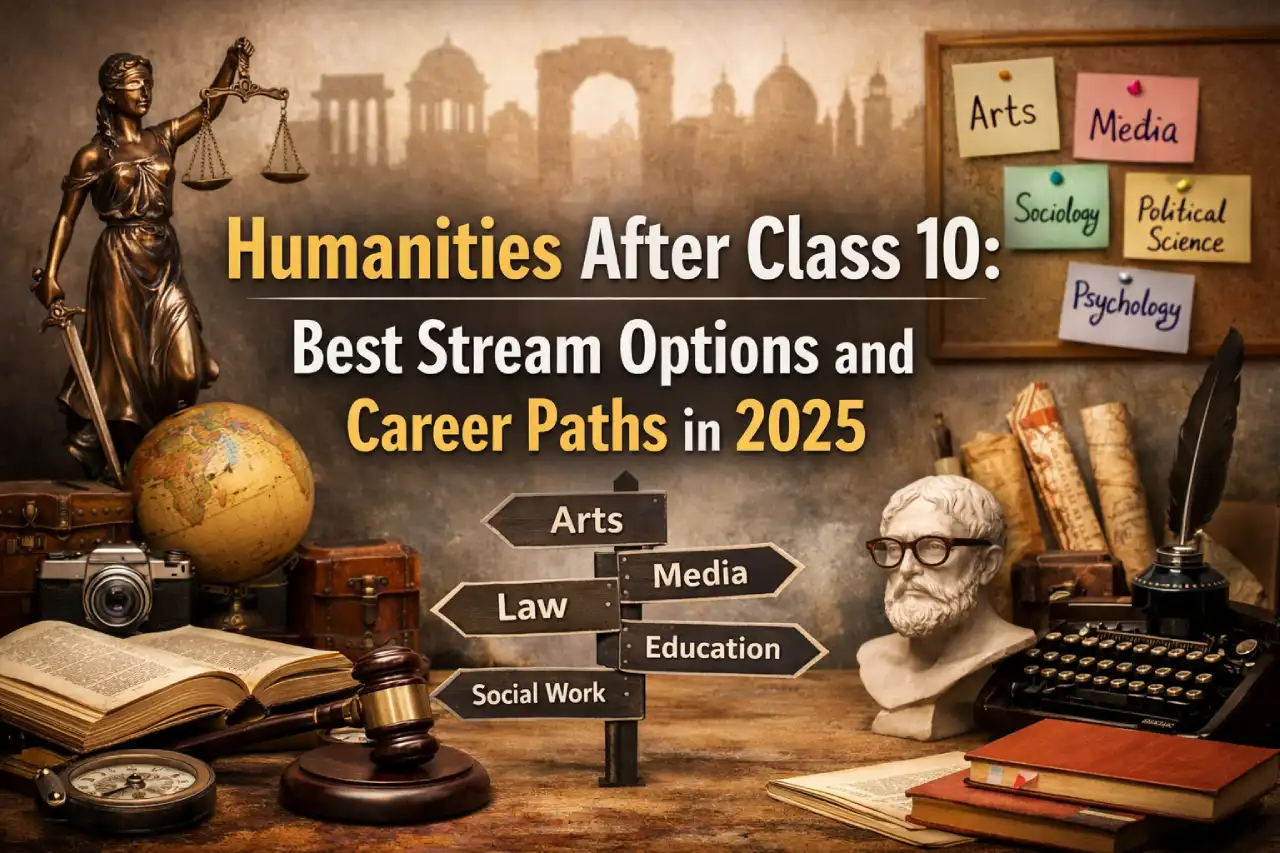
Choosing a stream after Class 10 is one of the first big academic decisions a student makes, and humanities is often misunderstood or underestimated. In reality, the humanities stream offers wide flexibility, strong career options, and the freedom to shape your interests into a profession. In 2025, humanities is no longer limited to “arts subjects” alone; it has expanded into areas like media, public policy, psychology, design, law, and data-driven social research.
I am writing this guide because every year I see students choosing streams under pressure—from relatives, peers, or outdated ideas about success. Humanities is often seen as a fallback option, which is unfair and incorrect. Many top professionals today, including civil servants, lawyers, economists, designers, writers, and policy experts, started their journey in humanities. What matters is not the label of the stream, but how well it matches your interests, strengths, and long-term goals. This guide is meant to help students and parents understand the best humanities combinations available after Class 10 and what kind of future each option can lead to.
What Is the Humanities Stream
The humanities stream focuses on understanding society, people, culture, governance, and communication. It develops skills like critical thinking, analysis, writing, speaking, and problem-solving.
Common subjects in humanities include History, Political Science, Geography, Economics, Sociology, Psychology, English, and regional languages.
Best Humanities Subject Combinations After Class 10
Choosing the right subject combination is more important than just choosing humanities. Here are some popular and practical combinations for 2025.
Humanities with Economics
This is one of the most in-demand combinations today.
Subjects usually include:
- Economics
- Political Science
- History or Geography
- English
Best suited for students interested in economics, policy, data analysis, UPSC, MBA, or finance-related careers.
Humanities with Political Science
Ideal for students interested in governance, law, and public service.
Subjects usually include:
- Political Science
- History
- Geography or Sociology
- English
This combination is popular among aspirants preparing for civil services, law, journalism, and public administration.
Humanities with Psychology
Psychology is gaining popularity due to rising awareness of mental health.
Subjects usually include:
- Psychology
- Sociology
- English
- History or Political Science
Good option for careers in counselling, HR, social work, education, and research.
Humanities with Geography
Geography is both theoretical and practical, making it a balanced subject.
Subjects usually include:
- Geography
- Political Science
- History or Economics
- English
Useful for careers in urban planning, environmental studies, civil services, and disaster management.
Humanities with Fine Arts or Media Studies
Best for creative students.
Subjects usually include:
- Fine Arts or Media Studies
- English
- Psychology or Sociology
- History
Suitable for careers in design, animation, filmmaking, journalism, advertising, and content creation.
Career Options After Humanities in 2025
Humanities opens doors to a wide range of careers, including:
- Civil Services (UPSC, State PSC)
- Law (BA LLB)
- Journalism and Mass Communication
- Psychology and Mental Health
- Economics and Policy Research
- Design, Animation, and Creative Fields
- Teaching and Academia
- Social Work and Development Sector
- Corporate roles like HR, PR, and Communications
With the right skills and higher education, humanities students compete equally with other streams.
Skills Humanities Students Develop
Humanities students gain strong transferable skills such as:
- Critical thinking
- Writing and communication
- Research and analysis
- Understanding of society and people
- Ethical reasoning and decision-making
These skills are highly valued in both government and private sectors.
How to Choose the Right Humanities Stream for Yourself
Before choosing subjects, ask yourself:
- What subjects do I enjoy reading and discussing
- Am I interested in people, society, law, media, or policy
- Do I enjoy writing, speaking, or analysing issues
- What kind of career excites me in the long run
Discuss options with teachers and career counsellors, not just relatives or friends.