JOIN WHATSAPP
STORIES

NCERT to Introduce AI Education in Senior Classes with New Textbooks

NCERT to Introduce AI Education in Senior Classes with New Textbooks

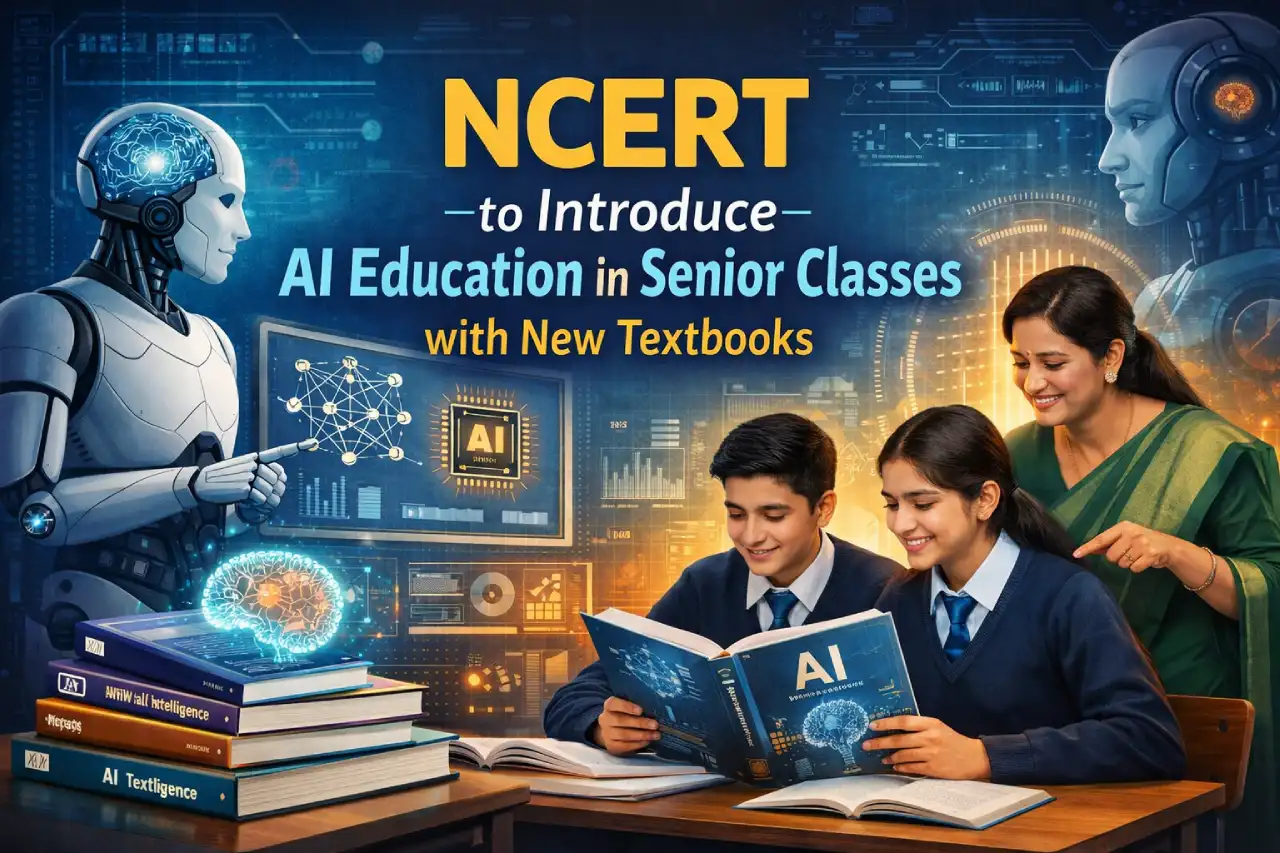
The National Council of Educational Research and Training has taken a major step towards modernising school education by constituting a dedicated team to develop Artificial Intelligence textbooks for Classes 11 and 12. The move is aimed at introducing students to AI concepts in a structured and age-appropriate manner. According to officials, the textbooks will focus on building foundational understanding, practical awareness, and ethical use of AI, keeping in line with India’s evolving education and technology goals.

I am writing about this development because Artificial Intelligence is no longer a niche subject limited to higher education or specialised careers. It is already shaping daily life, careers, and future job markets. Introducing AI at the senior secondary level ensures that students are not just passive users of technology but informed learners who understand how it works. This step also signals a shift in school education from rote learning towards skills that matter in the real world.

Why NCERT Is Introducing AI Textbooks

NCERT’s decision comes at a time when AI is influencing almost every sector, from healthcare and finance to education and governance. The idea is to familiarise students early with emerging technologies so they are better prepared for higher studies and future careers.

By developing dedicated textbooks, NCERT aims to move beyond short modules and offer a clear, well-designed curriculum.

What the AI Textbooks Are Expected to Cover

The upcoming textbooks for Classes 11 and 12 are expected to include:

  • Basic concepts of Artificial Intelligence
  • Real-life applications of AI
  • Introduction to data, algorithms, and automation
  • Ethical issues, bias, and responsible use of AI
  • Simple project-based learning and case studies

The focus will be on understanding concepts rather than heavy technical coding.

Who Is Part of the Textbook Development Team

NCERT has brought together subject experts, academicians, and technology professionals to work on the AI textbooks. This multidisciplinary approach is meant to ensure that the content is accurate, student-friendly, and aligned with global standards.

Experts will also ensure that the language and examples remain accessible to students from different backgrounds.

How This Fits into the National Education Vision

The move aligns with the broader goals of the National Education Policy, which emphasises skill-based learning, critical thinking, and exposure to emerging technologies. AI education at the school level supports the vision of creating future-ready learners.

It also encourages curiosity and problem-solving rather than memorisation.

What This Means for Students and Teachers

For students, AI textbooks open up early exposure to a high-demand field and help them make informed career choices. Teachers will receive structured material and training support, making it easier to teach a subject that is often seen as complex.

Schools may also gradually introduce practical activities linked to AI learning.

Challenges and Expectations

While the move has been widely welcomed, successful implementation will depend on teacher training, availability of resources, and clear assessment methods. NCERT will need to ensure that schools across regions can adopt the curriculum smoothly.

Balanced rollout will be key to avoiding a digital divide.
Leave a Comment

End of Article

Maharashtra College Teachers Seek Higher Retirement Age, Urge UGC to Act

Maharashtra College Teachers Seek Higher Retirement Age, Urge UGC to Act

Teachers from colleges across Maharashtra have urged the University Grants Commission to raise the retirement age for teaching faculty from the current 60 years to 65 years. The demand has been made by teachers’ associations who argue that experienced educators are being forced to retire too early, even as colleges continue to face staff shortages. They believe extending the retirement age will help retain academic expertise and improve teaching quality in higher education institutions.

I am writing about this issue because it affects not just teachers, but also students and the overall higher education system. At a time when universities are struggling with vacant posts and delayed recruitments, losing senior faculty creates gaps in teaching, research, and mentorship. The demand also raises a larger question about how India values experience in academia and whether policy needs to evolve with changing life expectancy and professional capability.

What Maharashtra Teachers Are Demanding

Teachers’ bodies have formally requested UGC to revise the retirement age for college and university teachers to 65 years, bringing it in line with several central institutions. They argue that many educators remain academically active and physically fit well beyond 60.

According to them, forcing retirement at 60 leads to a loss of institutional memory and teaching continuity.

Why Teachers Want the Age Limit Raised

Teachers say the demand is based on practical realities. Many colleges face:

  • Acute shortage of qualified faculty
  • Delays in permanent recruitment
  • Heavy teaching loads on existing staff

Extending the retirement age would offer immediate relief without additional recruitment costs.

Comparison with Central Institutions

In several central universities and institutions, teachers are allowed to work up to 65 years, and in some cases even longer through re-employment. Maharashtra teachers feel this creates inequality between state and central institutions.

They believe a uniform retirement policy across the country would be fairer and more effective.

Impact on Students and Academic Quality

Senior teachers often play a key role in mentoring young faculty, guiding research scholars, and maintaining academic standards. Their early retirement disrupts this balance and places extra pressure on junior staff.

Students, especially at postgraduate and research levels, are among the biggest losers.

Concerns About Youth Employment

Some critics argue that extending retirement age could limit opportunities for younger aspirants. Teachers’ associations counter this by saying vacant posts already exist and recruitment processes are slow, so extending service will not block new jobs.

They stress that experience and new talent should coexist.

What UGC’s Role Will Be

UGC has the authority to frame regulations related to service conditions in higher education. Any change in retirement age would require policy review and coordination with state governments.

Teachers are hopeful that the commission will consider the request seriously.

Leave a Comment

End of Article

Loading more posts...