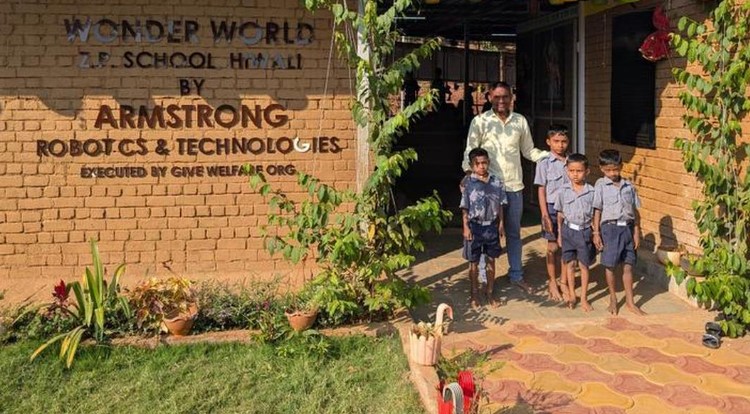
In a remote tribal hamlet of Hiwali in Tryambakeshwar taluka of Maharashtra, a government-run school is quietly rewriting what rural education can look like. The Zilla Parishad School here functions 365 days a year, for nearly 12 hours a day, offering free education, meals, and a safe space to children who would otherwise migrate seasonally with their parents. Despite severe water scarcity in the region, the school has ensured zero dropouts and full attendance, even drawing students from far-off tribal areas.
I am writing about this school because it shows how education, when designed with empathy and commitment, can address deep-rooted social problems like migration. This is not just a story about classrooms and textbooks, but about stability, dignity, and hope for tribal families. At a time when rural schools often struggle with attendance and resources, this model offers valuable lessons for policymakers, educators, and communities across India.
Where the School Is Located and Who It Serves
The Zilla Parishad School is located in Hiwali, a tribal hamlet in Tryambakeshwar taluka of Nashik district. The area is prone to seasonal migration as families move in search of work due to poor agricultural conditions and water scarcity.
The school currently educates around 60 children, many from tribal communities, some travelling up to 22 km daily. One parent has even rented a room in the village despite living over 110 km away, just to ensure uninterrupted education for his child.
How the School Prevents Migration
Seasonal migration often forces children to drop out of school. This institution tackles the problem directly by running throughout the year without breaks. There are no weekends or public holidays. Teachers and students attend daily, creating a sense of routine and stability.
By providing two meals a day, the school also reduces the financial pressure on families, making it easier for parents to keep their children enrolled even during difficult months.
Learning Beyond Textbooks
The school follows an activity-based and experiential learning model. Children are encouraged to learn through hands-on activities rather than rote memorisation. There is a strong focus on vocational training and agriculture, helping students stay connected to their local context while building practical skills.
Alongside this, students are also prepared for competitive examinations, ensuring they are not left behind academically.
Remarkable Outcomes
The results speak for themselves. The dropout rate at the school is zero. Students like six-year-old Ananya Gavit can read English textbooks meant for higher classes, write with both hands, and even recite articles from the Constitution of India.
Such achievements are rare in remote tribal settings and highlight the impact of consistent teaching and care.
Battling Water Scarcity With Commitment
Despite chronic water shortages in the region, the school continues to function smoothly. Teachers manage daily operations with limited resources, showing that determination and community involvement can overcome even basic infrastructure challenges.
The struggle for water has not diluted the school’s focus on education and student well-being.
Why This Model Matters
This school proves that education can be a powerful tool to stop migration when it addresses real-life challenges faced by families. By offering continuity, nutrition, and quality learning, it creates an environment where children can grow without disruption.
It also shows that government schools, when supported by committed teachers, can deliver transformative results.