JOIN WHATSAPP
STORIES

UPSC Preparation Guide: Why Current Affairs Matter and How to Study Them Smartly

UPSC Preparation Guide: Why Current Affairs Matter and How to Study Them Smartly

UPSC current affairs form the backbone of Civil Services Examination preparation, influencing every stage from Prelims to the Interview. Whether it is national policy, international relations, economy, environment, science, or social issues, questions are increasingly linked to what is happening around us. Aspirants are expected not just to know the news, but to understand its background, impact, and relevance to governance. This is why current affairs are no longer a separate subject but an integrated part of the UPSC syllabus.

I am writing about UPSC current affairs because many aspirants struggle with how to approach them properly. Some read too many sources and feel overwhelmed, while others ignore depth and focus only on facts. Understanding the right way to read, connect, and revise current affairs can save time and improve answer quality significantly. This article explains what to study, how to study, and why current affairs can make or break a UPSC attempt.

Why Current Affairs Are Crucial for UPSC

The Civil Services Examination conducted by the Union Public Service Commission is designed to test awareness, analytical ability, and administrative understanding. Current affairs help the commission judge whether a candidate understands real-world issues that a civil servant will face.

Almost every paper, including Essay, General Studies, and Interview, draws heavily from contemporary developments.

Role of Current Affairs in Prelims

In the Preliminary Examination, current affairs questions are often direct or indirectly linked to news events. Topics such as government schemes, international organisations, environmental conventions, science and technology developments, and economic indicators are frequently asked.

Many static subjects like polity, economy, and geography are now framed around current issues, making daily news reading essential.

Importance in Mains Examination

In the Mains examination, current affairs play an even bigger role. Questions demand analysis, opinion, and solution-based answers linked to recent developments.

Examples include:

  • Policy reforms and their impact
  • International relations and diplomacy
  • Social justice and governance challenges
  • Environmental issues and sustainability

Without current examples, even well-written answers appear incomplete.

Current Affairs and the UPSC Interview

The interview stage tests personality, awareness, and balanced thinking. Candidates are often asked questions based on their background, optional subject, and recent national or global events.

From my experience, candidates who regularly follow current affairs appear more confident and thoughtful during the personality test.

What to Focus on While Studying Current Affairs

Not every news item is relevant for UPSC. Aspirants should focus on:

  • Government policies and schemes
  • Supreme Court and constitutional developments
  • International relations involving India
  • Economic reforms and reports
  • Environmental and climate-related issues
  • Science and technology with societal impact

Entertainment and political gossip can be safely ignored.

How to Study UPSC Current Affairs Effectively

A smart approach works better than excessive reading. Aspirants should:

  • Read one reliable newspaper daily
  • Link news with static syllabus topics
  • Make short, revision-friendly notes
  • Revise weekly and monthly
  • Practise answer writing using current examples

Consistency matters more than quantity.

Common Mistakes Aspirants Make

Some common errors include reading too many sources, ignoring revision, memorising facts without understanding context, and treating current affairs as a separate subject.

Current affairs should support your core preparation, not distract from it.

How Current Affairs Improve Answer Writing

Answers enriched with current examples stand out. They show awareness, relevance, and administrative thinking. Even simple answers score better when linked to recent reports, schemes, or judgments.

Leave a Comment

End of Article

NTPC’s Project Saathi Explained: New Mental Health Support Initiative for Students and Youth

NTPC’s Project Saathi Explained: New Mental Health Support Initiative for Students and Youth

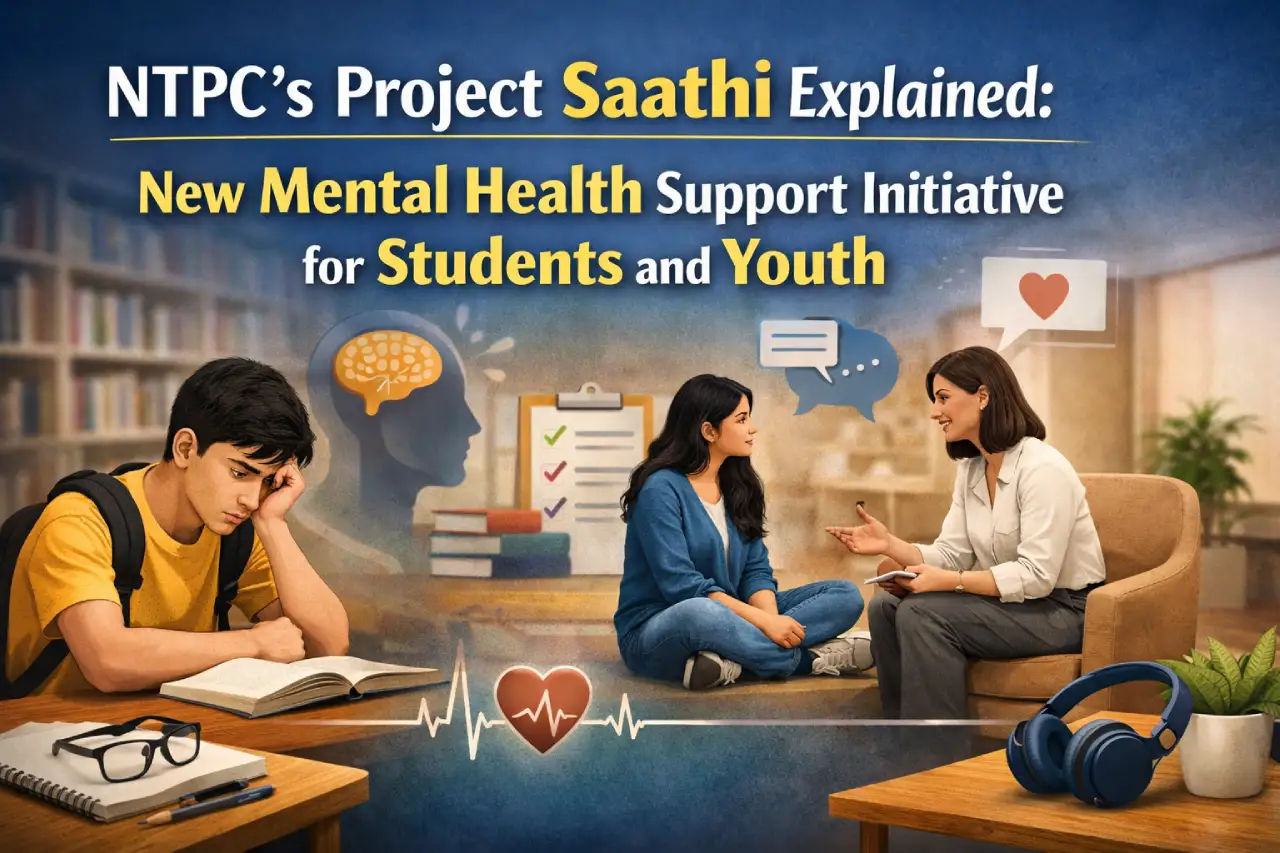
In a timely move to address growing mental health concerns among young people, NTPC has launched a new initiative in partnership with Emoneeds to make professional mental health support more accessible to students and youth. Rolled out under NTPC’s corporate social responsibility efforts, the programme focuses on awareness, early support, and practical coping strategies. Named Project Saathi, the initiative targets individuals aged 13 years and above and aims to create safe spaces where students can understand stress, emotions, and mental well-being in a structured and supportive manner.

I am writing about this initiative because mental health challenges among students are often discussed quietly, if at all. Academic pressure, exam stress, career uncertainty, and social expectations affect students across age groups, yet access to professional support remains limited. When large organisations step in with focused programmes like this, it signals that mental health is no longer a side issue. It also helps normalise conversations around emotional well-being, especially in school and college environments where such support is urgently needed.

What Project Saathi Is All About

Project Saathi is designed as a structured mental health support initiative that combines awareness with practical learning. Through interactive sessions, students are guided to better understand stress, emotional responses, and everyday mental health challenges. The focus is not only on identifying problems but also on building coping skills that students can use in daily life.

The programme is meant to be preventive as well as supportive, helping students recognise early signs of stress before they become overwhelming.

Who Is Behind the Initiative

The initiative is being implemented by NTPC in collaboration with Emoneeds, an organisation that provides care and support to people dealing with mental health issues.

By combining NTPC’s reach and CSR framework with Emoneeds’ mental health expertise, the programme aims to reach a wide and diverse group of students.

Focus on Students and Youth Aged 13 and Above

Project Saathi is open to individuals aged 13 years and above, covering school students, college students, and young adults. This age group is often at a stage where emotional stress increases but guidance is limited.

The sessions are designed to be age-appropriate and interactive, encouraging participation rather than one-way lectures.

What Students Learn Through These Sessions

According to Emoneeds, the initiative focuses on helping students:

  • Understand stress and emotional responses
  • Learn healthy coping mechanisms
  • Recognise when to seek help
  • Reduce stigma around mental health conversations

These skills are essential not just for academics but for long-term personal and professional life.

Why Corporate Support for Mental Health Matters

Mental health support in educational settings often depends on limited resources. When large organisations invest in such initiatives, it helps bridge gaps that schools and colleges may struggle to address on their own.

From my point of view, corporate-led mental health programmes can play a big role in changing attitudes, especially when they focus on awareness and early support rather than crisis-only intervention.

A Step Towards Normalising Mental Health Conversations

One of the most important aspects of Project Saathi is its focus on normalising discussions around emotions and stress. Many students hesitate to speak openly due to fear of judgement or misunderstanding.

By introducing these conversations in group settings, the initiative helps students realise that mental health challenges are common and manageable.

Long-Term Impact on Student Well-Being

If implemented consistently, programmes like Project Saathi can help students build emotional resilience at an early stage. Better awareness leads to healthier coping habits, improved focus, and reduced anxiety around studies and life decisions.

It also encourages students to seek professional help when needed, rather than ignoring warning signs.

Leave a Comment

End of Article

Loading more posts...