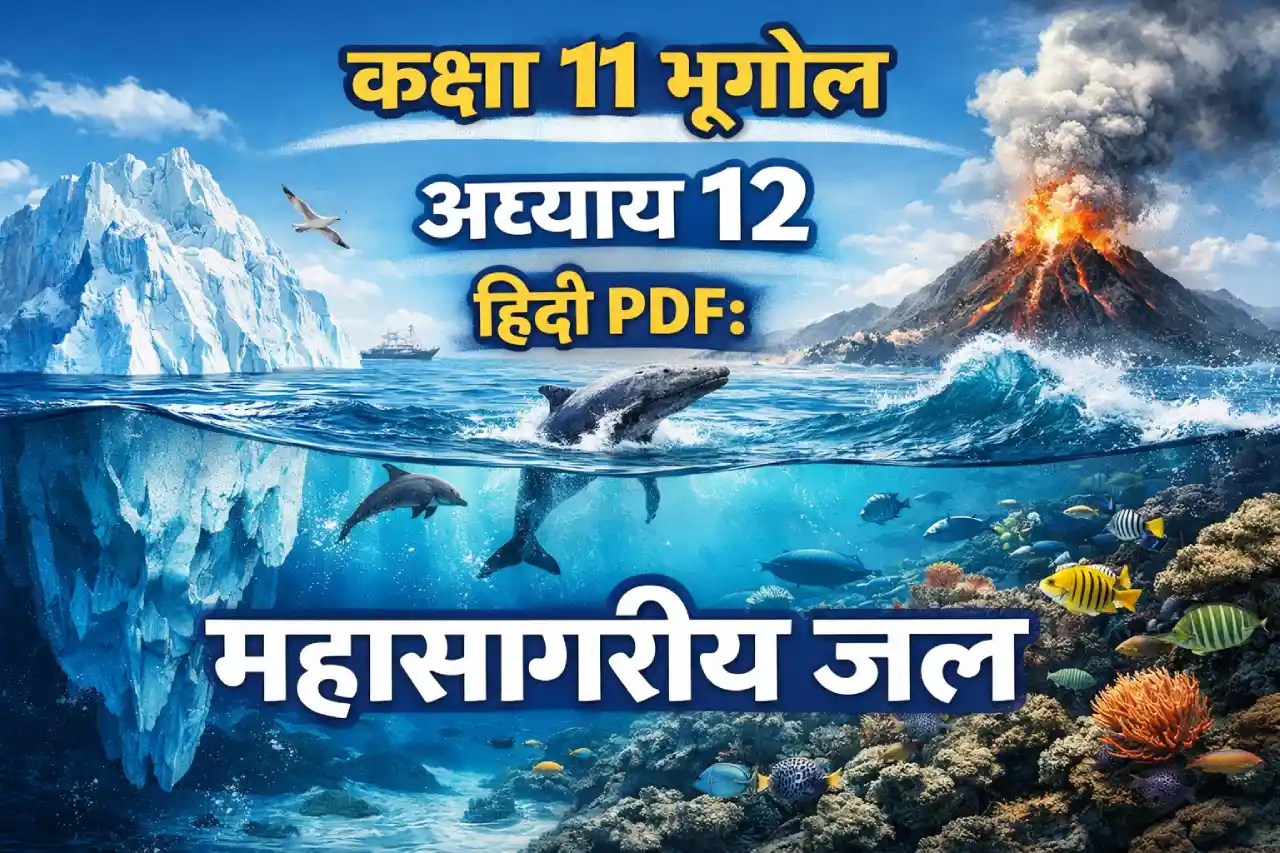
NCERT Class 11 Geography Chapter 12, महासागरीय जल, focuses on the physical characteristics and movement of ocean water. This chapter explains why oceans are not just large water bodies but active systems that influence climate, weather, marine life, and even human activities. Students learn about temperature, salinity, density, and different types of ocean movements like waves, tides, and currents, all of which play a key role in shaping the Earth’s environment.
I am writing about this chapter because many students find oceanography concepts confusing at first, especially topics like salinity variation and ocean currents. Chapter 12 simplifies these ideas by linking them with real examples such as warm and cold currents, tidal movements, and their effects on coastal regions. This chapter is important not only from an exam point of view but also for understanding how oceans regulate Earth’s climate. For Class 11 students, this topic builds a strong base for later chapters on climate, natural vegetation, and even disaster studies. Once you understand this chapter well, Geography starts to feel more logical and connected to real life.
What This Chapter Is About
Chapter 12 explains the nature of ocean water and how its properties and movements affect the Earth. It connects oceans with atmosphere, climate, and human life.
Temperature of Ocean Water
This section explains how ocean water temperature changes with:
- Latitude
- Seasons
- Depth of the ocean
Students learn why surface water is warmer and why temperature decreases as we go deeper. These concepts are often tested in short answers.
Salinity of Ocean Water
Salinity refers to the amount of dissolved salts in ocean water. The chapter explains:
- Factors affecting salinity
- Why salinity is higher in some seas
- Differences between open oceans and enclosed seas
Examples like the Red Sea and Baltic Sea help students remember answers easily.
Density of Ocean Water
Density depends on temperature and salinity. This section explains how density differences lead to vertical movement of water, which further influences ocean circulation.
Movements of Ocean Water
One of the most important parts of this chapter is ocean water movement. It is divided into three main types.
Waves
Waves are generated mainly by wind. This part explains wave height, speed, and how waves affect coastal areas.
Tides
Tides are caused by the gravitational pull of the Moon and the Sun. The chapter explains:
- High tide and low tide
- Spring tides and neap tides
- Importance of tides for ports and fishing
Ocean Currents
Ocean currents are large-scale movements of ocean water. Students learn about:
- Warm and cold currents
- Their role in climate control
- Examples like Gulf Stream and Labrador Current
This section is very important for map-based and long-answer questions.
Why Chapter 12 Is Important for Exams
Questions from this chapter usually focus on:
- Factors affecting ocean temperature and salinity
- Differences between waves, tides, and currents
- Role of ocean currents in climate
Clear diagrams and examples can help score better marks.
How to Download NCERT Class 11 Geography Chapter 12 PDF (Hindi)
Students can download the official Hindi PDF by following these steps:
- Visit the official NCERT website
- Go to the Textbooks / E-Books section
- Select Class 11
- Choose Geography
- Open Fundamentals of Physical Geography (Hindi)
- Click on Chapter 12: महासागरीय जल
- Download the PDF for free
Always use the official NCERT PDF to ensure accuracy and syllabus alignment.