JOIN WHATSAPP
STORIES

Class 11 Hindi Antra Chapter 7 PDF: उसकी माँ

Class 11 Hindi Antra Chapter 7 PDF: उसकी माँ

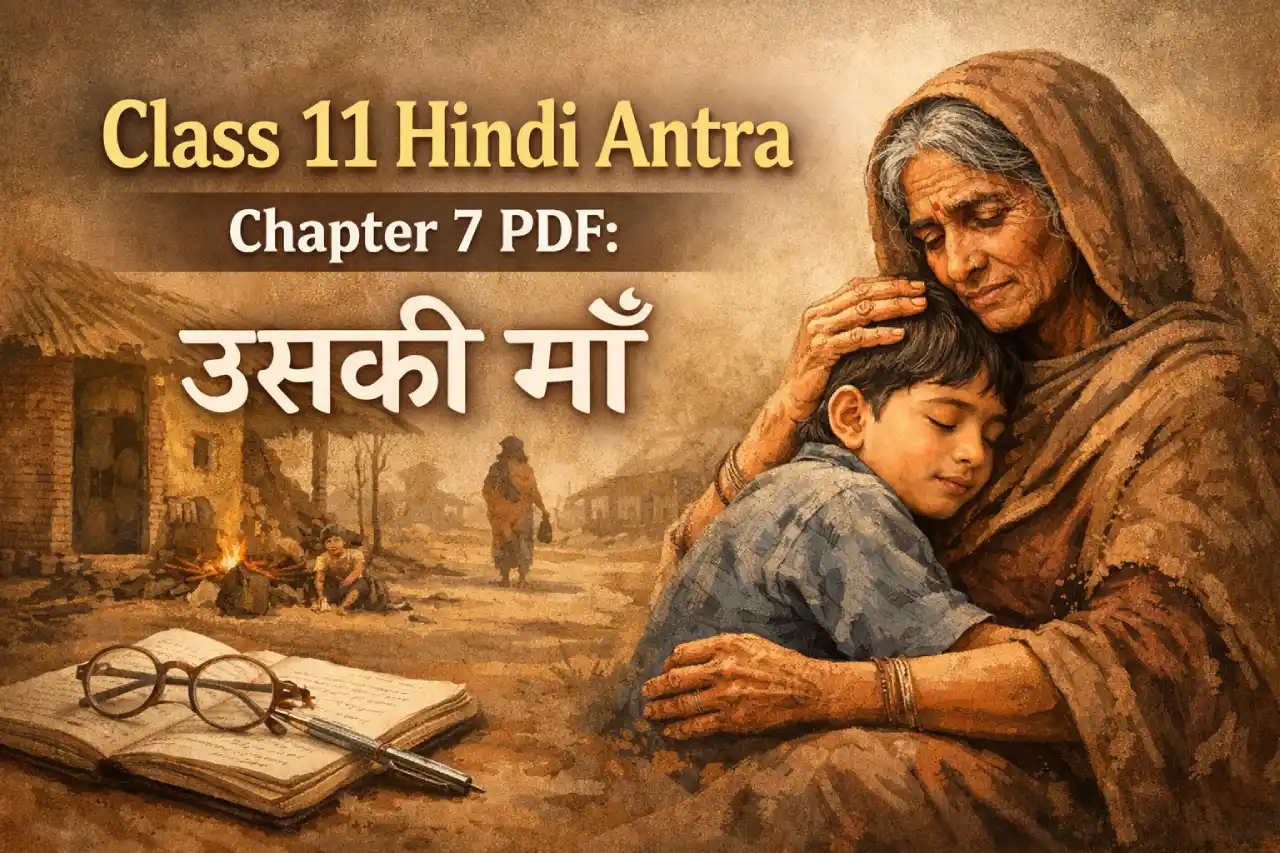
NCERT Class 11 Hindi Antra Chapter 7, उसकी माँ, is a deeply emotional lesson that explores the idea of motherhood beyond biological relationships. The chapter presents a sensitive portrayal of a woman whose life is shaped by care, sacrifice, and quiet strength. Through simple situations and restrained language, the lesson makes readers reflect on how society defines a mother and how love and responsibility often go unrecognised when they do not fit traditional labels.

I am writing about this chapter because उसकी माँ is one of those lessons that students often read quickly but remember for a long time. It does not rely on dramatic events or loud emotions. Instead, it slowly builds a picture of silent suffering and unconditional care. For students, this chapter is important not only from an exam point of view but also for understanding how literature captures everyday emotions. Many exam questions from this lesson test interpretation, character understanding, and emotional depth. If students understand the core idea clearly, writing answers becomes much easier and more natural.

What the Chapter “उसकी माँ” Is About

The chapter focuses on a woman who plays the role of a mother through her actions rather than through social or biological recognition. Her care, patience, and emotional involvement define her motherhood, even if society does not openly acknowledge it.

The story highlights:

  • Motherhood as responsibility, not just relation
  • Silent sacrifice without expectations
  • Emotional bonds formed through care and time

Central Themes Students Should Understand

To score well in exams, students should focus on these themes while reading the chapter:

  • Redefinition of motherhood
  • Emotional labour of women
  • Social neglect of unseen sacrifices
  • Strength expressed through silence

These ideas often appear in long-answer and analytical questions.

Character Portrayal and Writing Style

The language of उसकी माँ is simple, gentle, and realistic. There is no exaggeration. The author allows actions to speak louder than words. Students should remember this while writing answers and avoid dramatic language.

Key points to mention in answers include:

  • The emotional restraint of the mother figure
  • Her consistent presence in difficult moments
  • The contrast between social recognition and real care

Why This Chapter Is Important for Exams

This chapter is frequently used to test a student’s ability to:

  • Explain emotions using examples from the text
  • Understand character psychology
  • Write value-based and opinion-based answers

Students who rely only on summaries may struggle. Understanding feelings and motives is more important here.

How to Download NCERT Class 11 Hindi Antra Chapter 7 PDF

Students can download the official chapter PDF by following these steps:

Always use the official NCERT PDF to stay aligned with the latest syllabus.
Leave a Comment

End of Article

Class 11 Sanskrit Shashwati Chapter 11 PDF: नवद्रव्याणि Explained

Class 11 Sanskrit Shashwati Chapter 11 PDF: नवद्रव्याणि Explained

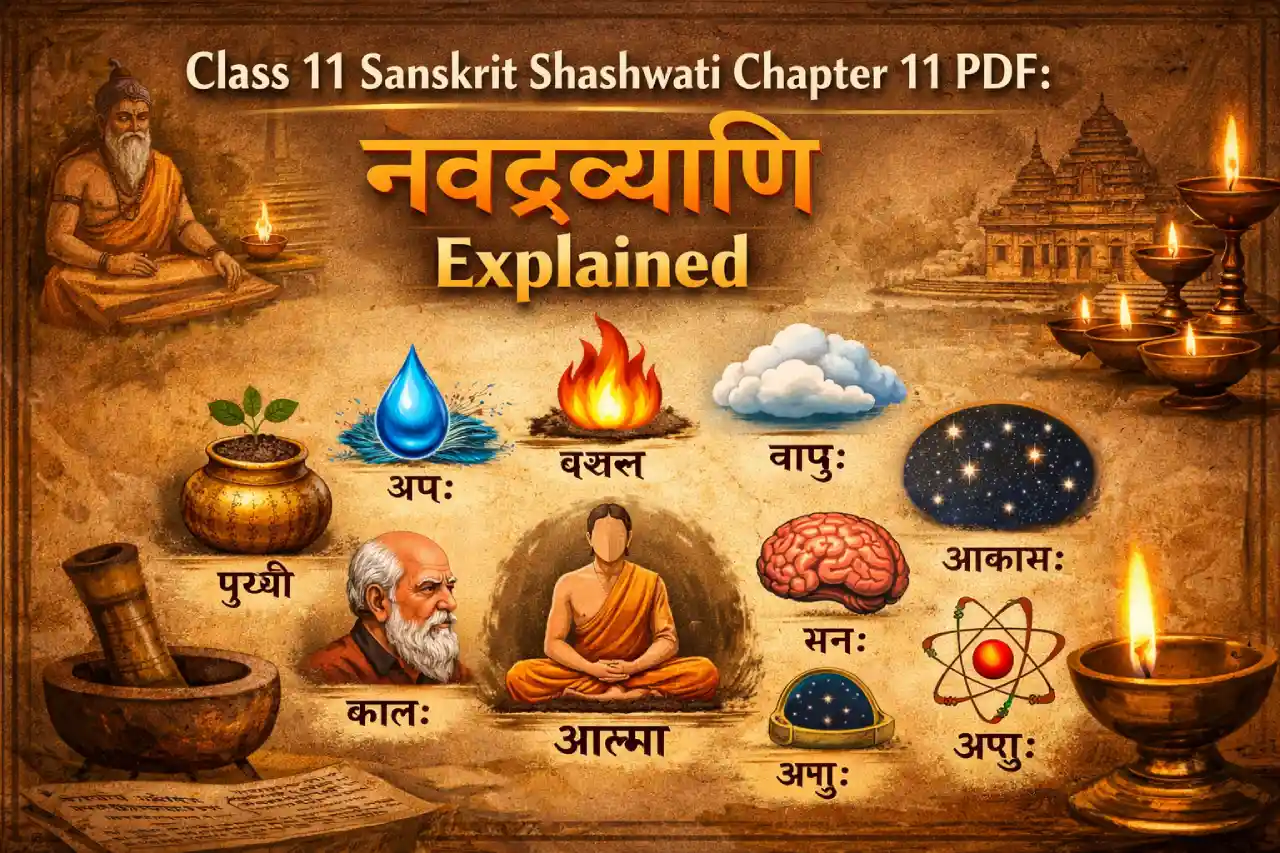
NCERT Class 11 Sanskrit Shashwati Chapter 11, titled “नवद्रव्याणि”, introduces students to an important concept from Indian philosophy—the nine fundamental substances that make up the universe. The chapter explains these elements in a simple and structured way, helping students understand how ancient thinkers tried to explain the nature of reality through observation and logic.

I am writing about this chapter because many students search for the official NCERT PDF along with a simple explanation before exams. In my experience, topics like “नवद्रव्याणि” may feel slightly abstract at first, but once you understand the list and their meanings, it becomes quite easy to remember and revise. This chapter is important not only for Sanskrit exams but also for gaining a basic idea of traditional Indian philosophy. It helps students connect language learning with deeper concepts. Studying from the official NCERT book and revising regularly can make this chapter scoring and easy to handle.

About the Chapter: नवद्रव्याणि

The term “नवद्रव्याणि” means “nine substances.” These are considered the basic elements that exist in the universe according to classical Indian thought.

The chapter explains each of these substances and their role in the functioning of the world.

The Nine Substances Explained

Here is a simple table to understand the nine dravyas:

Sanskrit TermMeaning (Simple English)
पृथ्वी (Prithvi)Earth
आपः (Apah)Water
तेजः (Tejas)Fire
वायु (Vayu)Air
आकाश (Akasha)Space
काल (Kala)Time
दिशा (Disha)Direction
आत्मा (Atma)Soul
मनः (Manas)Mind

These elements together explain the physical and non-physical aspects of existence.

Key Ideas in the Chapter

1. Understanding the Universe

The chapter explains how everything in the world is made up of basic substances.

2. Physical and Non-Physical Elements

Some substances like earth and water are physical, while others like time and soul are abstract.

3. Connection Between Mind and Body

The inclusion of “मनः” (mind) and “आत्मा” (soul) shows the importance of inner consciousness.

Why This Chapter Is Important for Students

  • Helps understand basic philosophical concepts
  • Improves Sanskrit reading and comprehension
  • Important for exam questions and explanations
  • Builds logical and conceptual thinking

Students who understand the list properly can easily score marks.

Study Tips for Chapter 11

  • Memorise the nine dravyas and their meanings
  • Understand the difference between physical and abstract elements
  • Practise writing short explanations
  • Revise regularly using a table format

This makes the chapter easier to revise before exams.

How to Download NCERT Class 11 Sanskrit Shashwati Chapter 11 PDF

Students can download the official chapter PDF from the National Council of Educational Research and Training website by following these steps:

Always use the official NCERT website to ensure you get the correct and updated version.

Leave a Comment

End of Article

Loading more posts...