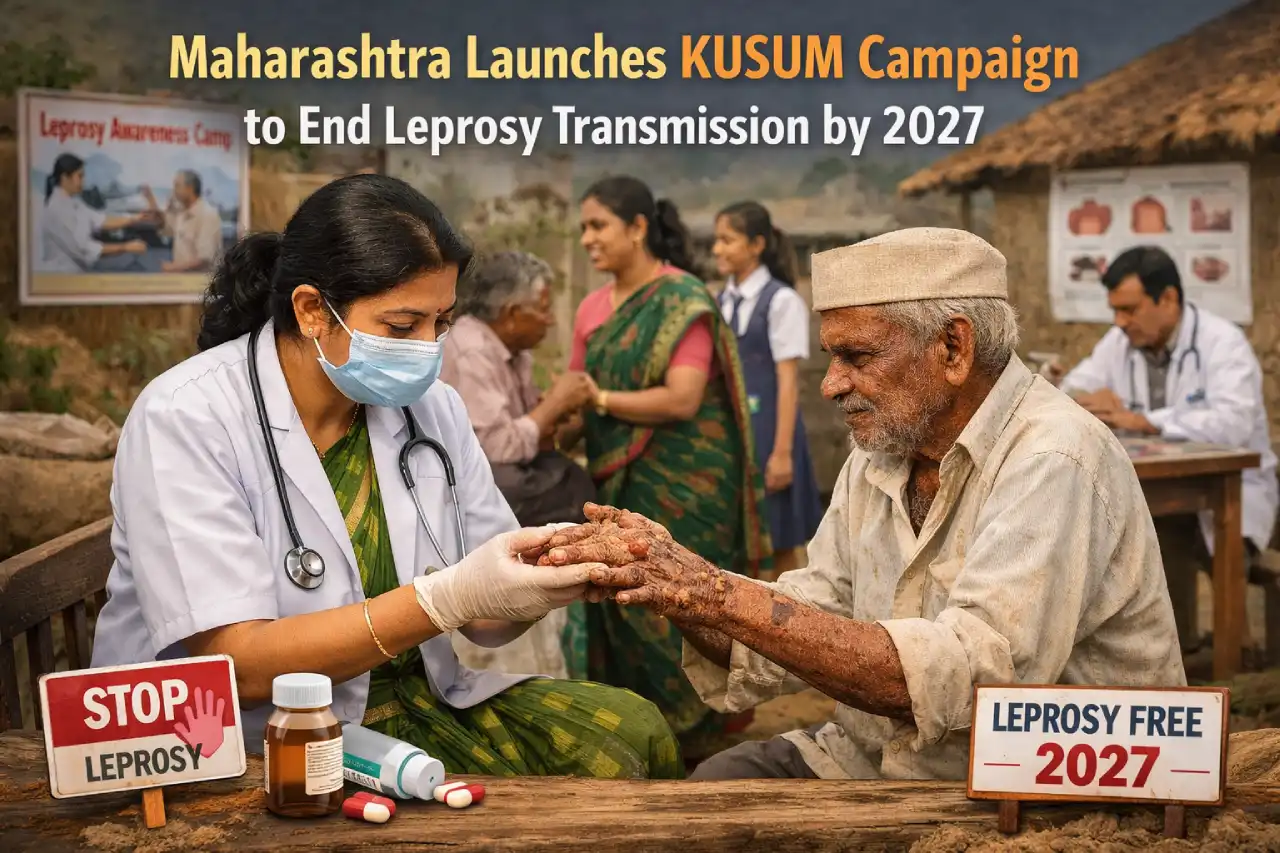
The Maharashtra Government has announced a statewide special campaign titled Kushthamukt Surakshit Maharashtra (KUSUM) to eliminate leprosy transmission by 2027. The campaign will be conducted from January 30 to February 13, 2026, covering all districts across the state. Health officials said the focus will be on early detection, timely treatment, and awareness to break the chain of transmission and reduce the social stigma associated with the disease.
I am writing about this initiative because leprosy, despite being curable, continues to persist due to delayed diagnosis and lack of awareness. Many cases still go unreported until visible complications appear. The KUSUM campaign highlights how focused public health action can make a real difference. For citizens, healthcare workers, and local administrations, understanding this drive is important because community participation plays a key role in achieving the goal of zero transmission.
What Is the KUSUM Campaign
KUSUM, short for Kushthamukt Surakshit Maharashtra, is a special time-bound campaign aimed at identifying hidden leprosy cases and ensuring immediate treatment. The drive will involve active case detection through door-to-door surveys, health camps, and screenings in high-risk areas.
The campaign is part of Maharashtra’s broader public health strategy to move from leprosy control to complete interruption of transmission.
Timeline and Coverage of the Drive
The campaign will run from January 30 to February 13, 2026, across urban and rural areas of the state. Health workers, ASHAs, and medical teams will work together to identify suspected cases and refer them for confirmation and treatment.
Special focus will be given to vulnerable communities where access to healthcare services is limited.
Importance of Early Detection and Treatment
According to Dr Rajratna Waghmare, joint director for tuberculosis and leprosy in Maharashtra, early detection and timely treatment are critical to breaking the chain of leprosy transmission. When diagnosed early, leprosy can be completely cured with multidrug therapy provided free of cost by the government.
Delayed treatment not only increases the risk of disability but also allows the infection to spread further in the community.
Role of Health Workers and Local Administration
Health workers will play a central role in the KUSUM drive. They will be trained to identify early symptoms such as numb patches on the skin and loss of sensation. Local administrations have been instructed to ensure coordination between health departments, community leaders, and voluntary organisations.
Awareness activities will also be conducted to encourage people to report symptoms without fear or hesitation.
Addressing Stigma Around Leprosy
One of the key challenges in eliminating leprosy is social stigma. Many patients hide symptoms due to fear of discrimination. The KUSUM campaign aims to address this through awareness programmes that stress that leprosy is curable and not a cause for social exclusion.
From my point of view, changing public perception is just as important as medical treatment in achieving zero transmission.
Maharashtra’s Target of Zero Transmission by 2027
With the KUSUM campaign, Maharashtra has set a clear and measurable target of achieving zero leprosy transmission by 2027. This aligns with national and global health goals aimed at eliminating neglected tropical diseases.
Officials believe that consistent surveillance, early diagnosis, and sustained awareness can help the state reach this milestone.