JOIN WHATSAPP
STORIES

Maharashtra Launches KUSUM Campaign to End Leprosy Transmission by 2027

Maharashtra Launches KUSUM Campaign to End Leprosy Transmission by 2027

The Maharashtra Government has announced a statewide special campaign titled Kushthamukt Surakshit Maharashtra (KUSUM) to eliminate leprosy transmission by 2027. The campaign will be conducted from January 30 to February 13, 2026, covering all districts across the state. Health officials said the focus will be on early detection, timely treatment, and awareness to break the chain of transmission and reduce the social stigma associated with the disease.

I am writing about this initiative because leprosy, despite being curable, continues to persist due to delayed diagnosis and lack of awareness. Many cases still go unreported until visible complications appear. The KUSUM campaign highlights how focused public health action can make a real difference. For citizens, healthcare workers, and local administrations, understanding this drive is important because community participation plays a key role in achieving the goal of zero transmission.

What Is the KUSUM Campaign

KUSUM, short for Kushthamukt Surakshit Maharashtra, is a special time-bound campaign aimed at identifying hidden leprosy cases and ensuring immediate treatment. The drive will involve active case detection through door-to-door surveys, health camps, and screenings in high-risk areas.

The campaign is part of Maharashtra’s broader public health strategy to move from leprosy control to complete interruption of transmission.

Timeline and Coverage of the Drive

The campaign will run from January 30 to February 13, 2026, across urban and rural areas of the state. Health workers, ASHAs, and medical teams will work together to identify suspected cases and refer them for confirmation and treatment.

Special focus will be given to vulnerable communities where access to healthcare services is limited.

Importance of Early Detection and Treatment

According to Dr Rajratna Waghmare, joint director for tuberculosis and leprosy in Maharashtra, early detection and timely treatment are critical to breaking the chain of leprosy transmission. When diagnosed early, leprosy can be completely cured with multidrug therapy provided free of cost by the government.

Delayed treatment not only increases the risk of disability but also allows the infection to spread further in the community.

Role of Health Workers and Local Administration

Health workers will play a central role in the KUSUM drive. They will be trained to identify early symptoms such as numb patches on the skin and loss of sensation. Local administrations have been instructed to ensure coordination between health departments, community leaders, and voluntary organisations.

Awareness activities will also be conducted to encourage people to report symptoms without fear or hesitation.

Addressing Stigma Around Leprosy

One of the key challenges in eliminating leprosy is social stigma. Many patients hide symptoms due to fear of discrimination. The KUSUM campaign aims to address this through awareness programmes that stress that leprosy is curable and not a cause for social exclusion.

From my point of view, changing public perception is just as important as medical treatment in achieving zero transmission.

Maharashtra’s Target of Zero Transmission by 2027

With the KUSUM campaign, Maharashtra has set a clear and measurable target of achieving zero leprosy transmission by 2027. This aligns with national and global health goals aimed at eliminating neglected tropical diseases.

Officials believe that consistent surveillance, early diagnosis, and sustained awareness can help the state reach this milestone.

Leave a Comment

End of Article

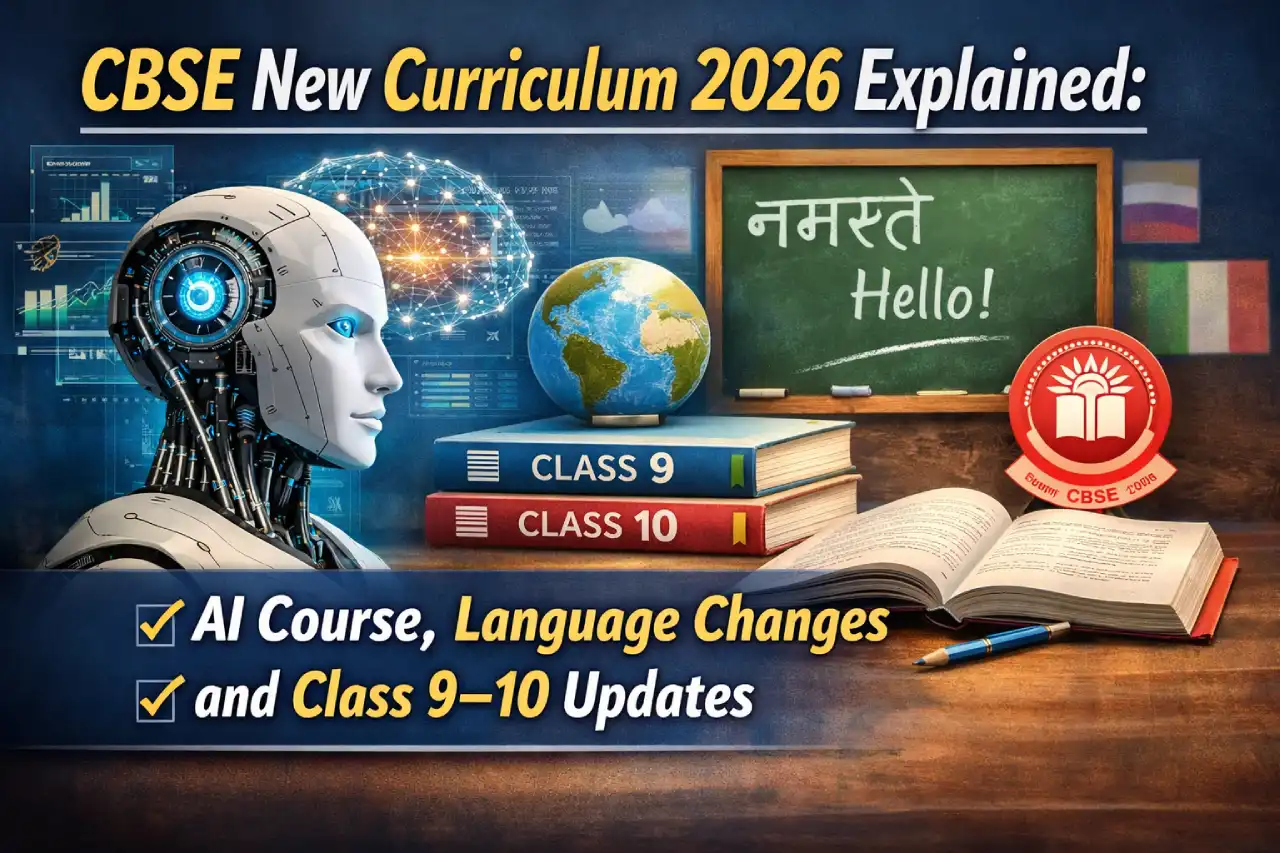
CBSE New Curriculum 2026 Explained: AI Course, Language Changes and Class 9–10 Updates

CBSE New Curriculum 2026 Explained: AI Course, Language Changes and Class 9–10 Updates

The Central Board of Secondary Education (CBSE) has introduced a major overhaul in its curriculum, which will be implemented in phases over the coming years. The new framework brings in several important changes, including the introduction of Artificial Intelligence (AI) and Computational Thinking (CT) as a compulsory subject from Class 9, a revised three-language system starting from Class 6, and optional advanced-level assessments in Mathematics and Science for Class 10 students. These reforms are aligned with the National Education Policy (NEP) 2020 and the National Curriculum Framework (NCF) 2023.

I am writing about this update because it directly affects lakhs of students, parents, and teachers across the country. From what I can see, these changes are not just about adding new subjects but about changing how students learn and think. With technology becoming a core part of education and careers, understanding these updates early can help students prepare better. It is also important for parents to know how the system is evolving so they can guide their children in the right direction.

What is Changing in the CBSE Curriculum

CBSE has redesigned the curriculum to make it more practical, skill-based, and future-ready. The focus is shifting from rote learning to conceptual understanding and real-world application.

Here are the major highlights:

  • Introduction of AI and Computational Thinking
  • New three-language system with proficiency levels
  • Optional advanced assessments in Class 10
  • Compulsory inclusion of art, physical education, and vocational subjects
  • Focus on interdisciplinary learning

These changes will not happen overnight but will be rolled out step by step.

AI and Computational Thinking from Class 9

One of the biggest updates is the introduction of AI and Computational Thinking as a compulsory subject.

  • This will begin from the 2027–28 academic session
  • Students will first appear for board exams in this subject in 2029
  • Textbooks for Class 9 are currently being prepared
  • AI learning has already been introduced for Classes 3 to 8 in a structured way

From my perspective, this is a much-needed step because digital skills are becoming essential in almost every field.

New Language System Explained

CBSE is restructuring language education through a three-language formula with different proficiency levels:

  • R1 – Highest level of proficiency
  • R2 – Intermediate level
  • R3 – Basic level

Key updates include:

  • A compulsory third language from Class 6 starting 2026–27
  • R3-level textbooks will be introduced first in Class 6
  • Students will gradually progress with this structure till Class 10
  • First board exam under this system will be in 2031

For students currently entering Class 9, revised R1 and R2 textbooks will be used, with the first board exams in 2028.

Optional Advanced Mathematics and Science

CBSE is also giving students the option to go deeper into subjects they are interested in.

  • Students can choose Advanced Mathematics, Advanced Science, both, or neither
  • Additional study material and higher-order questions will be provided
  • A separate one-hour assessment will be conducted after Class 10
  • Students scoring around 50% or more will get it mentioned in their mark sheet
  • No penalty if a student does not clear the advanced paper

The first batch for this advanced assessment will appear in 2028.

Compulsory Subjects for Holistic Development

The new curriculum also focuses on overall student development, not just academics.

The following subjects will now be compulsory:

  • Art Education
  • Physical Education and Wellbeing
  • Vocational Education
  • Interdisciplinary Studies

These will mainly be assessed through internal evaluations rather than board exams.

Expansion of Language Options

CBSE is also widening language choices for students.

New languages introduced at Class 9 level include:

  • Maithili
  • Santhali
  • Dogri
  • Konkani

This move ensures that more regional languages listed in the Constitution are available for students to study.

Implementation Timeline at a Glance

FeatureTimeline
Third Language (Class 6)2026–27
AI & CT (Class 9)2027–28
First AI Board Exam2029
Advanced Subject Assessment2028
New Language System Board Exam2031

What This Means for Students

In my opinion, this curriculum shift is clearly aimed at preparing students for the future. Instead of focusing only on marks, the system is encouraging skills, flexibility, and deeper understanding.

Students should:

  • Start getting comfortable with technology and logical thinking
  • Focus on understanding concepts instead of memorising
  • Explore subjects based on interest, especially advanced options
  • Take internal assessments seriously

Parents and teachers also need to adapt to this new approach and support students during the transition.

Leave a Comment

End of Article

Loading more posts...

Important Video