JOIN WHATSAPP
STORIES

Career Planning vs Job Hunting Explained: Simple Guide for Students and Freshers

Career Planning vs Job Hunting Explained: Simple Guide for Students and Freshers

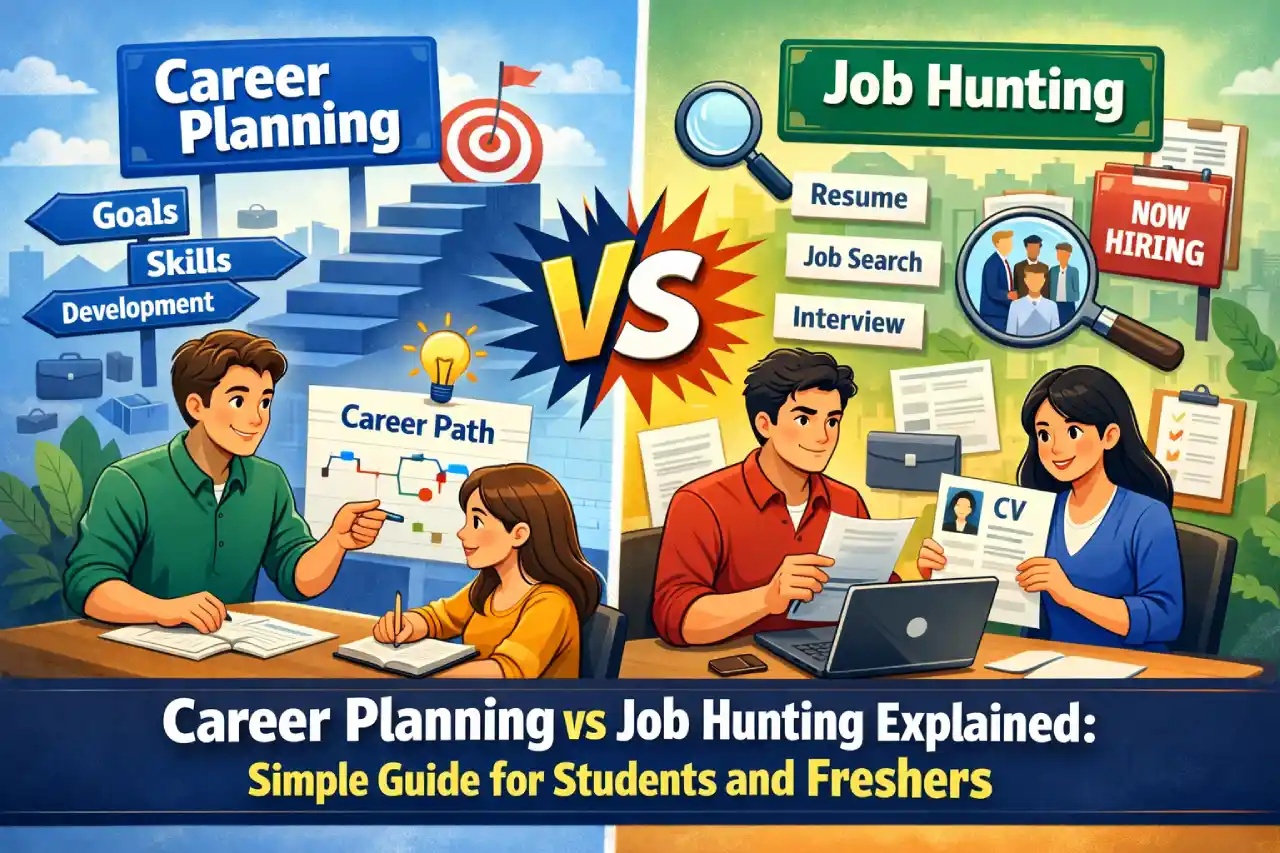
Many people use the terms “career planning” and “job hunting” as if they mean the same thing. But in reality, they are very different. Career planning is about deciding where you want to go in the long run, while job hunting is about finding a job right now. Understanding this difference can save you from confusion, stress and wrong decisions.

I am writing about this because I often see students and freshers rushing into job applications without a clear career plan. They focus only on getting a job, not on building a meaningful career. If you understand how career planning and job hunting work together, you can make smarter choices and avoid feeling stuck later.

What Is Career Planning

Career planning is the process of deciding what kind of professional life you want in the long term. It is about setting goals and creating a roadmap to achieve them.

In simple terms, career planning answers questions like:

  • What kind of work do I enjoy
  • What skills do I want to develop
  • Where do I see myself in five or ten years
  • What qualifications do I need

It is a long-term process, not something you do in one day.

What Is Job Hunting

Job hunting is the process of searching and applying for jobs. It usually happens after you finish your studies or when you want to change your job.

Job hunting includes:

  • Preparing a resume
  • Searching for vacancies
  • Applying for jobs
  • Attending interviews
  • Negotiating salary

It is more immediate and short-term compared to career planning.

Career Planning vs Job Hunting: Key Differences

Here is a simple comparison:

Career Planning

  • Long-term focus
  • Based on interests and goals
  • Involves skill development
  • Strategic thinking

Job Hunting

  • Short-term focus
  • Based on available vacancies
  • Involves applications and interviews
  • Immediate action

Both are important, but they serve different purposes.

Why Career Planning Comes First

If you start job hunting without career planning, you may:

  • Accept a job that does not match your interests
  • Feel unhappy after a few months
  • Keep changing jobs without direction

When you plan your career first, you choose jobs that align with your long-term goals.

From my experience, people who plan their careers early feel more confident and satisfied with their professional journey.

How to Start Career Planning

Here are simple steps:

  • Identify your strengths and weaknesses
  • Understand your interests
  • Research career options
  • Set short-term and long-term goals
  • Learn required skills

This does not mean everything must be fixed. You can adjust your plan as you grow.

How to Approach Job Hunting Smartly

Once you have a career plan, your job hunting becomes focused.

  • Apply for roles that match your goals
  • Customise your resume for each job
  • Prepare well for interviews
  • Learn from rejections

Job hunting should support your career plan, not replace it.

Common Mistakes to Avoid

  • Choosing a job only for salary
  • Following friends without thinking
  • Ignoring skill development
  • Expecting quick success

Career growth takes time and patience.

When Career Planning and Job Hunting Work Together

The best situation is when:

  • You know what career path you want
  • You search for jobs that fit that path
  • You continuously upgrade your skills

This balance leads to steady progress.

Leave a Comment

End of Article

Career vs Job Explained Clearly: Key Differences, Examples and How to Choose the Right Path

Career vs Job Explained Clearly: Key Differences, Examples and How to Choose the Right Path

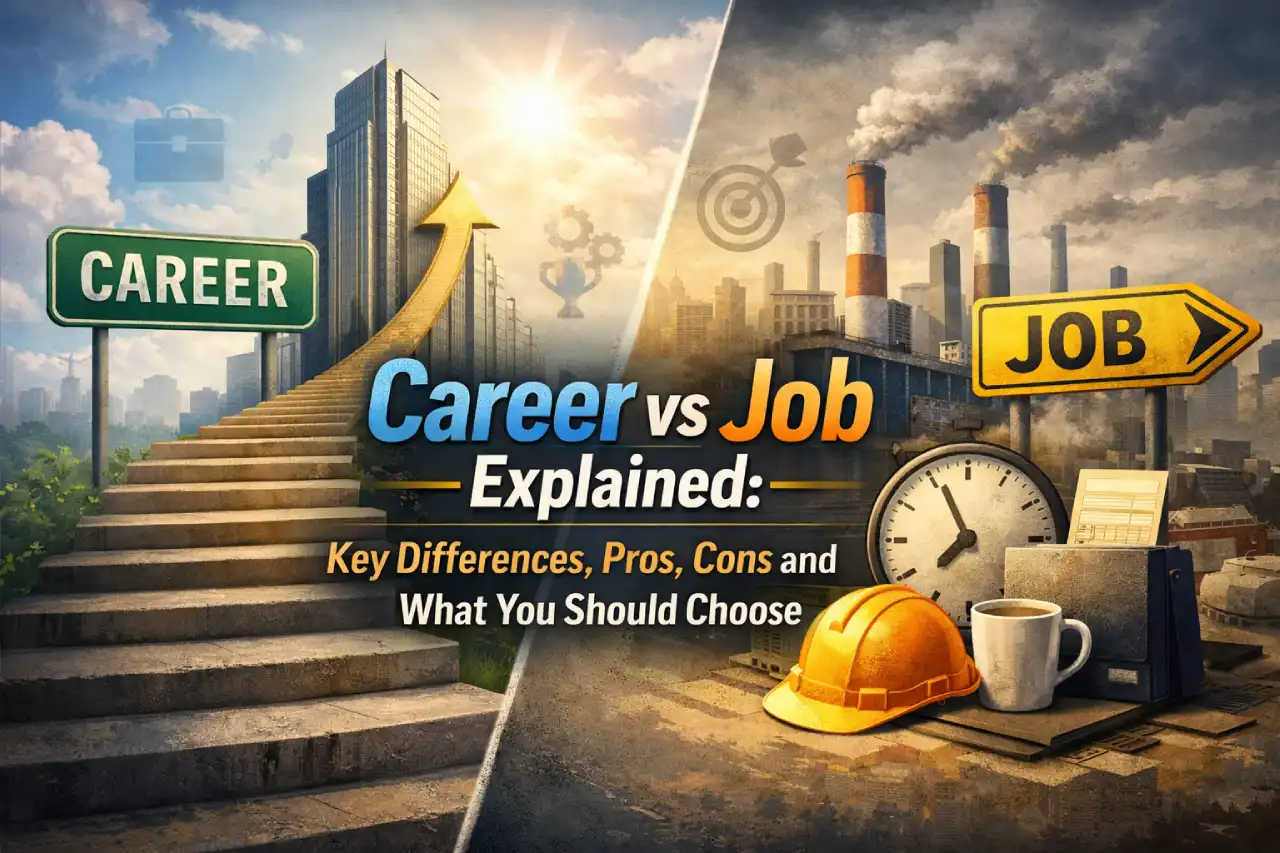
If you are confused between a job and a career, you are not alone. Many people use these two words interchangeably, but they actually mean different things. A job is something you do to earn money, usually for a short-term purpose, while a career is a long-term journey built around your skills, interests, and goals. Understanding this difference is important, especially if you are planning your future or thinking about what you really want to achieve in life.

I am writing about this because I have seen many students and even working professionals struggle with this confusion. Some people jump from one job to another without direction, while others feel stuck because they are not sure what they are working towards. Knowing the difference between a job and a career can help you make better decisions, stay focused, and build a path that gives both financial stability and personal satisfaction.

What is a Job

A job is a role where you work for a company or organisation in exchange for money.

Key features of a job:

  • Short-term focus
  • Mainly done to earn income
  • Limited connection with long-term goals
  • Fixed responsibilities
  • Less emphasis on growth or passion

For example, working as a cashier, delivery executive, or temporary office assistant can be considered a job.

What is a Career

A career is a long-term professional journey where you grow, learn, and build your identity over time.

Key features of a career:

  • Long-term vision
  • Focus on growth and development
  • Connected with your interests and skills
  • Offers progression and opportunities
  • Builds expertise over time

For example, becoming a teacher, engineer, doctor, or writer is part of a career path.

Career vs Job: Key Differences

Here is a simple comparison to understand the difference clearly:

AspectJobCareer
DurationShort-termLong-term
PurposeEarn moneyBuild future
GrowthLimitedContinuous
MotivationSalaryPassion + growth
StabilityTemporaryMore stable over time

From my perspective, a job can be a part of your career, but not every job leads to a meaningful career.

Can a Job Become a Career

Yes, a job can turn into a career if you approach it with the right mindset.

  • If you learn new skills in your job
  • If you grow within the same field
  • If you set long-term goals

For example, starting as a junior employee and growing into a manager or expert can turn a job into a career.

Why Understanding the Difference Matters

Knowing the difference can help you:

  • Make better career decisions
  • Avoid feeling lost or stuck
  • Choose jobs that align with your goals
  • Plan your future more effectively

In my opinion, this clarity can save you years of confusion and frustration.

How to Choose Between a Job and a Career

If you are just starting out, it is okay to take a job. But over time, you should think about building a career.

Ask yourself:

  • What are my interests and strengths
  • Where do I see myself in 5 or 10 years
  • Am I learning something valuable in my current role
  • Does this job help me grow

Your answers will guide your decisions.

Common Mistakes People Make

Many people unknowingly make these mistakes:

  • Choosing jobs only based on salary
  • Not planning long-term goals
  • Ignoring skill development
  • Staying in comfort zones for too long

From what I have seen, avoiding these mistakes can make a big difference in your journey.

Tips to Build a Strong Career

If you want to move from a job mindset to a career mindset, here are some simple tips:

  • Keep learning and upgrading your skills
  • Set clear long-term goals
  • Network with people in your field
  • Take calculated risks
  • Stay consistent and patient

Building a career takes time, but it is worth the effort.

Leave a Comment

End of Article

Loading more posts...