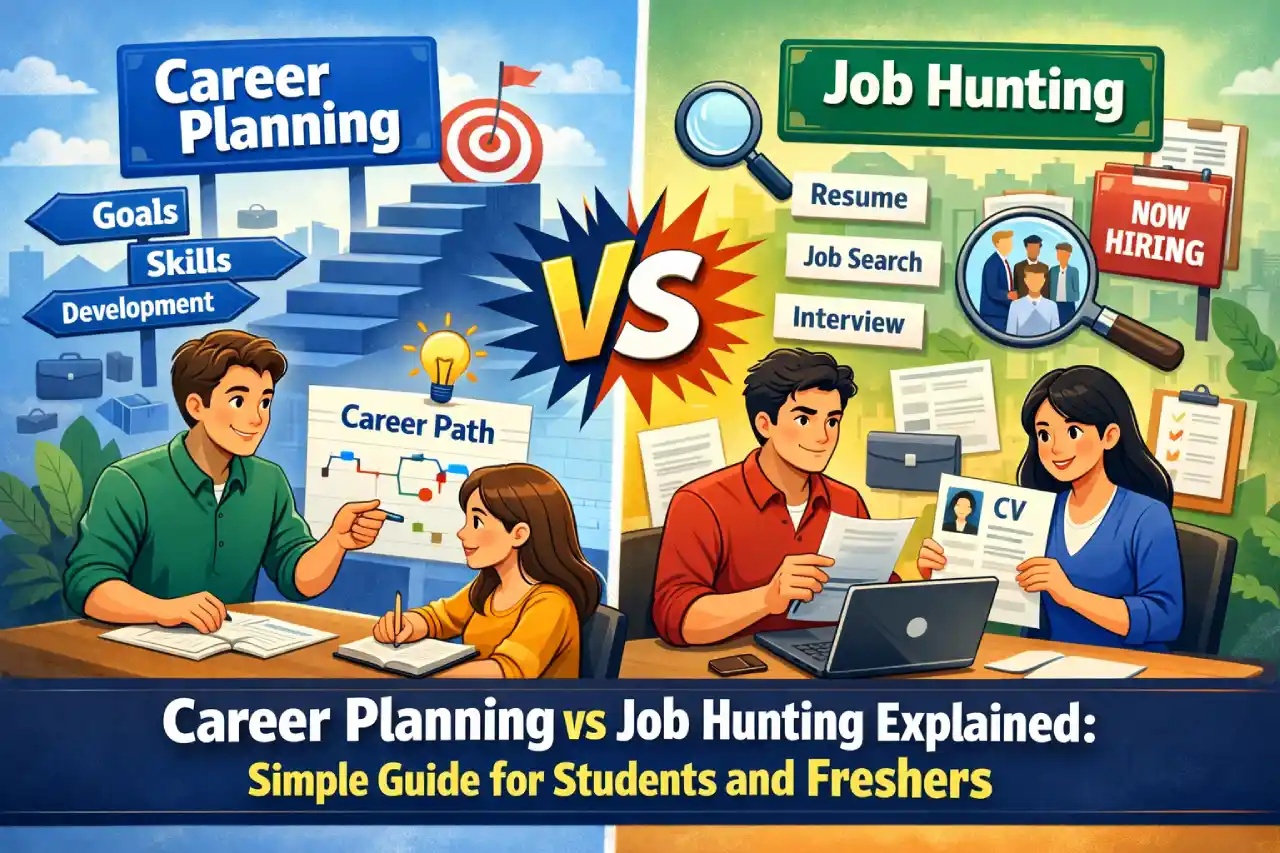
Many people use the terms “career planning” and “job hunting” as if they mean the same thing. But in reality, they are very different. Career planning is about deciding where you want to go in the long run, while job hunting is about finding a job right now. Understanding this difference can save you from confusion, stress and wrong decisions.
I am writing about this because I often see students and freshers rushing into job applications without a clear career plan. They focus only on getting a job, not on building a meaningful career. If you understand how career planning and job hunting work together, you can make smarter choices and avoid feeling stuck later.
What Is Career Planning
Career planning is the process of deciding what kind of professional life you want in the long term. It is about setting goals and creating a roadmap to achieve them.
In simple terms, career planning answers questions like:
- What kind of work do I enjoy
- What skills do I want to develop
- Where do I see myself in five or ten years
- What qualifications do I need
It is a long-term process, not something you do in one day.
What Is Job Hunting
Job hunting is the process of searching and applying for jobs. It usually happens after you finish your studies or when you want to change your job.
Job hunting includes:
- Preparing a resume
- Searching for vacancies
- Applying for jobs
- Attending interviews
- Negotiating salary
It is more immediate and short-term compared to career planning.
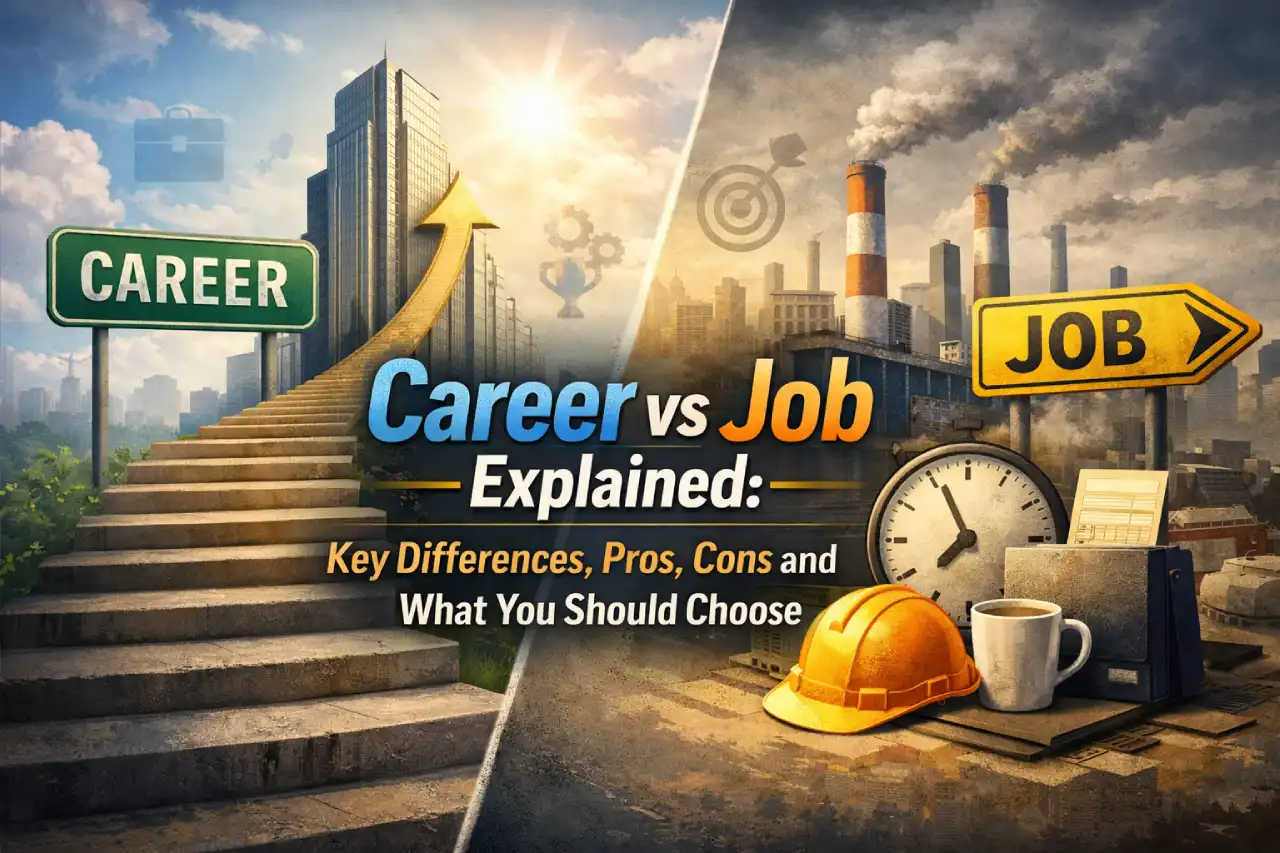
Career Planning vs Job Hunting: Key Differences
Here is a simple comparison:
Career Planning
- Long-term focus
- Based on interests and goals
- Involves skill development
- Strategic thinking
Job Hunting
- Short-term focus
- Based on available vacancies
- Involves applications and interviews
- Immediate action
Both are important, but they serve different purposes.
Why Career Planning Comes First
If you start job hunting without career planning, you may:
- Accept a job that does not match your interests
- Feel unhappy after a few months
- Keep changing jobs without direction
When you plan your career first, you choose jobs that align with your long-term goals.
From my experience, people who plan their careers early feel more confident and satisfied with their professional journey.
How to Start Career Planning
Here are simple steps:
- Identify your strengths and weaknesses
- Understand your interests
- Research career options
- Set short-term and long-term goals
- Learn required skills
This does not mean everything must be fixed. You can adjust your plan as you grow.
How to Approach Job Hunting Smartly
Once you have a career plan, your job hunting becomes focused.
- Apply for roles that match your goals
- Customise your resume for each job
- Prepare well for interviews
- Learn from rejections
Job hunting should support your career plan, not replace it.
Common Mistakes to Avoid
- Choosing a job only for salary
- Following friends without thinking
- Ignoring skill development
- Expecting quick success
Career growth takes time and patience.
When Career Planning and Job Hunting Work Together
The best situation is when:
- You know what career path you want
- You search for jobs that fit that path
- You continuously upgrade your skills
This balance leads to steady progress.