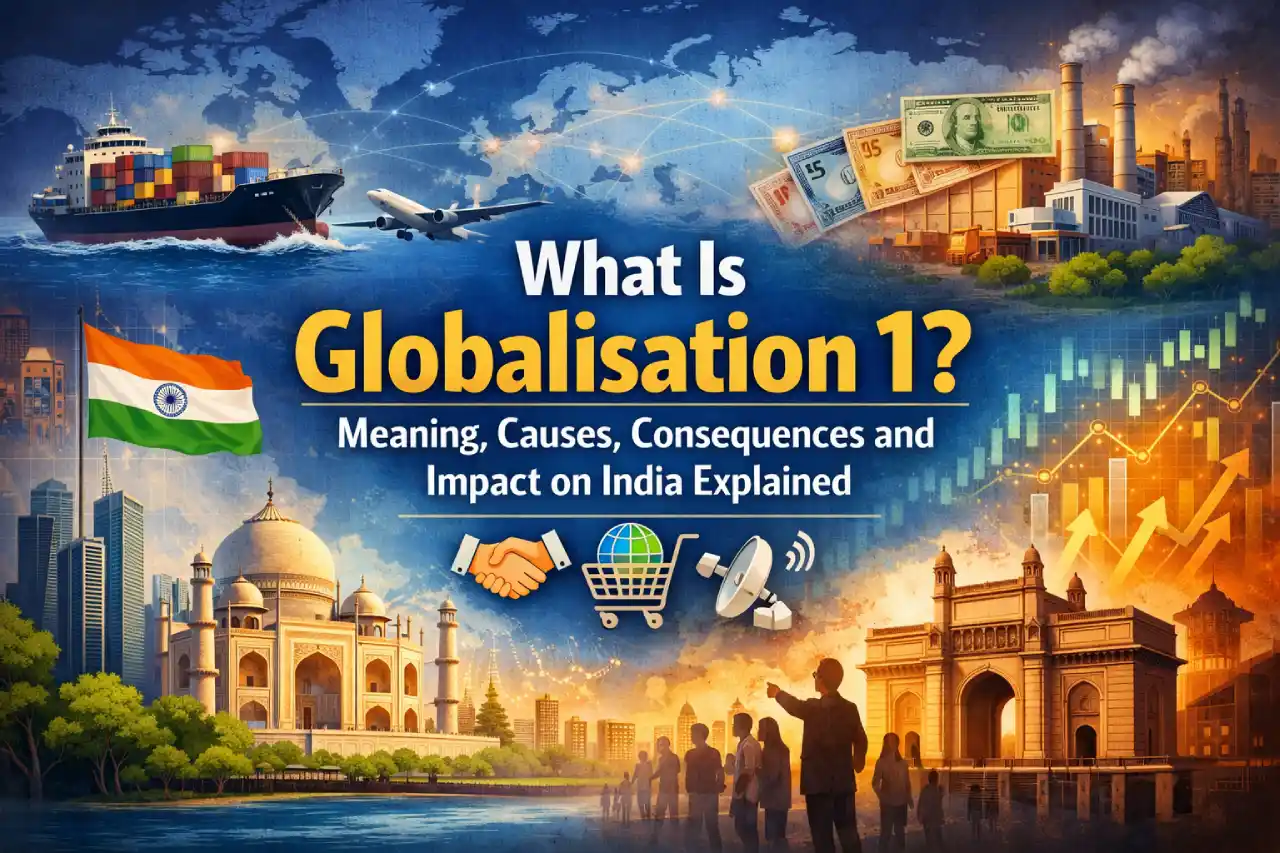
Globalisation has become one of the most important developments in the modern world. It refers to the growing interconnectedness between countries through trade, technology, ideas, culture, and movement of people. In today’s world, goods produced in one country are sold in another, companies operate across continents, and information travels instantly through digital networks. Because of these rapid connections, the boundaries between national economies and societies have become less rigid, making globalisation a key feature of contemporary international relations.
I am writing about this topic because many students and readers often hear the word globalisation but struggle to understand what it actually means and why it matters. Globalisation affects daily life in many ways—from the brands we use and the jobs people do to the policies governments adopt. Understanding globalisation helps explain how economic reforms, technological advancement, and international cooperation have transformed the global economy and reshaped societies across the world, including India.
What Is Globalisation?
Globalisation refers to the process through which countries become increasingly connected and interdependent. It involves the flow of goods, services, capital, technology, ideas, and people across national borders.
In simple terms, globalisation means that events in one country can influence economic, cultural, or political developments in another. This growing interconnection has been made possible mainly because of improved communication systems, faster transport, and liberal economic policies.
Globalisation usually includes several types of flows:
- Movement of goods and services through international trade
- Flow of capital through foreign investments
- Exchange of ideas and information through technology and media
- Movement of people for employment, education, or migration
Because it involves economic, political, and cultural dimensions simultaneously, globalisation is often described as a multi-dimensional process.
Causes of Globalisation
Globalisation did not happen suddenly. It developed gradually due to several important factors that increased global interaction and cooperation.
Technological Advancement
One of the most significant drivers of globalisation has been technological progress. Innovations in communication and transport have reduced the distance between countries.
Some important technological developments include:
- The internet and digital communication
- Email and mobile communication systems
- Satellite television and global media networks
- Faster air transport and shipping systems
These technologies allow businesses, governments, and individuals to communicate and operate globally with ease.
Economic Liberalisation
Another important factor behind globalisation is economic liberalisation. Many countries have reduced restrictions on trade, investment, and business operations.
Economic reforms encourage:
- Free trade between countries
- Entry of multinational companies into domestic markets
- Reduction of import duties and trade barriers
Such policies help integrate national economies into the global economic system.
Role of International Institutions
International organisations also play a major role in shaping global economic policies and promoting international cooperation.
Some important global economic institutions include:
- World Trade Organization (WTO)
- International Monetary Fund (IMF)
- World Bank
These organisations encourage countries to participate in global trade and maintain stable economic systems.
Download this B-1 Globalisation WS 1 PDF File: Click Here
Economic Consequences of Globalisation
Globalisation has brought several economic changes around the world.
Some important economic impacts include:
- Growth of international trade
- Increase in foreign direct investment
- Expansion of multinational corporations
- Greater economic cooperation among countries
Many developing countries have benefited from global markets and increased investment opportunities.
However, critics argue that globalisation may also increase economic inequality and create challenges for small domestic industries that cannot compete with large multinational companies.
Cultural Consequences of Globalisation
Globalisation has influenced cultures across the world by increasing the exchange of ideas, traditions, and lifestyles.
Some cultural impacts include:
- Spread of international brands and consumer culture
- Greater exposure to global media and entertainment
- Exchange of food habits, fashion trends, and cultural practices
One important concept related to cultural globalisation is cultural homogenisation, which means that cultures around the world may start becoming more similar due to global influences.
At the same time, globalisation can also lead to cultural diversity, as societies blend global ideas with local traditions and create new cultural expressions.
Political Consequences of Globalisation
Globalisation has also changed the nature of political decision-making and governance.
Some important political consequences include:
- Increasing influence of international organisations
- Greater cooperation among governments
- Expansion of international treaties and agreements
- Changes in the role and authority of national governments
While nation-states continue to remain important, globalisation has encouraged countries to coordinate policies on economic and environmental issues.
Resistance to Globalisation
Despite its advantages, globalisation has also faced criticism and resistance from various groups across the world.
Some major concerns raised by critics include:
- Globalisation may increase economic inequality
- Local industries and small businesses may suffer
- Cultural traditions may be threatened by foreign influences
- Governments may lose control over economic policies
Many civil society groups, trade unions, and social movements have organised protests and campaigns to highlight these concerns.
Impact of Globalisation on India
India has experienced significant changes due to globalisation, particularly after economic reforms were introduced in the early 1990s.
Some positive impacts include:
- Rapid growth of the information technology sector
- Expansion of international trade and investment
- Growth of service industries such as call centres and IT services
- Greater access to global markets and technologies
However, globalisation has also created challenges such as economic inequality, competition for domestic industries, and cultural debates regarding Western influence.
Despite these challenges, globalisation has played an important role in shaping India’s economic development and global engagement.