JOIN WHATSAPP
STORIES

Centre and State Must Increase Education Funding, Says VIT Chancellor

Centre and State Must Increase Education Funding, Says VIT Chancellor

Education is the backbone of any country’s growth, and according to VIT Chancellor Dr G. Viswanathan, India is still not spending enough on it. While speaking at an event in Tamil Nadu, he stressed that both Centre and State governments must urgently increase their fund allocation towards education. He argued that the current spending—around 2.9% of GDP—is far below the global average and inadequate for a country aiming to become a global knowledge hub.

I decided to write about this topic because the demand for more education funding is not new, but it’s becoming more relevant than ever. India has a growing young population, but not enough investment is being made to ensure quality education for all. The infrastructure in many government schools is poor, teachers are underpaid, and public universities struggle with outdated resources. When someone as experienced as Dr Viswanathan raises this point, it reflects the concerns of educators across the country. Without strong investment from both levels of government, we risk leaving millions of students behind—especially in rural areas.

Why More Funds Are Needed in Education

India currently spends less than 3% of its GDP on education, whereas the National Education Policy (NEP) 2020 recommends increasing it to 6%. This gap between intention and actual spending is huge. For comparison:

  • Finland spends over 6.5% of its GDP on education
  • Brazil and South Africa both allocate around 6%
  • Even smaller nations like Vietnam invest nearly 5.5%

Dr Viswanathan’s point is simple: without enough money, no reforms can work on the ground. Teachers need training, schools need smart classrooms, and students need scholarships. All of this requires budgetary support.

Current Challenges That Need Funding

Several areas in India’s education system require immediate financial attention:

  • Basic school infrastructure – Many government schools still lack toilets, electricity, or clean drinking water
  • Digital divide – Online learning is inaccessible for lakhs of rural students due to lack of devices or internet
  • Higher education quality – Public universities are underfunded, which affects research and learning outcomes
  • Teacher training and salaries – Most teachers, especially in primary schools, are underpaid and undertrained

Without proper investment, these gaps will only widen and affect India’s future workforce.

Centre vs State: Who Should Spend More?

Both Centre and State governments have responsibilities under the Concurrent List in the Constitution. However, most of the education budget comes from State governments, while the Centre provides schemes like:

  • Samagra Shiksha Abhiyan
  • PM Poshan (mid-day meals)
  • Scholarship programs under the Ministry of Education

Dr Viswanathan suggests that the Centre should also increase its share and play a stronger role, especially in funding higher education, research, and the digital transformation of learning.

How This Can Make a Real Difference

If the government increases funding:

  • More students in rural areas can access quality learning
  • Public colleges can invest in better labs, libraries, and faculty
  • EdTech tools can be provided in regional languages across states
  • Students from poor backgrounds can continue education without dropping out due to financial stress

These are not big dreams, but basic requirements.
Leave a Comment

End of Article

The Pride of Uniform Meets the Future of Tech: Nagpur to Become NCC’s ‘Power House’ under Major General Vivek Tyagi’s New Vision

The Pride of Uniform Meets the Future of Tech: Nagpur to Become NCC’s ‘Power House’ under Major General Vivek Tyagi’s New Vision

Umesh Varma (Senior Photojournalist)
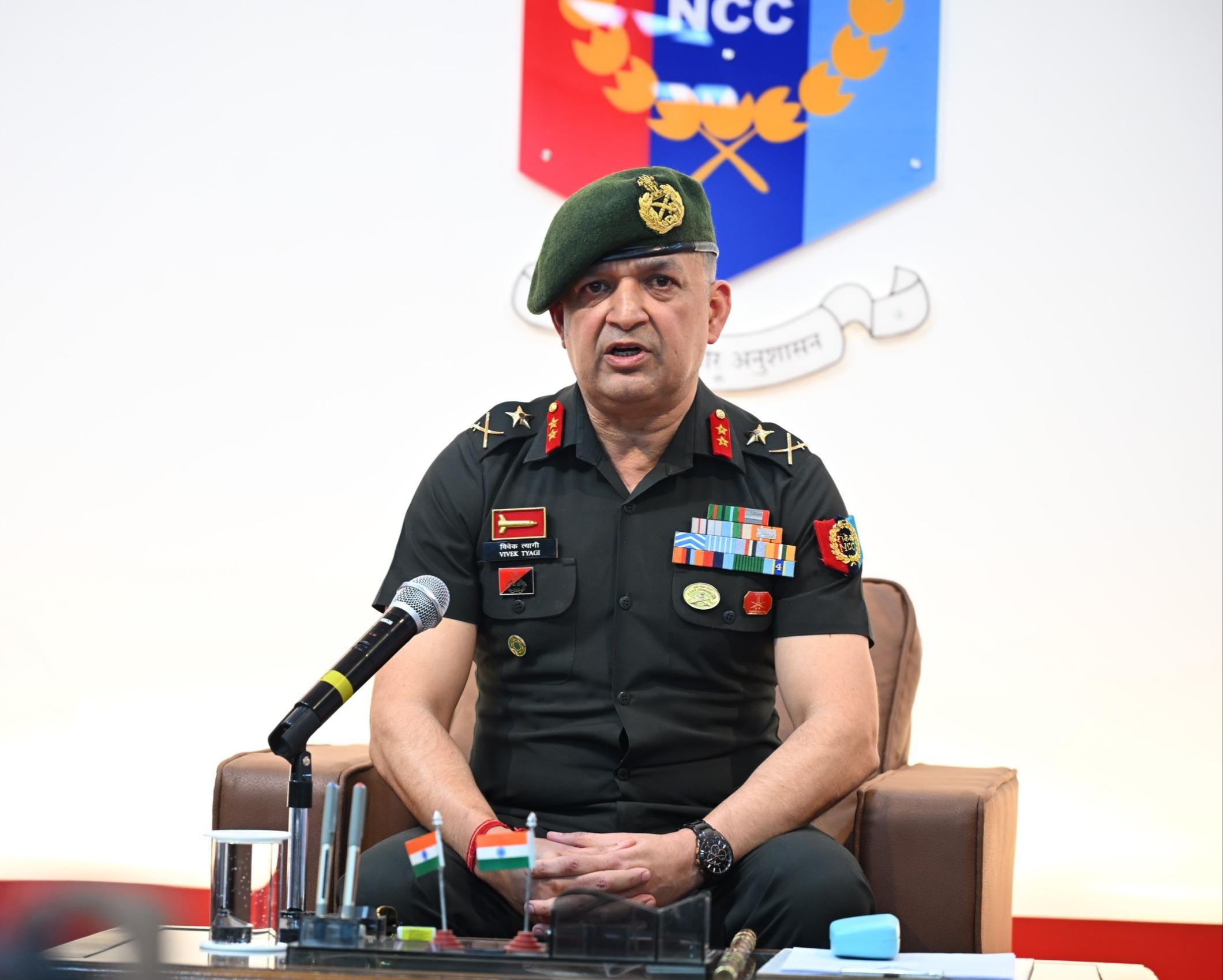
Nagpur | April 29, 2026: “Mastering Drones and Cyber Security is not just the geographical heart of India; it is now set to become the ‘Center of Excellence’ that will give wings to the dreams of NCC cadets across the nation.” These inspiring words were shared by Major General Vivek Kumar Tyagi, Additional Director General (ADG) of NCC Maharashtra, during a special press conference held today. On the first day of his three-day administrative visit, the Major General unveiled a transformative roadmap for the youth and the future of the NCC.

Mastering Drones and Cyber Security

Major General Tyagi announced that a state-of-the-art ‘Drone Training Academy’ is being established in Nagpur. This academy will be unique as it focuses on creating ‘Master Drone Trainers’—cadets and instructors who will go on to train others across various divisions in India. Recognizing the digital age’s challenges, he also highlighted a dedicated ‘Cyber Awareness’ initiative and tech-based skilling, ensuring that cadets are not just physically fit but technologically superior and ready for the future.

Nagpur: A Nursery for Future Officers and Leaders

The Pride of Uniform Meets the Future of Tech: Nagpur to Become NCC’s ‘Power House’ under Major General Vivek Tyagi’s New Vision

The Major General expressed immense pride in the dedication of Nagpur’s youth. He revealed that in just the past few months, 12 to 14 cadets from Nagpur alone have successfully cleared their boards to join the Armed Forces as officers. Whether through the Agniveer scheme, the Armed Forces, or the Maharashtra Police, NCC cadets are leading the way with the motto of ‘Nation First.’ He also noted that the training of civil staff, such as Girl Cadet Instructors (GCI) and Caretaker Officers (CTO) at the Officer Training Academy (OTA) in Kamthi, is playing a pivotal role in expanding the NCC’s reach

Meeting the Surge in Demand: 160 Institutions on Waiting List

The growing craze for the NCC among today’s youth is evident: currently, 160 schools and colleges in Nagpur are on the waiting list to start NCC units. To meet this demand, Major General Tyagi called upon the State Government for support in building a World-Class NCC Academy in Nagpur. He emphasized that the goal is not just to reach the milestone of 1.5 lakh cadets, but to reach the most remote areas of Maharashtra, transforming every student into a confident, resilient, and patriotic leader.

Empowering Daughters and Global Exposure

The Pride of Uniform Meets the Future of Tech: Nagpur to Become NCC’s ‘Power House’ under Major General Vivek Tyagi’s New Vision

A significant highlight of the briefing was the rising strength of women in the corps, with the gender ratio now approaching 60:40. Through the ‘Youth Exchange Program,’ cadets are also interacting with international students, gaining global perspectives and representing India’s diversity. Major General Tyagi concluded by stating that the NCC is more than just a career path; it is a workshop that builds character, discipline, and the best version of a human being.

Leave a Comment

End of Article

Loading more posts...