JOIN WHATSAPP
STORIES

Amity Convocation 2025: 28,000 Students to Receive Degrees in Noida

Amity Convocation 2025: 28,000 Students to Receive Degrees in Noida

Amity University has commenced its 21st convocation at the Noida campus, celebrating the academic accomplishments of more than 28,000 graduating students. The four-day ceremony, being held from December 6 to 9, will see students from diverse fields take the stage to receive their degrees and diplomas.

The event features graduates from programmes in engineering, management, law, biotechnology, mass communication, and several other specialised disciplines. Along with the distribution of degrees, the university is also honouring gold medallists, outstanding achievers and research scholars for their exceptional performance during the course of their studies.

I chose to write about this moment because convocation ceremonies are more than a formality. For students, it is the day every long night of studying, every project, and every exam finally feels worth it. For families, it is a moment of pride after years of support. Universities also use this platform to inspire fresh graduates as they step into the professional world. In a time where education is constantly evolving, celebrating such milestones shows how learning continues to shape society. Highlighting events like this encourages today’s students to dream bigger, work harder, and value the journey as much as the achievement.

A Grand Ceremony at Amity Noida

The convocation is taking place in multiple sessions to accommodate thousands of students and their families. The event includes:

  • Award of undergraduate, postgraduate and doctoral degrees
  • Presentation of medals to academic toppers
  • Special recognition for innovation and research excellence
  • Inspirational speeches by industry leaders and dignitaries

The atmosphere at the campus is festive, with graduating students wearing traditional convocation robes, ready to step into their next phase of life.

Courses Covered in the 2025 Convocation

Degrees and diplomas are being conferred to students from:

  • Engineering and Technology
  • Management and Business Administration
  • Law
  • Media and Communication
  • Hospitality and Tourism
  • Biotechnology and Life Sciences
  • Psychology, Architecture, Design and Multiple Professional Programmes

This wide mix reflects the university’s expansion into diverse academic fields over the years.

Honouring Excellence and Innovation

Apart from regular degree distribution, the convocation also celebrates the outstanding performance of students.

  • Gold medals for academic excellence
  • Silver and bronze recognition for high scorers
  • Awards for research contributions and patents
  • Special honours for social initiatives and entrepreneurship

These distinctions encourage students to pursue excellence beyond classrooms and contribute meaningfully to society.

Messages from Leaders and Dignitaries

Convocation speeches are often the most memorable part of the ceremony. Speakers usually share real-world insights, motivating graduates to stay determined, think independently and approach challenges with confidence. This year’s event is expected to focus on skill development, ethics in professional life and innovation-driven careers.

What This Convocation Means for Students

  • A symbol of hard work, patience and growth
  • An official entry into the professional world
  • A reminder to apply knowledge responsibly
  • A celebration of friendships, memories and personal development

For many students, the degree is not just a certificate; it is a gateway to new goals and bigger dreams.

Leave a Comment

End of Article

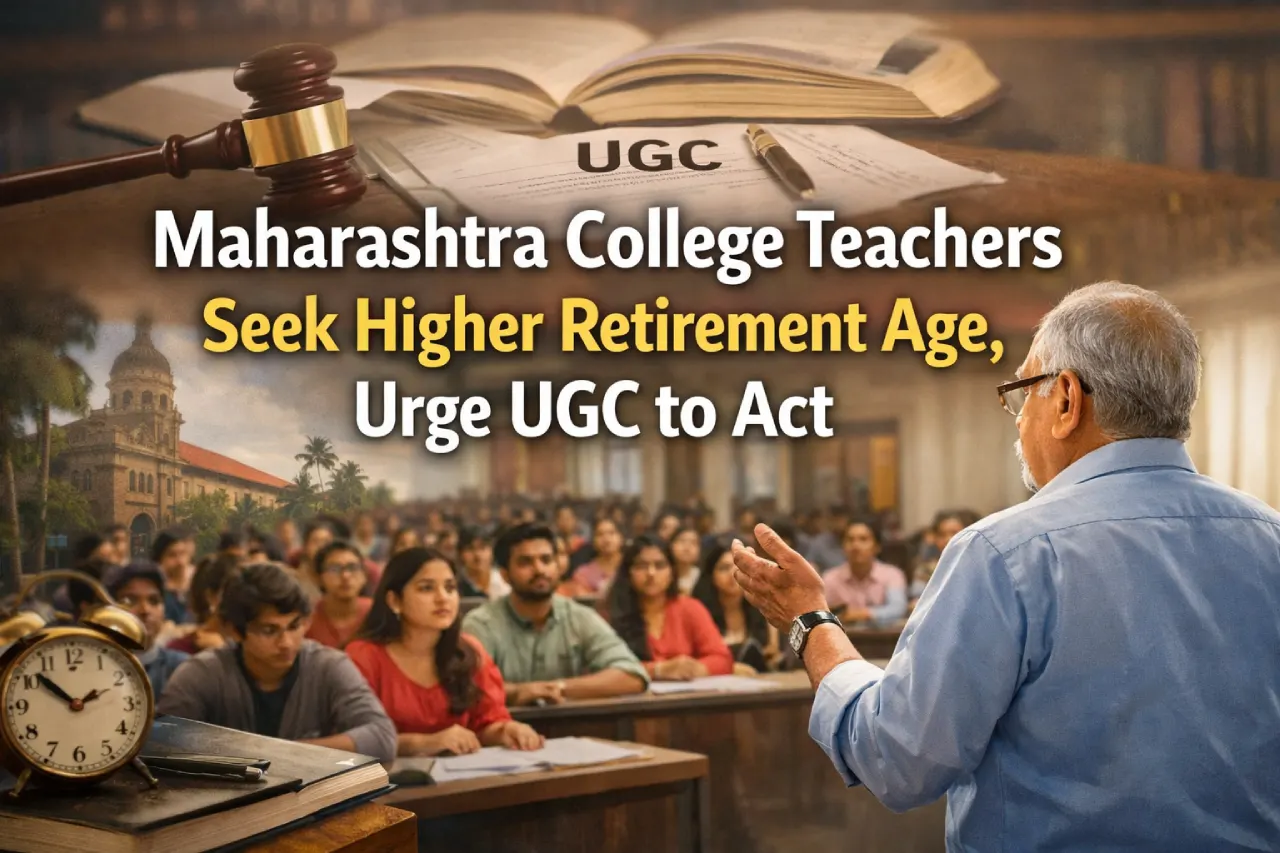
Maharashtra College Teachers Seek Higher Retirement Age, Urge UGC to Act

Maharashtra College Teachers Seek Higher Retirement Age, Urge UGC to Act

Teachers from colleges across Maharashtra have urged the University Grants Commission to raise the retirement age for teaching faculty from the current 60 years to 65 years. The demand has been made by teachers’ associations who argue that experienced educators are being forced to retire too early, even as colleges continue to face staff shortages. They believe extending the retirement age will help retain academic expertise and improve teaching quality in higher education institutions.

I am writing about this issue because it affects not just teachers, but also students and the overall higher education system. At a time when universities are struggling with vacant posts and delayed recruitments, losing senior faculty creates gaps in teaching, research, and mentorship. The demand also raises a larger question about how India values experience in academia and whether policy needs to evolve with changing life expectancy and professional capability.

What Maharashtra Teachers Are Demanding

Teachers’ bodies have formally requested UGC to revise the retirement age for college and university teachers to 65 years, bringing it in line with several central institutions. They argue that many educators remain academically active and physically fit well beyond 60.

According to them, forcing retirement at 60 leads to a loss of institutional memory and teaching continuity.

Why Teachers Want the Age Limit Raised

Teachers say the demand is based on practical realities. Many colleges face:

  • Acute shortage of qualified faculty
  • Delays in permanent recruitment
  • Heavy teaching loads on existing staff

Extending the retirement age would offer immediate relief without additional recruitment costs.

Comparison with Central Institutions

In several central universities and institutions, teachers are allowed to work up to 65 years, and in some cases even longer through re-employment. Maharashtra teachers feel this creates inequality between state and central institutions.

They believe a uniform retirement policy across the country would be fairer and more effective.

Impact on Students and Academic Quality

Senior teachers often play a key role in mentoring young faculty, guiding research scholars, and maintaining academic standards. Their early retirement disrupts this balance and places extra pressure on junior staff.

Students, especially at postgraduate and research levels, are among the biggest losers.

Concerns About Youth Employment

Some critics argue that extending retirement age could limit opportunities for younger aspirants. Teachers’ associations counter this by saying vacant posts already exist and recruitment processes are slow, so extending service will not block new jobs.

They stress that experience and new talent should coexist.

What UGC’s Role Will Be

UGC has the authority to frame regulations related to service conditions in higher education. Any change in retirement age would require policy review and coordination with state governments.

Teachers are hopeful that the commission will consider the request seriously.

Leave a Comment

End of Article

Loading more posts...