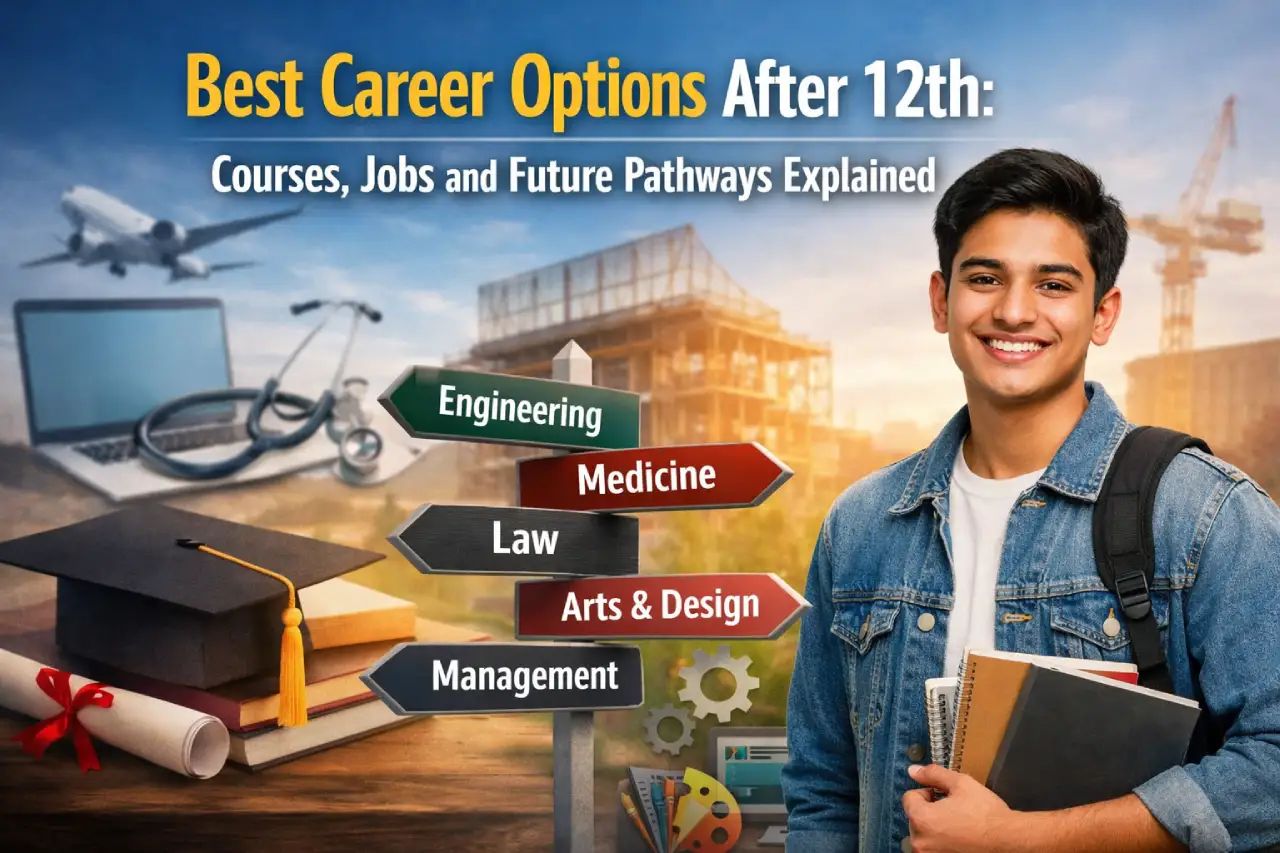
Completing Class 12 is a major milestone in every student’s life. It is also the point where one of the most important decisions has to be made—choosing the right career path. With so many courses, colleges and career options available today, it is natural to feel confused or even overwhelmed. The good news is that there is no single “perfect” choice. What matters most is finding a path that matches your interests, strengths and long-term goals.
I am writing about this topic because I often see students worrying too much about making the “right” decision after 12th. Some feel pressured by family expectations, while others simply follow what their friends are doing. Understanding the different options available can make this decision easier. When you know what each stream offers, you can choose more confidently and plan your future step by step.
Career Options After 12th Science
Students from the science stream usually have a wide range of professional and academic choices.
Engineering and Technology
Engineering remains one of the most popular choices.
- BTech or BE in Computer Science, Mechanical, Civil, Electrical, Electronics and other branches
- Diploma in Engineering after 12th or after ITI
- Emerging fields like Artificial Intelligence, Data Science and Robotics
These courses open doors to jobs in IT companies, core industries, startups and research.
Medical and Allied Health Sciences
For students interested in healthcare:
- MBBS, BDS, BAMS, BHMS
- Nursing, Pharmacy, Physiotherapy
- Medical Laboratory Technology, Radiology and other paramedical courses
Healthcare careers are respected and always in demand.
Pure Science and Research
If you enjoy theory and experimentation:
- BSc in Physics, Chemistry, Biology, Mathematics
- Integrated MSc or research-oriented programmes
- Later options include MSc, PhD and teaching or research roles
This path suits students who love academics and discovery.
Career Options After 12th Commerce
Commerce students can move into business, finance and management-related careers.
Chartered Accountant, Company Secretary and CMA
Professional courses with strong career prospects:
- CA (Chartered Accountant)
- CS (Company Secretary)
- CMA (Cost and Management Accountant)
These courses require dedication but offer excellent growth.
Business and Management Courses
- BCom, BBA, BBM
- Bachelor in Economics or Finance
- Later, MBA or PGDM
These courses prepare students for corporate and entrepreneurial roles.
Banking and Finance Careers
- Preparation for banking exams
- Jobs in accounting firms, insurance companies and financial institutions
Commerce graduates have good scope in the financial sector.
Career Options After 12th Arts/Humanities
Arts stream offers diverse and creative career paths.
Humanities and Social Sciences
- BA in History, Political Science, Sociology, Psychology, Economics
- Careers in teaching, research, civil services and social work
These subjects build strong analytical and communication skills.
Media, Journalism and Mass Communication
- BA or Diploma in Journalism and Mass Communication
- Careers in news media, digital platforms, content creation and PR
Ideal for students who enjoy writing and storytelling.
Design and Creative Fields
- Fashion Design, Graphic Design, Interior Design, Animation
- Fine Arts, Photography and Visual Communication
These careers suit students with creative talent and imagination.
Skill-Based and Vocational Courses
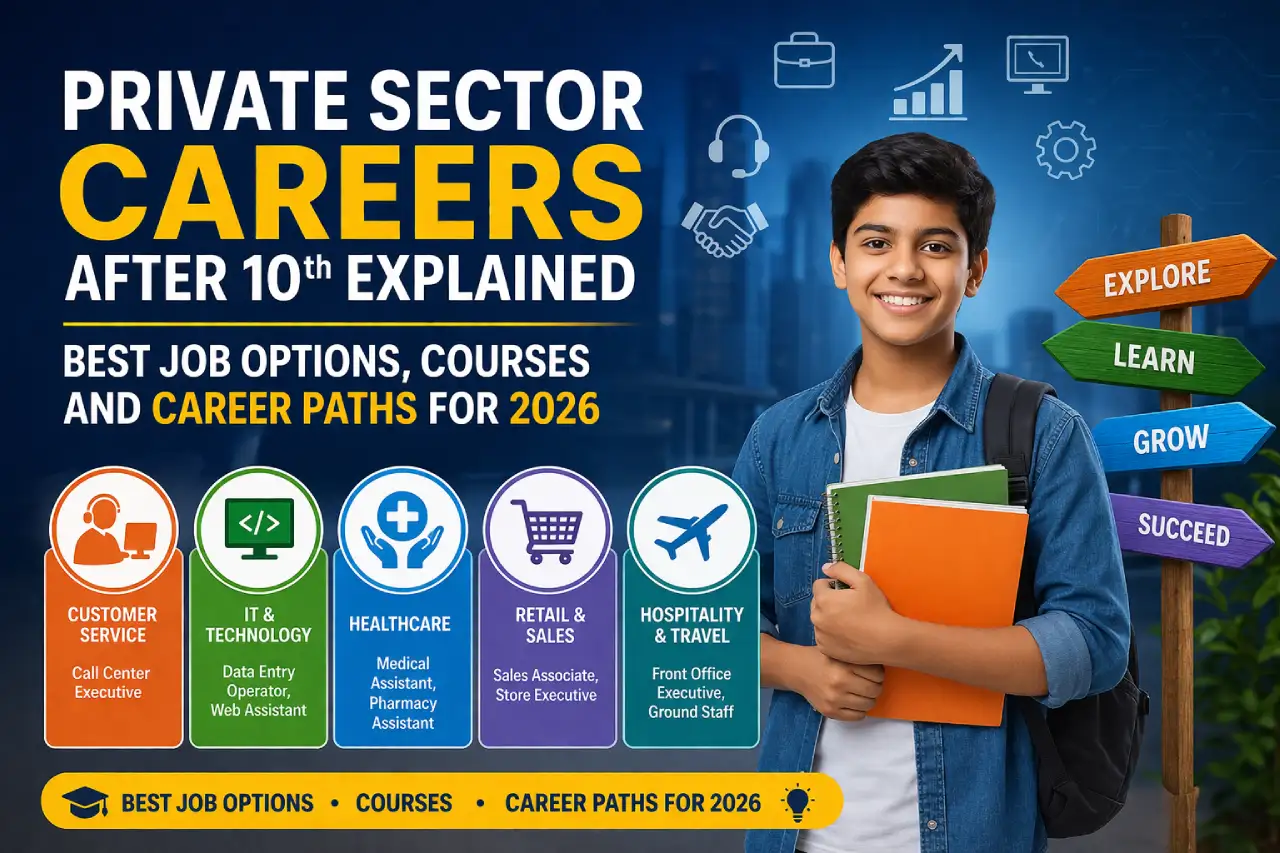
Not every student wants a traditional degree. Skill-based courses can lead to quick employment.
- ITI and polytechnic courses
- Web development, digital marketing, data analytics
- Hospitality and tourism management
- Aviation, cabin crew and ground staff training
These courses focus on practical skills and industry needs.
Government Jobs and Competitive Exams
Many students start preparing early for government careers.
- Defence services
- Banking and insurance exams
- SSC and other central/state government exams
A clear plan and consistent preparation are essential.
How to Choose the Right Career Path
I believe choosing a career should be a thoughtful process.
- Identify your interests and strengths
- Research courses and colleges
- Talk to teachers, seniors and career counsellors
- Consider future scope and job opportunities
Avoid choosing a career only because others are doing it.