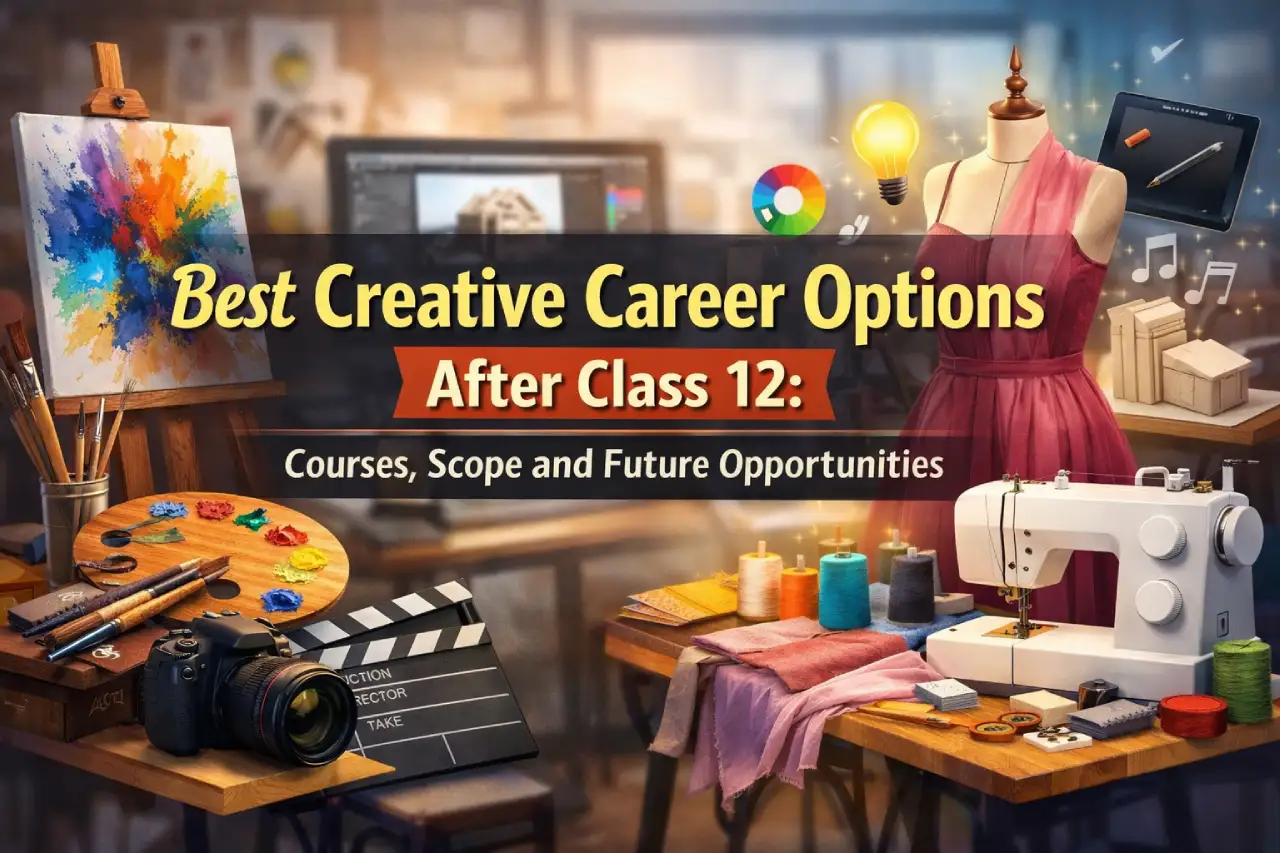
Choosing a career after Class 12 can feel overwhelming, especially for students who do not see themselves in conventional options like engineering or medicine. Creative career paths offer a wide range of opportunities for students who enjoy thinking differently, expressing ideas, and working in dynamic environments. Today, creativity is not limited to art alone. It is valued across industries such as media, design, technology, education, marketing, and entertainment, making creative careers both practical and rewarding.
I am writing about creative career paths because many students are still unaware of the options available beyond traditional streams. Parents and students often assume that creative careers are risky or lack stability, which is no longer true. With the growth of digital platforms, content-driven businesses, and the creative economy, students with skills and passion now have strong career prospects. Knowing these options early helps students make confident and informed decisions.
Why Consider a Creative Career After 12th
Creative careers allow students to combine passion with profession. These fields value originality, skill, and continuous learning rather than marks alone. Many creative professions also offer flexibility, freelancing options, and global opportunities.
Students from any stream, Arts, Science, or Commerce, can explore creative fields depending on their interests and aptitude.
Design and Visual Arts Careers
Design-related careers are among the most popular creative options today. These fields focus on visual communication, aesthetics, and problem-solving.
Popular options include:
- Graphic Design
- Fashion Design
- Interior Design
- Product and Industrial Design
- Animation and Visual Effects
These careers are suitable for students who enjoy drawing, visual thinking, and working with design tools.
Media, Communication and Content Careers
The rise of digital media has created many career options in communication and storytelling. These roles focus on writing, speaking, presenting, and content creation.
Key career paths include:
- Journalism and Mass Communication
- Content Writing and Copywriting
- Public Relations
- Digital Marketing
- Social Media Management
From my perspective, students with strong language skills and curiosity about society do well in these fields.
Performing and Fine Arts Careers
For students passionate about performing or fine arts, there are structured career options beyond hobbies.
These include:
- Acting and Theatre Arts
- Music and Sound Engineering
- Dance and Choreography
- Fine Arts and Painting
- Photography and Cinematography
While these careers require dedication and practice, they offer deep personal satisfaction and recognition.
Creative Careers in Technology
Creativity and technology now go hand in hand. Many careers combine technical skills with creative thinking.
Examples include:
- UI and UX Design
- Game Design and Development
- Multimedia and Web Design
- AR and VR Content Creation
These roles are ideal for students who enjoy both creativity and technology.
Writing, Publishing and Language-Based Careers
Students who love reading, writing, and languages can explore careers in publishing and education-related creative fields.
Options include:
- Creative Writing and Authoring
- Editing and Publishing
- Scriptwriting and Screenwriting
- Teaching Creative Subjects
Strong communication and imagination are key strengths in these careers.
Skill-Based and Short-Term Creative Courses
Not all creative careers require long degree programmes. Many skill-based courses help students enter the workforce quickly.
Such courses include:
- Photography and Film Editing
- Makeup and Beauty Arts
- Event Management
- Culinary Arts and Food Styling
These careers focus on practical skills and hands-on learning.
How Students Should Choose the Right Creative Path
Students should assess their interests, strengths, and long-term goals before choosing a creative career. Attending workshops, internships, and short courses can help test interest before committing fully.
I believe speaking to professionals already working in creative fields also gives realistic insight into career growth and challenges.