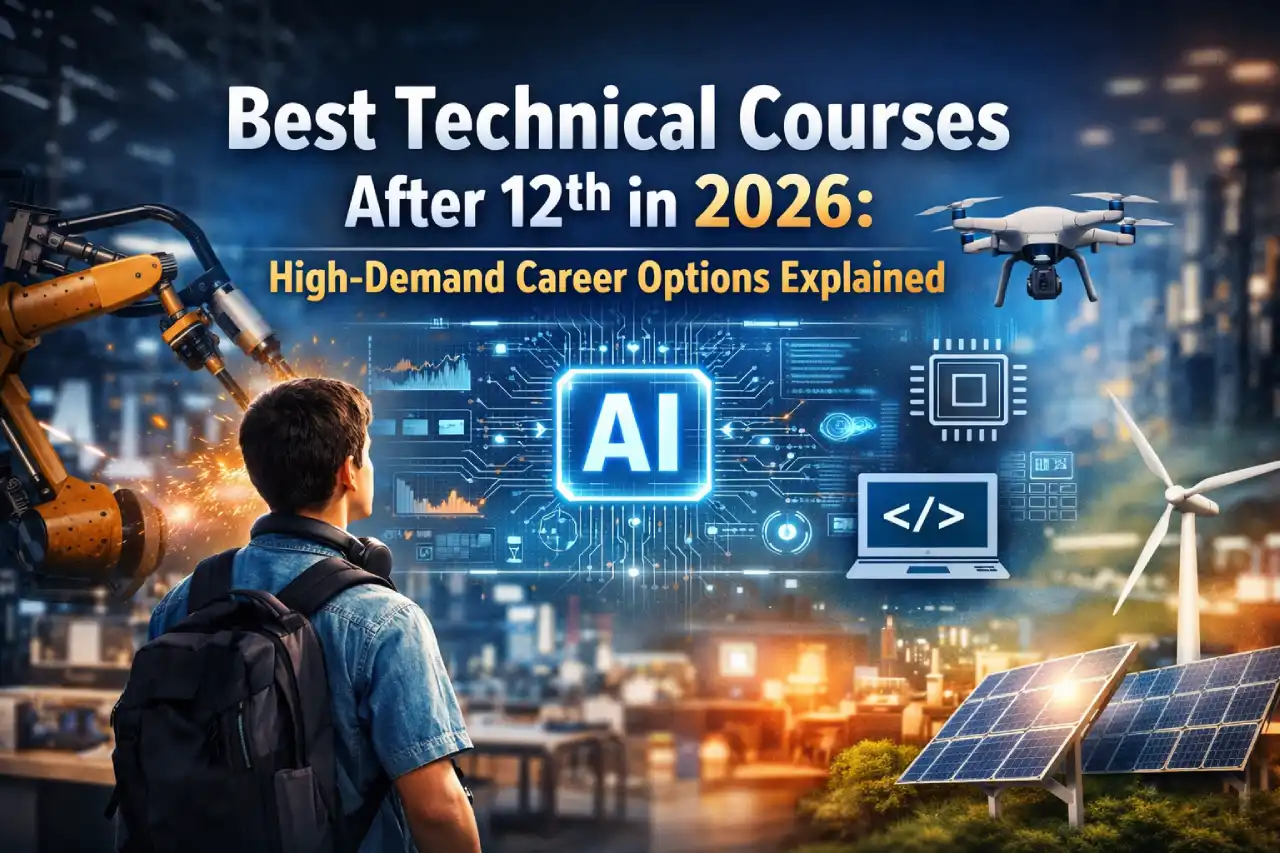
Choosing the right technical course after Class 12 can shape your entire career. In 2026, the demand for skilled professionals in technology, engineering, data, healthcare, and digital fields is only increasing. If you are wondering which technical courses offer strong career growth, good salaries, and future stability, this guide will help you understand the best options available after 12th.
I am writing this because many students feel confused right after board exams. Marks matter, but choosing the right direction matters even more. With technology changing rapidly, it is important to select a course that not only matches your interest but also aligns with future job trends. Let us look at the top technical courses that are worth considering in 2026.
Engineering Courses (B.Tech / BE)
Engineering remains one of the most popular technical paths after 12th, especially for science students with Physics, Chemistry, and Mathematics.
Top engineering branches in 2026 include:
- Computer Science Engineering
- Artificial Intelligence and Machine Learning
- Data Science
- Electronics and Communication Engineering
- Mechanical Engineering
- Civil Engineering
These courses usually last four years and offer strong placement opportunities in IT companies, manufacturing industries, infrastructure firms, and research organisations.
If you enjoy problem-solving and innovation, engineering can be a solid choice.
Computer Applications (BCA)
Bachelor of Computer Applications is ideal for students interested in software, coding, and IT but who may not want to pursue traditional engineering.
Key features:
- Duration: 3 years
- Focus on programming languages, database management, web development, and cybersecurity
- Good foundation for MCA or specialised certifications
In 2026, with digital businesses growing rapidly, BCA graduates are in demand in software companies and start-ups.
Artificial Intelligence and Data Science Courses
AI and Data Science are among the fastest-growing technical fields globally.
Popular options:
- B.Tech in AI or Data Science
- BSc in Data Science
- Diploma in Artificial Intelligence
- Certification courses in machine learning and analytics
These courses prepare students for roles like data analyst, AI developer, machine learning engineer, and business intelligence expert.
With industries relying heavily on data, this field offers excellent long-term growth.
Polytechnic Diploma Courses
For students who want a shorter, skill-focused technical course, diploma programmes after 12th or even after 10th are practical options.
Common diploma branches:
- Civil Engineering
- Mechanical Engineering
- Electrical Engineering
- Computer Engineering
Duration is generally 3 years, and students can either start working or later take lateral entry into engineering degree courses.
This is a good option if you prefer practical learning over theory-heavy study.
Medical and Paramedical Technical Courses
For biology students, technical healthcare courses are also gaining popularity.
Options include:
- BSc Nursing
- Bachelor of Physiotherapy
- BSc Medical Laboratory Technology
- Radiology and Imaging Technology
- Operation Theatre Technology
Healthcare is a stable and respected field, and skilled technical professionals are always needed in hospitals and diagnostic centres.
Aviation and Marine Technical Courses
Students interested in specialised technical careers can explore:
- Aircraft Maintenance Engineering
- Commercial Pilot Training
- Marine Engineering
These courses require specific eligibility and entrance exams but offer exciting and high-paying careers.
ITI and Skill-Based Technical Courses
Industrial Training Institutes offer short-term technical courses focused on employable skills.
Popular ITI trades:
- Electrician
- Fitter
- Welder
- Computer Operator and Programming Assistant
These are practical courses designed to prepare students for immediate employment in technical roles.
Emerging Technical Fields in 2026
Some new-age courses are becoming popular due to technological shifts:
- Cybersecurity
- Robotics
- Cloud Computing
- Blockchain Technology
- Internet of Things (IoT)
If you are future-focused and willing to adapt, these fields can offer excellent career prospects.
How to Choose the Right Technical Course
Before making a decision, consider:
- Your interest and strengths
- Eligibility criteria and entrance exams
- Course duration and fees
- Placement record of the college
- Future job scope and industry demand
I always advise students not to follow trends blindly. Research properly, talk to seniors or career counsellors, and choose a field that excites you.