Bihar Police SI Exam Date 2026 Announced: Admit Card Release Date, Shift Timings and Full Schedule
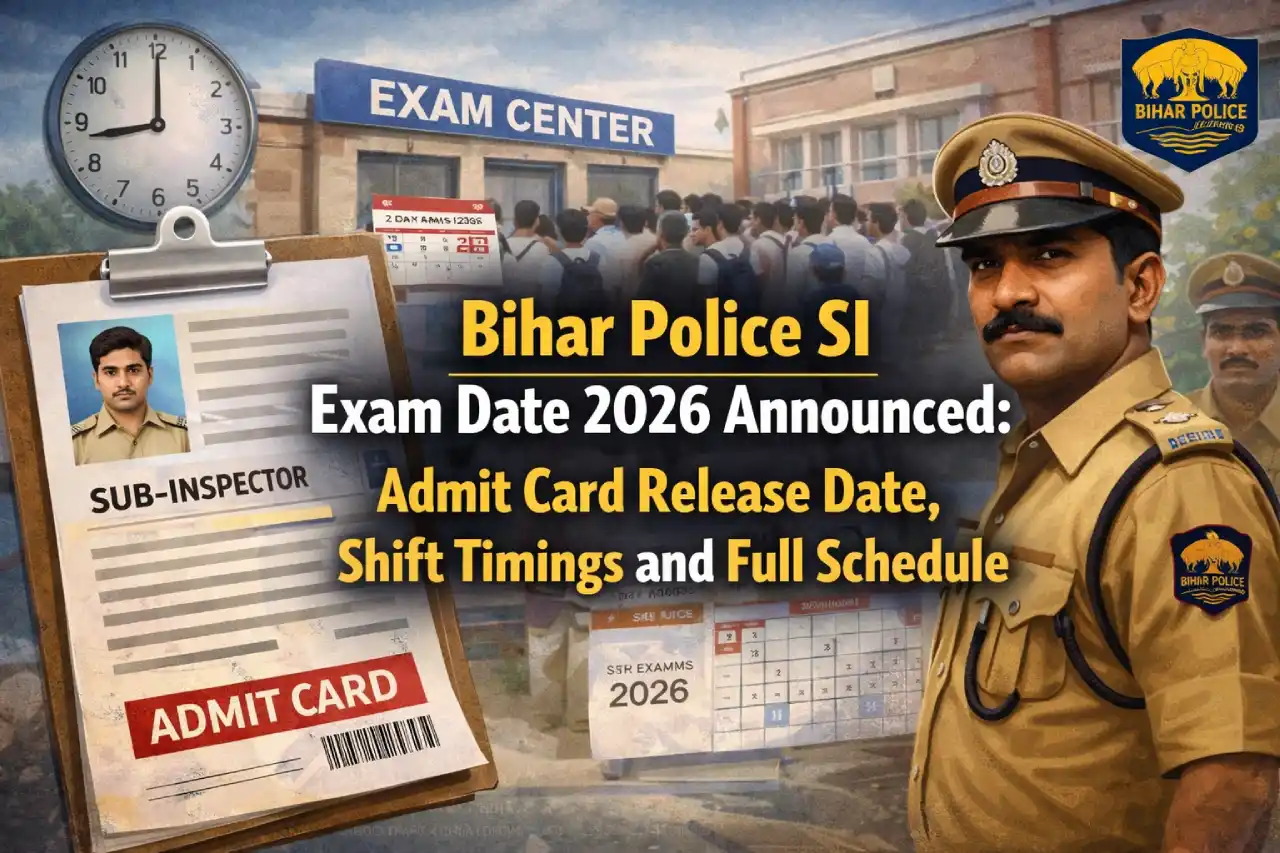
The Bihar Police SI recruitment exam date has been officially announced, bringing much-needed clarity for thousands of aspirants preparing for the Sub-Inspector examination. As per the latest notification, the written exam for the recruitment of Sub-Inspectors under Bihar Police will be conducted on January 18 and January 21, 2026. The examination will be held in two shifts each day, and candidates will soon be able to download their admit cards from the official portal.
I am writing about this update because exam dates and admit card timelines are critical for serious aspirants. Many candidates plan their revision, travel, and mock tests around the exact exam schedule. A clear understanding of shift timings and admit card release dates helps reduce last-minute confusion and allows candidates to focus on performance rather than logistics.
Bihar Police SI Exam Date and Shift Timings
According to the official notification, the Sub-Inspector recruitment written examination will be held on two separate dates in January 2026. Each exam day will have two shifts.
Here is the detailed schedule:
Exam Date
Shift
Time
January 18, 2026
First Shift
10:00 AM to 12:00 PM
January 18, 2026
Second Shift
2:30 PM to 4:30 PM
January 21, 2026
First Shift
10:00 AM to 12:00 PM
January 21, 2026
Second Shift
2:30 PM to 4:30 PM
Candidates are advised to check their allotted exam date and shift carefully once the admit card is released.
Bihar Police SI Admit Card Release Date
The admit card for the Bihar Police SI exam 2026 is expected to be released a few days before the examination date. The exact release date will be mentioned in the official notice on the recruitment website.
The admit card will contain important details such as:
Candidate’s name and roll number
Exam date and shift timing
Examination centre address
Important instructions for the exam day
Without a valid admit card, candidates will not be allowed to enter the examination centre.
CBSE New Curriculum 2026 Explained: AI Course, Language Changes and Class 9–10 Updates
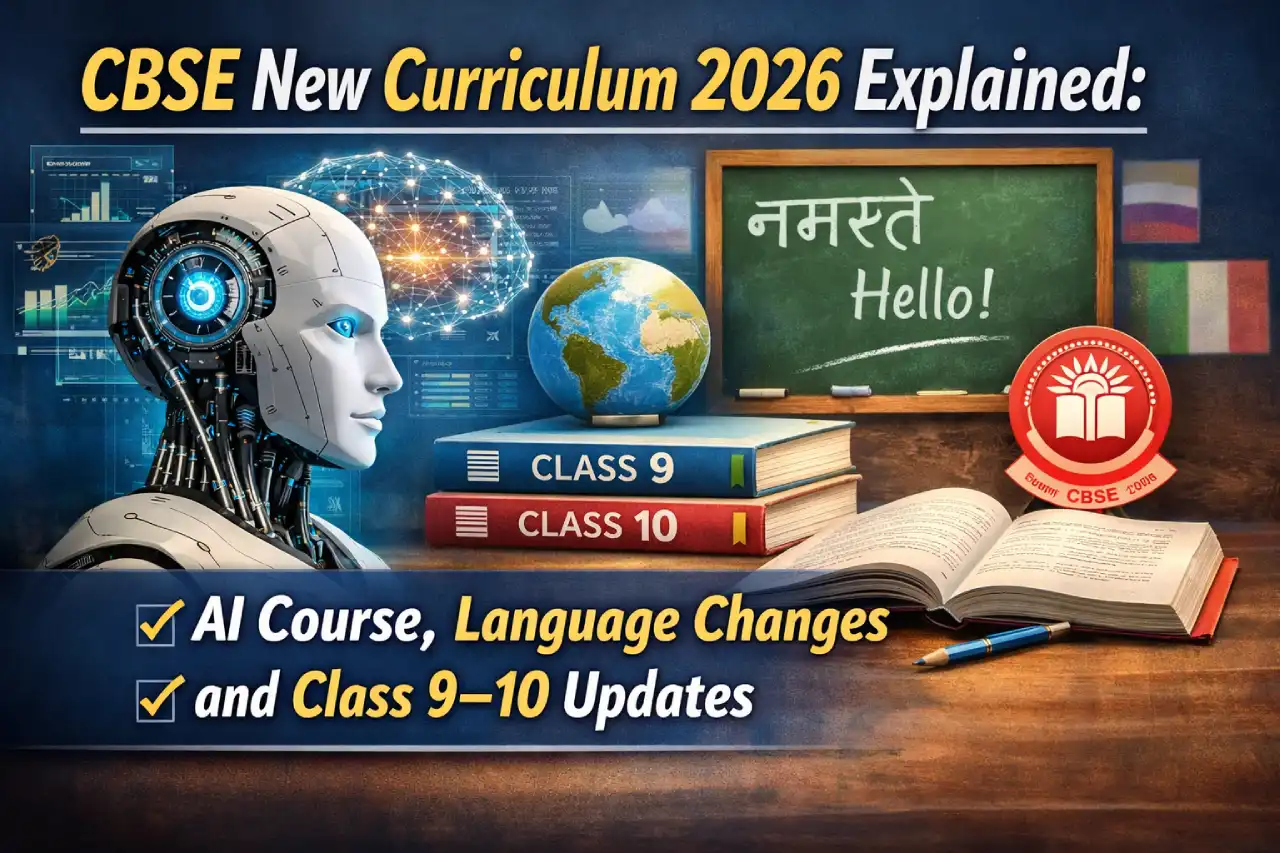
The Central Board of Secondary Education (CBSE) has introduced a major overhaul in its curriculum, which will be implemented in phases over the coming years. The new framework brings in several important changes, including the introduction of Artificial Intelligence (AI) and Computational Thinking (CT) as a compulsory subject from Class 9, a revised three-language system starting from Class 6, and optional advanced-level assessments in Mathematics and Science for Class 10 students. These reforms are aligned with the National Education Policy (NEP) 2020 and the National Curriculum Framework (NCF) 2023.
I am writing about this update because it directly affects lakhs of students, parents, and teachers across the country. From what I can see, these changes are not just about adding new subjects but about changing how students learn and think. With technology becoming a core part of education and careers, understanding these updates early can help students prepare better. It is also important for parents to know how the system is evolving so they can guide their children in the right direction.
What is Changing in the CBSE Curriculum
CBSE has redesigned the curriculum to make it more practical, skill-based, and future-ready. The focus is shifting from rote learning to conceptual understanding and real-world application.
Here are the major highlights:
Introduction of AI and Computational Thinking
New three-language system with proficiency levels
Optional advanced assessments in Class 10
Compulsory inclusion of art, physical education, and vocational subjects
Focus on interdisciplinary learning
These changes will not happen overnight but will be rolled out step by step.
AI and Computational Thinking from Class 9
One of the biggest updates is the introduction of AI and Computational Thinking as a compulsory subject.
This will begin from the 2027–28 academic session
Students will first appear for board exams in this subject in 2029
Textbooks for Class 9 are currently being prepared
AI learning has already been introduced for Classes 3 to 8 in a structured way
From my perspective, this is a much-needed step because digital skills are becoming essential in almost every field.
New Language System Explained
CBSE is restructuring language education through a three-language formula with different proficiency levels:
R1 – Highest level of proficiency
R2 – Intermediate level
R3 – Basic level
Key updates include:
A compulsory third language from Class 6 starting 2026–27
R3-level textbooks will be introduced first in Class 6
Students will gradually progress with this structure till Class 10
First board exam under this system will be in 2031
For students currently entering Class 9, revised R1 and R2 textbooks will be used, with the first board exams in 2028.
Optional Advanced Mathematics and Science
CBSE is also giving students the option to go deeper into subjects they are interested in.
Students can choose Advanced Mathematics, Advanced Science, both, or neither
Additional study material and higher-order questions will be provided
A separate one-hour assessment will be conducted after Class 10
Students scoring around 50% or more will get it mentioned in their mark sheet
No penalty if a student does not clear the advanced paper
The first batch for this advanced assessment will appear in 2028.
Compulsory Subjects for Holistic Development
The new curriculum also focuses on overall student development, not just academics.
The following subjects will now be compulsory:
Art Education
Physical Education and Wellbeing
Vocational Education
Interdisciplinary Studies
These will mainly be assessed through internal evaluations rather than board exams.
Expansion of Language Options
CBSE is also widening language choices for students.
New languages introduced at Class 9 level include:
Maithili
Santhali
Dogri
Konkani
This move ensures that more regional languages listed in the Constitution are available for students to study.
Implementation Timeline at a Glance
Feature
Timeline
Third Language (Class 6)
2026–27
AI & CT (Class 9)
2027–28
First AI Board Exam
2029
Advanced Subject Assessment
2028
New Language System Board Exam
2031
What This Means for Students
In my opinion, this curriculum shift is clearly aimed at preparing students for the future. Instead of focusing only on marks, the system is encouraging skills, flexibility, and deeper understanding.
Students should:
Start getting comfortable with technology and logical thinking
Focus on understanding concepts instead of memorising
Explore subjects based on interest, especially advanced options
Take internal assessments seriously
Parents and teachers also need to adapt to this new approach and support students during the transition.