JOIN WHATSAPP
STORIES

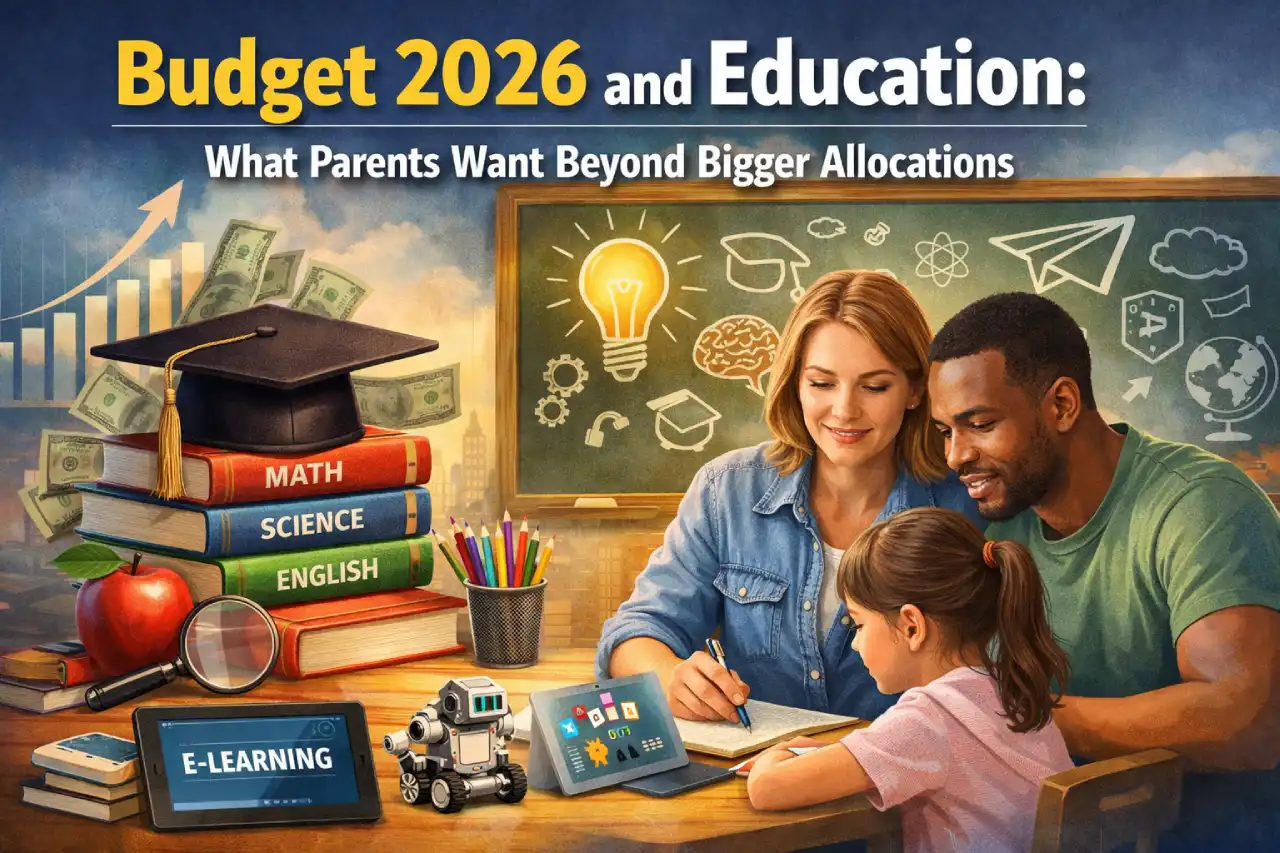
Budget 2026 and Education: What Parents Want Beyond Bigger Allocations

Budget 2026 and Education: What Parents Want Beyond Bigger Allocations

As Budget 2026 approaches, parents across India are voicing a clear expectation from the government: results, not just promises. While education budgets have grown steadily over the years, many families feel the impact on classrooms, learning quality, and student readiness remains uneven. From government schools to higher education, parents are now asking for visible improvements that directly affect children’s learning, safety, and future employability rather than broad policy announcements.

I am writing about this because education budgets are often discussed in terms of numbers, but rarely in terms of everyday outcomes. Parents invest time, money, and trust in the education system, and they want accountability in return. Budget 2026 is being seen as an opportunity for the government to shift focus from allocation-heavy announcements to measurable changes that families can actually experience on the ground.

What Parents Mean by “Tangible Outcomes”

When parents talk about tangible outcomes, they are not asking for complex reforms on paper. They want simple, visible improvements that make a real difference in their children’s education.

These include:

  • Better-trained and available teachers in classrooms
  • Improved infrastructure such as toilets, labs, and libraries
  • Reduced learning gaps after pandemic disruptions
  • Stronger focus on foundational literacy and numeracy
  • Safer school environments

For many families, these basics still remain unmet despite repeated policy pushes.

Budget Spending Versus Classroom Reality

Over the years, education spending has increased, but parents often feel disconnected from where the money actually goes. In many government schools, teacher shortages, outdated facilities, and uneven learning levels continue to be major concerns.

Parents argue that:

  • Budget utilisation should be tracked more transparently
  • Funds should reach schools faster
  • States and districts must be held accountable for outcomes

Without clear monitoring, higher allocations alone do not build confidence.

Focus on Learning Outcomes, Not Just Enrolment

India has largely succeeded in improving enrolment rates, but learning outcomes remain a challenge. Many parents worry that children are moving up classes without mastering basics.

They want Budget 2026 to prioritise:

  • Strong early-grade learning programmes
  • Regular learning assessments with corrective support
  • Teacher training focused on classroom effectiveness

For parents, quality matters more than numbers on enrolment charts.

Concerns Around Skill Readiness and Employability

Parents of older students are increasingly anxious about whether education is preparing children for real jobs. Degrees alone are no longer seen as enough.

There is growing demand for:

  • Stronger linkage between education and skills
  • Practical exposure in schools and colleges
  • Career guidance from early stages
  • Industry-aligned courses in higher education

This is especially important in a rapidly changing job market.

Expectations From the Education Ministry

Parents expect the Ministry of Education to use Budget 2026 to push outcome-based reforms. This includes setting clear targets, timelines, and public reporting on progress.

There is also a call for closer coordination between central and state governments so that national schemes translate into local improvements.

Role of Parents in the Education Conversation

Parents today are more informed and vocal than ever. They are not just passive recipients of policy decisions but active stakeholders who want to be heard.

Many believe that:

  • Parent feedback should inform education planning
  • School-level accountability must be strengthened
  • Communication between schools and families needs improvement

Budget discussions that ignore this perspective risk missing the ground reality.

What Success Would Look Like After Budget 2026

For parents, success will not be measured by headlines alone. It will be felt when children read confidently, understand concepts, feel safe at school, and move forward with skills that matter.

They want Budget 2026 to mark a shift from intent to impact, where education spending is clearly linked to better learning and brighter futures.

Leave a Comment

End of Article

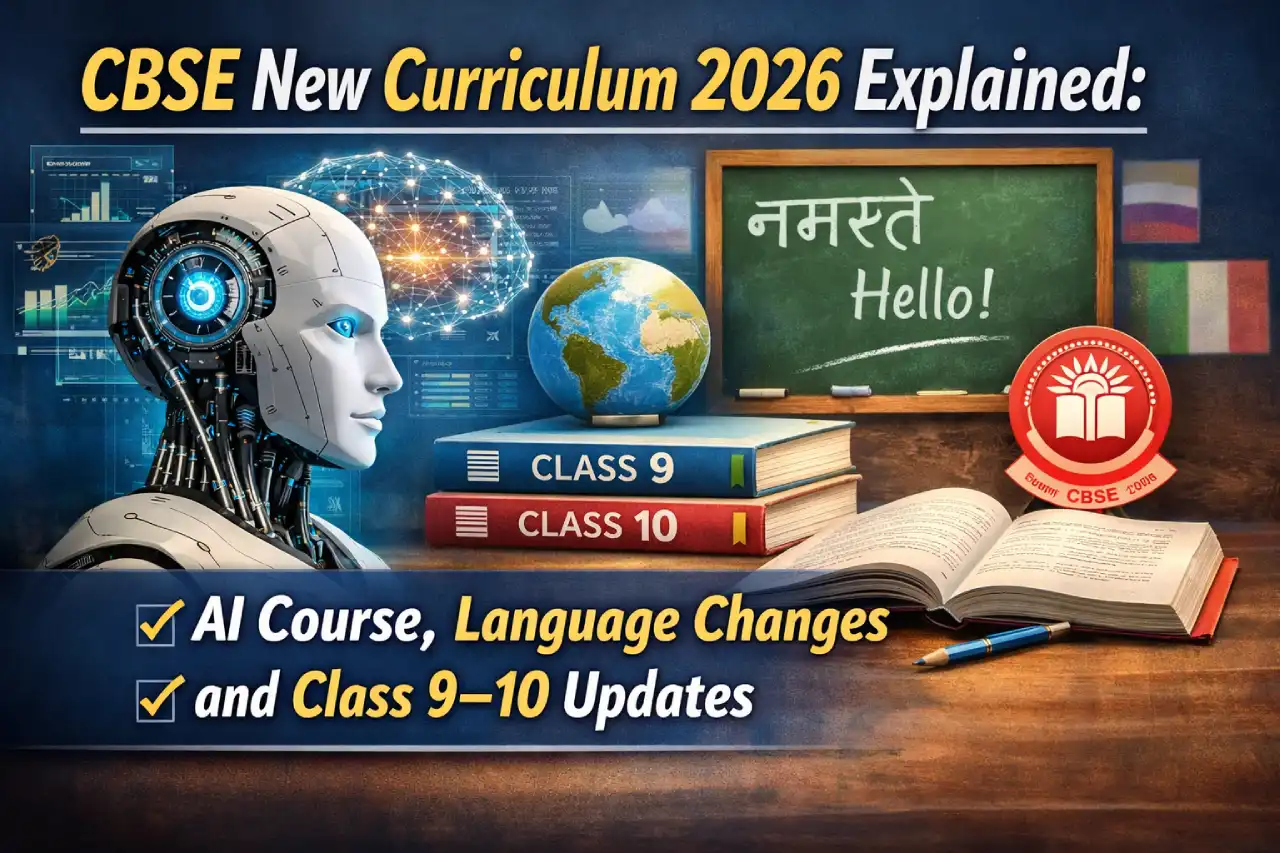
CBSE New Curriculum 2026 Explained: AI Course, Language Changes and Class 9–10 Updates

CBSE New Curriculum 2026 Explained: AI Course, Language Changes and Class 9–10 Updates

The Central Board of Secondary Education (CBSE) has introduced a major overhaul in its curriculum, which will be implemented in phases over the coming years. The new framework brings in several important changes, including the introduction of Artificial Intelligence (AI) and Computational Thinking (CT) as a compulsory subject from Class 9, a revised three-language system starting from Class 6, and optional advanced-level assessments in Mathematics and Science for Class 10 students. These reforms are aligned with the National Education Policy (NEP) 2020 and the National Curriculum Framework (NCF) 2023.

I am writing about this update because it directly affects lakhs of students, parents, and teachers across the country. From what I can see, these changes are not just about adding new subjects but about changing how students learn and think. With technology becoming a core part of education and careers, understanding these updates early can help students prepare better. It is also important for parents to know how the system is evolving so they can guide their children in the right direction.

What is Changing in the CBSE Curriculum

CBSE has redesigned the curriculum to make it more practical, skill-based, and future-ready. The focus is shifting from rote learning to conceptual understanding and real-world application.

Here are the major highlights:

  • Introduction of AI and Computational Thinking
  • New three-language system with proficiency levels
  • Optional advanced assessments in Class 10
  • Compulsory inclusion of art, physical education, and vocational subjects
  • Focus on interdisciplinary learning

These changes will not happen overnight but will be rolled out step by step.

AI and Computational Thinking from Class 9

One of the biggest updates is the introduction of AI and Computational Thinking as a compulsory subject.

  • This will begin from the 2027–28 academic session
  • Students will first appear for board exams in this subject in 2029
  • Textbooks for Class 9 are currently being prepared
  • AI learning has already been introduced for Classes 3 to 8 in a structured way

From my perspective, this is a much-needed step because digital skills are becoming essential in almost every field.

New Language System Explained

CBSE is restructuring language education through a three-language formula with different proficiency levels:

  • R1 – Highest level of proficiency
  • R2 – Intermediate level
  • R3 – Basic level

Key updates include:

  • A compulsory third language from Class 6 starting 2026–27
  • R3-level textbooks will be introduced first in Class 6
  • Students will gradually progress with this structure till Class 10
  • First board exam under this system will be in 2031

For students currently entering Class 9, revised R1 and R2 textbooks will be used, with the first board exams in 2028.

Optional Advanced Mathematics and Science

CBSE is also giving students the option to go deeper into subjects they are interested in.

  • Students can choose Advanced Mathematics, Advanced Science, both, or neither
  • Additional study material and higher-order questions will be provided
  • A separate one-hour assessment will be conducted after Class 10
  • Students scoring around 50% or more will get it mentioned in their mark sheet
  • No penalty if a student does not clear the advanced paper

The first batch for this advanced assessment will appear in 2028.

Compulsory Subjects for Holistic Development

The new curriculum also focuses on overall student development, not just academics.

The following subjects will now be compulsory:

  • Art Education
  • Physical Education and Wellbeing
  • Vocational Education
  • Interdisciplinary Studies

These will mainly be assessed through internal evaluations rather than board exams.

Expansion of Language Options

CBSE is also widening language choices for students.

New languages introduced at Class 9 level include:

  • Maithili
  • Santhali
  • Dogri
  • Konkani

This move ensures that more regional languages listed in the Constitution are available for students to study.

Implementation Timeline at a Glance

FeatureTimeline
Third Language (Class 6)2026–27
AI & CT (Class 9)2027–28
First AI Board Exam2029
Advanced Subject Assessment2028
New Language System Board Exam2031

What This Means for Students

In my opinion, this curriculum shift is clearly aimed at preparing students for the future. Instead of focusing only on marks, the system is encouraging skills, flexibility, and deeper understanding.

Students should:

  • Start getting comfortable with technology and logical thinking
  • Focus on understanding concepts instead of memorising
  • Explore subjects based on interest, especially advanced options
  • Take internal assessments seriously

Parents and teachers also need to adapt to this new approach and support students during the transition.

Leave a Comment

End of Article

Loading more posts...

Important Video