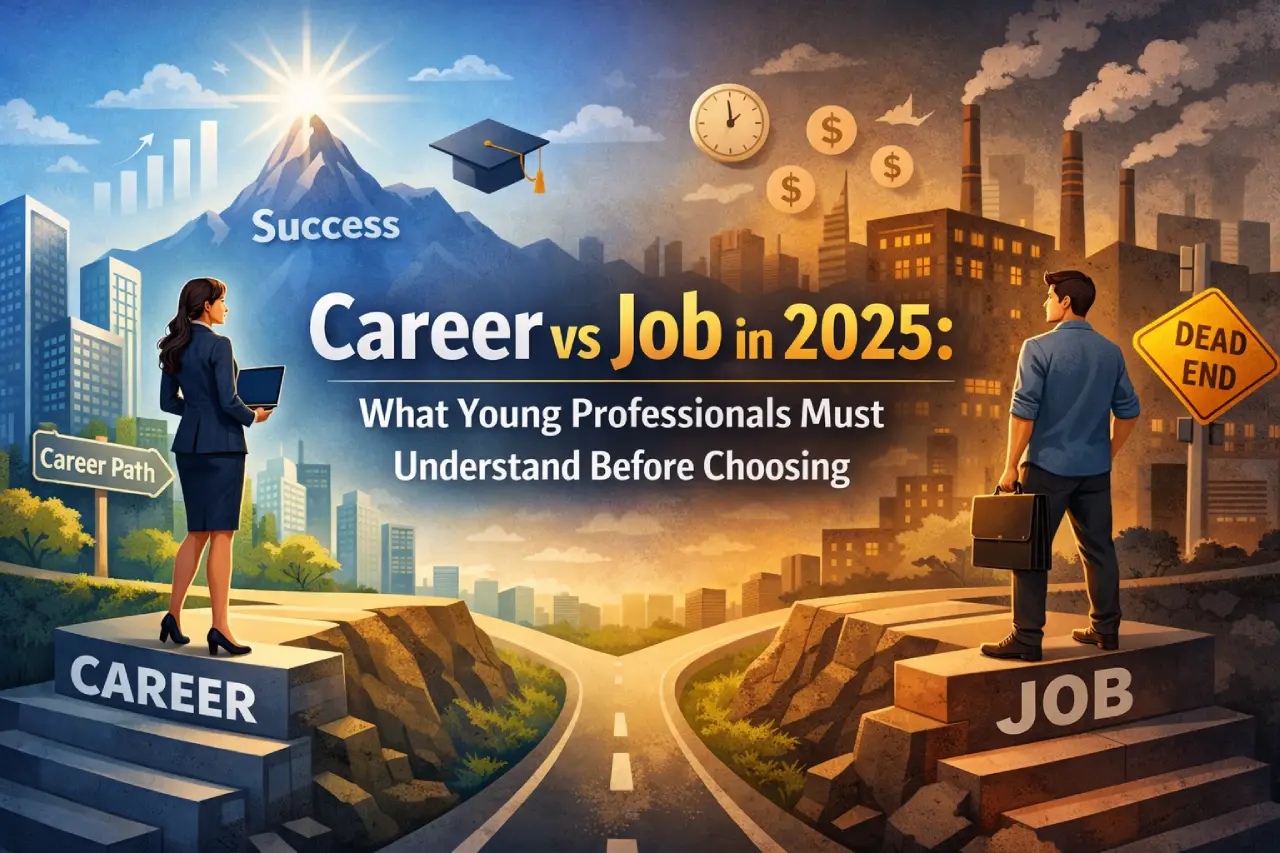
As we step into 2026, the conversation around work has changed sharply. Young professionals, fresh graduates, and even mid-career workers are constantly weighing one basic question: should I focus on a long-term career or settle for a short-term job? While both words are often used interchangeably, the reality is very different. A job may pay the bills today, but a career is what defines where you stand five or ten years from now. In a fast-moving job market shaped by automation, AI tools, and remote work, this difference matters more than ever.
I am writing about this topic because I see many people around me feeling confused, stuck, or rushed into decisions. Some jump from one job to another for quick money, while others hesitate to take risks fearing instability. Understanding the difference between a career and a job is not about choosing the “right” or “wrong” path. It is about knowing what you are trading off and what you are building for yourself in the long run. In 2026, clarity is power, especially when careers are no longer linear and security looks very different from what our parents experienced.
What exactly is a short-term job?
A short-term job is usually taken to meet immediate needs. It could be for income, experience, or convenience. These roles are often task-based, limited in scope, and do not always offer growth beyond the role itself.
Common examples include:
- Temporary office roles or contract-based work
- Gig work such as delivery, freelancing, or on-demand services
- Entry-level jobs taken only for salary, not skill development
Short-term jobs are not bad. In fact, they are sometimes necessary. They help people survive transitions, support families, or explore industries. The problem starts when people remain stuck in such roles without learning new skills or planning the next step.
What defines a long-term career?
A long-term career is a journey, not a single position. It involves gradual skill-building, professional identity, and growth over time. Careers evolve, but they usually move in a clear direction.
A career often offers:
- Skill progression and deeper expertise
- Better earning potential over time
- Recognition, responsibility, and stability
- Alignment with long-term goals and interests
For example, someone may start as a junior analyst, move to a specialist role, and later grow into leadership or consultancy. Each step builds on the previous one, even if the employer changes.
Key differences between a career and a job
Here is a simple comparison to make things clearer:
| Aspect | Short-Term Job | Long-Term Career |
|---|---|---|
| Focus | Immediate income | Future growth |
| Duration | Temporary or uncertain | Long-term vision |
| Skill use | Limited | Continuous development |
| Motivation | Survival or convenience | Purpose and progress |
| Stability | Often unstable | Grows over time |
This table is not meant to judge choices, but to show how outcomes differ if planning is ignored.
Why this distinction matters more in 2026
The workplace in 2026 is unpredictable. Many roles that existed five years ago have changed or disappeared. At the same time, new roles in data, sustainability, health tech, and digital services are growing.
If you only chase short-term jobs without upgrading skills, you risk becoming replaceable. On the other hand, those who invest in learning, adaptability, and industry relevance are better prepared to shift roles without losing direction.
In simple words, careers today are flexible, but they still need intent.
Can a short-term job become part of a career?
Yes, absolutely. The difference lies in mindset. A job becomes career-relevant when:
- You consciously learn skills from it
- You understand how it fits into your larger plan
- You avoid staying stagnant for too long
For instance, a customer support role can lead to operations, product management, or client relations if approached strategically.
How to choose wisely in 2026
Before accepting or continuing in any role, ask yourself:
- What am I learning here?
- Will this experience help me in two years?
- Am I growing or just earning?
There is no shame in taking a short-term job. The mistake is not planning beyond it.