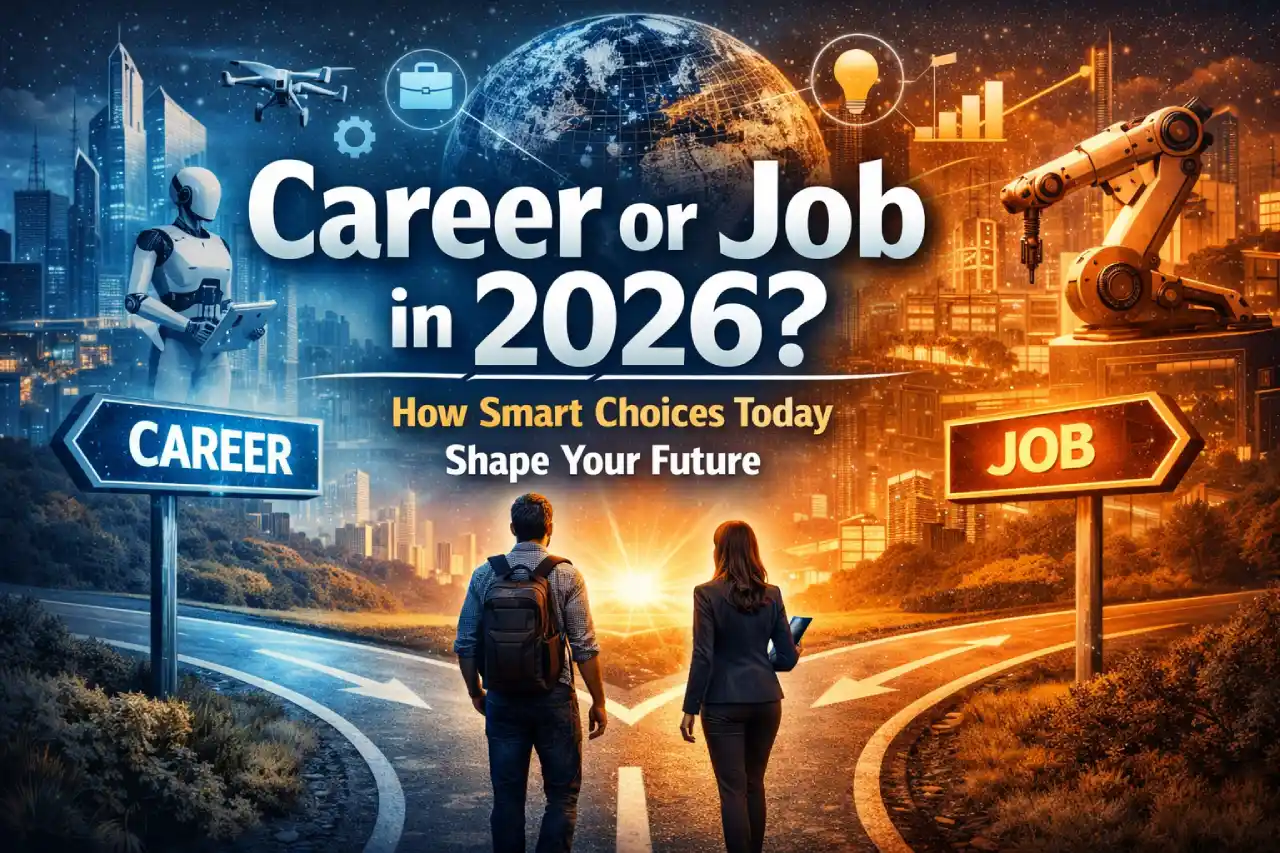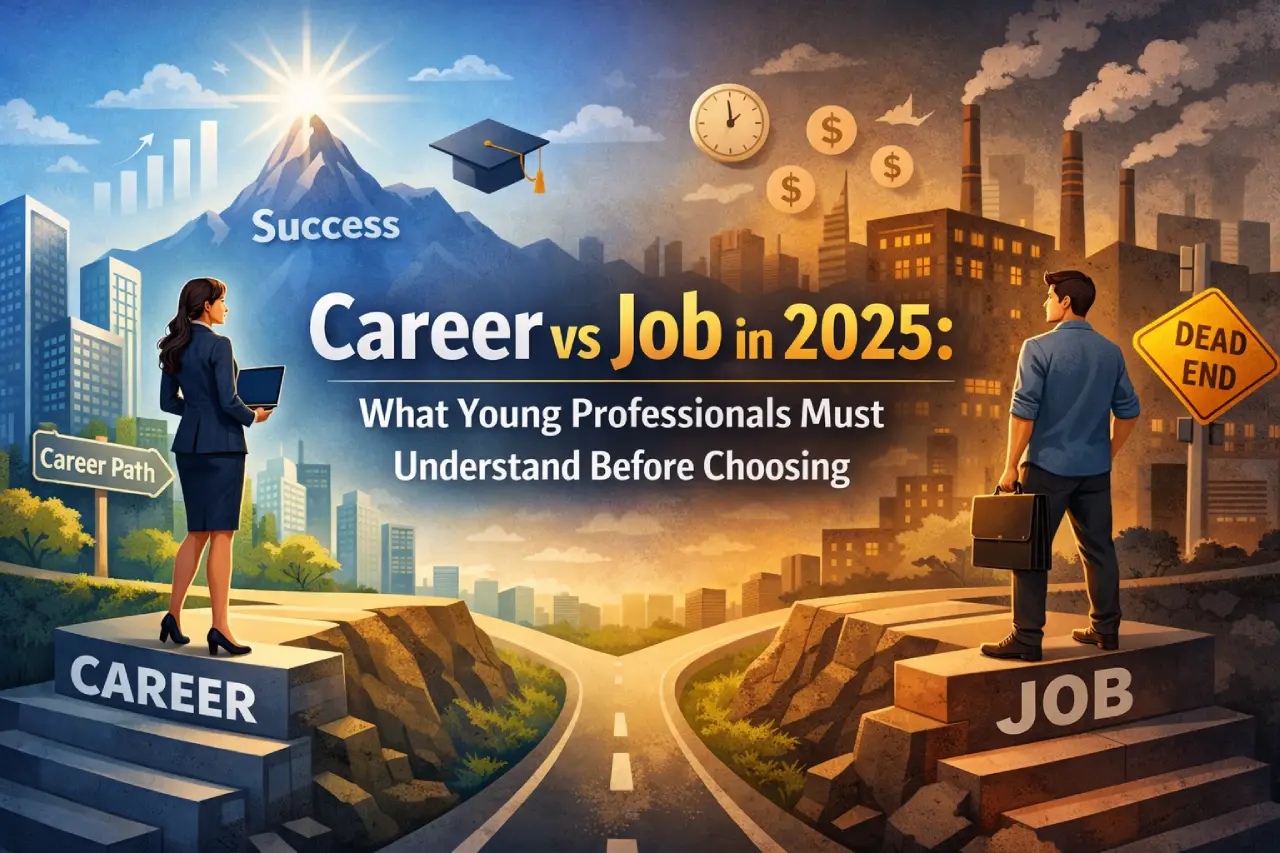
In 2025, the difference between a job and a career has become more important than ever, especially for students and early professionals trying to plan their future. A job is often seen as a role you take up to earn money, meet expenses, and gain short-term stability. A career, on the other hand, is a long-term journey built around skills, growth, learning, and purpose. With changing industries, remote work, and skill-based hiring becoming common, this distinction is no longer just theory—it affects real-life decisions.
I am writing about this because I see many young people feeling confused and anxious about their work choices. Some feel stuck in jobs they don’t enjoy, while others worry whether chasing a “career” is even practical anymore. In 2025, where layoffs, freelancing, startups, and AI-driven roles exist side by side, understanding the difference between a job and a career can help people make smarter choices. This clarity matters not only for income but also for mental peace, long-term growth, and job satisfaction. If you understand where you stand today, you can decide where you actually want to go tomorrow.
What Is a Job in Today’s Context
A job is usually a position you take to earn a salary. It may or may not align with your long-term interests.
Key characteristics of a job in 2025 include:
- Focus on immediate income
- Limited scope beyond assigned duties
- Can be temporary or easily replaceable
- Often driven by necessity rather than passion
For example, a graduate working in a call centre to pay EMIs or support family expenses is doing a job. There is nothing wrong with this, but the role may not offer long-term growth unless skills are upgraded.
What Defines a Career in 2025
A career is a series of connected roles that help you grow in a particular direction over time. It is more about progress than position.
A career usually involves:
- Continuous learning and skill-building
- Clear growth path over years
- Alignment with interests or strengths
- Better long-term stability and satisfaction
For instance, someone starting as a junior data analyst, then moving into analytics consulting or AI-driven roles, is building a career. The income may start slow, but growth compounds over time.
Career vs Job: A Simple Comparison
| Aspect | Job | Career |
|---|---|---|
| Time frame | Short-term | Long-term |
| Purpose | Earn money | Grow professionally |
| Skill focus | Limited | Continuous |
| Emotional connect | Low to moderate | Usually high |
| Stability | Depends on employer | Built through expertise |
Why This Difference Matters More in 2025
The job market in 2025 is skill-heavy and fast-changing. Roles can disappear, but skills stay valuable. People who focus only on jobs often struggle when industries change. Those who focus on careers adapt better because they keep learning.
Also, younger professionals today value flexibility, work-life balance, and meaning. A career allows room to shift roles within the same field, while a job often feels restrictive.
Can a Job Turn Into a Career
Yes, and this is where many people get it wrong. A job can become a career if you:
- Learn new skills alongside work
- Take responsibility beyond your role
- Plan your next move instead of staying stuck
- Use the job as a stepping stone
Many successful professionals started with ordinary jobs but treated them as learning platforms.