JOIN WHATSAPP
STORIES

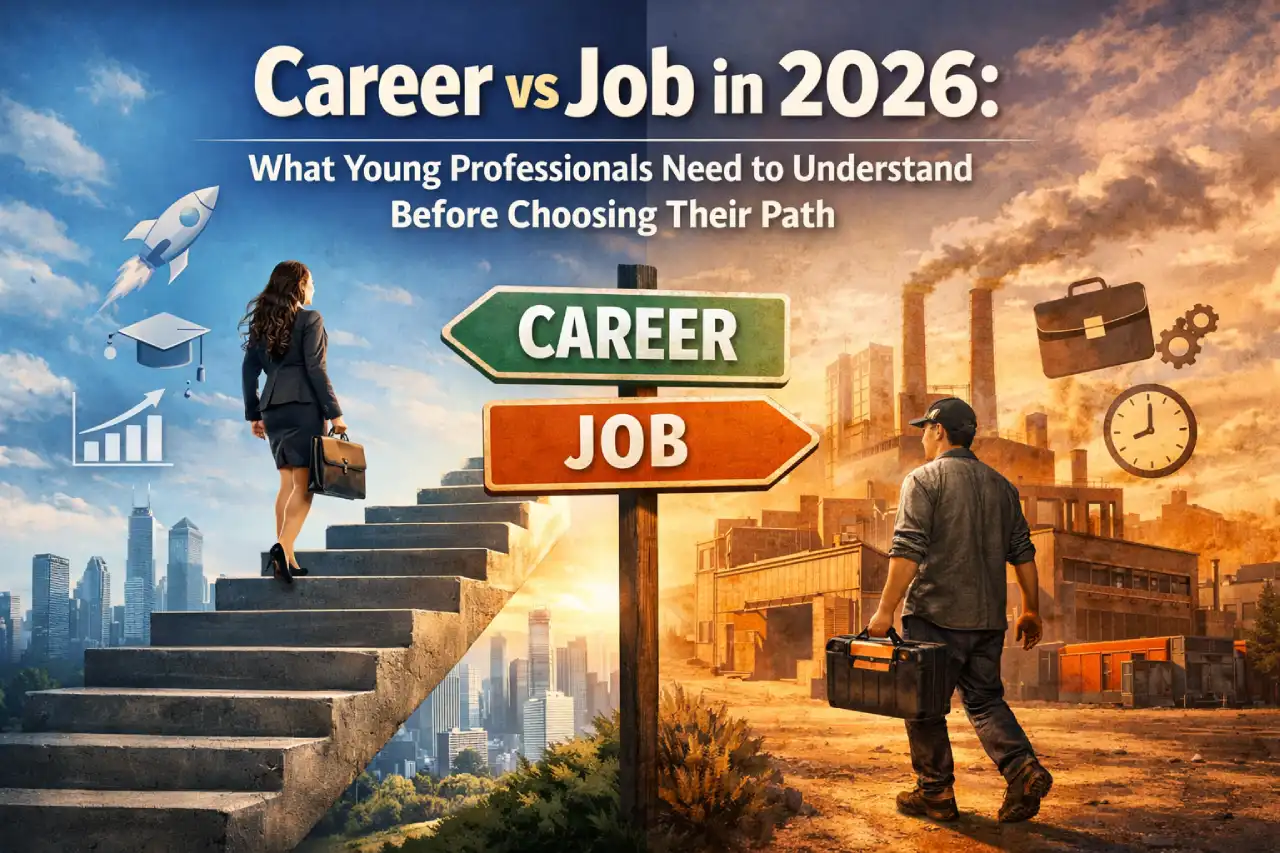
Career vs Job in 2026: What Young Professionals Need to Understand Before Choosing Their Path

Career vs Job in 2026: What Young Professionals Need to Understand Before Choosing Their Path

In 2026, the line between a career and a job feels more blurred than ever. With remote work, freelancing, AI-driven roles, and fast-changing industries, many people are asking a basic but important question: am I building a career, or am I just doing a job? For students and young professionals stepping into the workforce, this distinction matters more now than it did a decade ago. The choices you make early can shape not just your income, but your growth, satisfaction, and long-term stability.

I am writing about this because I see many people feeling stuck, even while being “employed”. They work hard, meet deadlines, and get paid, yet feel unsure about where they are headed. In 2026, understanding the difference between a career and a job is not about status or labels. It is about clarity, direction, and making decisions that align with how the world of work is actually evolving.

What Is a Job in Today’s Context

A job is usually a role you take up to meet immediate needs, most commonly financial ones. It comes with defined responsibilities, working hours, and a salary.

In 2026, jobs are often:

  • Task-oriented and short-term focused
  • Linked to specific deliverables
  • Easily replaceable or automated
  • Not always connected to long-term growth

There is nothing wrong with having a job. Many people start with jobs to gain experience or support themselves. The problem arises when a job is mistaken for a long-term plan.

What Defines a Career in 2026

A career is a long-term journey built around skills, learning, and progression. It is not limited to one company or role, and it often evolves over time.

A career usually involves:

  • Continuous skill development
  • Clear direction and purpose
  • Growth across roles or industries
  • Increasing responsibility and impact

In 2026, careers are no longer linear. People switch domains, learn new skills, and redefine success multiple times, but the underlying direction remains intentional.

Why the Difference Matters More Than Before

Earlier generations could rely on stable jobs turning into lifelong careers. That reality no longer exists for most people.

In today’s world:

  • Automation can wipe out roles quickly
  • Industries evolve faster than degrees
  • Skills matter more than job titles
  • Loyalty to learning beats loyalty to one employer

If you only chase jobs without building skills, you risk becoming irrelevant. A career mindset, on the other hand, keeps you adaptable.

Common Myths Around Career and Job

Many people confuse visibility with progress.

Some common myths include:

  • A high salary automatically means a strong career
  • Staying busy equals growth
  • A prestigious company guarantees long-term success
  • Changing paths means failure

In reality, a low-paying role that builds rare skills may be a better career move than a high-paying job with no learning.

How Young People Should Think in 2026

If you are a student or early professional, the key question is not “What job will I get?” but “What skills am I building?”

A smart approach includes:

  • Choosing roles that teach transferable skills
  • Investing time in learning beyond office work
  • Tracking growth, not just salary
  • Being open to change without panic

In 2026, adaptability is one of the strongest career assets.

When a Job Can Become a Career

A job can turn into a career if you treat it as a learning platform rather than just a paycheck.

This happens when you:

  • Take ownership beyond your role
  • Seek feedback and improvement
  • Build expertise in a domain
  • Connect daily work to long-term goals

The same job can feel like a dead end to one person and a stepping stone to another.

Signs You Are Stuck in a Job, Not a Career

It may be time to rethink your direction if:

  • You are not learning anything new
  • Your work feels repetitive and disconnected
  • You see no growth path after years
  • You rely only on experience, not skills

Recognising this early allows you to course-correct without burnout.

How to Shift From Job Thinking to Career Thinking

The shift starts internally, not with a resignation letter.

You can begin by:

  • Identifying skills your industry values
  • Taking online courses or certifications
  • Building projects or portfolios
  • Networking with people doing work you admire

Career-building is gradual, but intentional.

Leave a Comment

End of Article

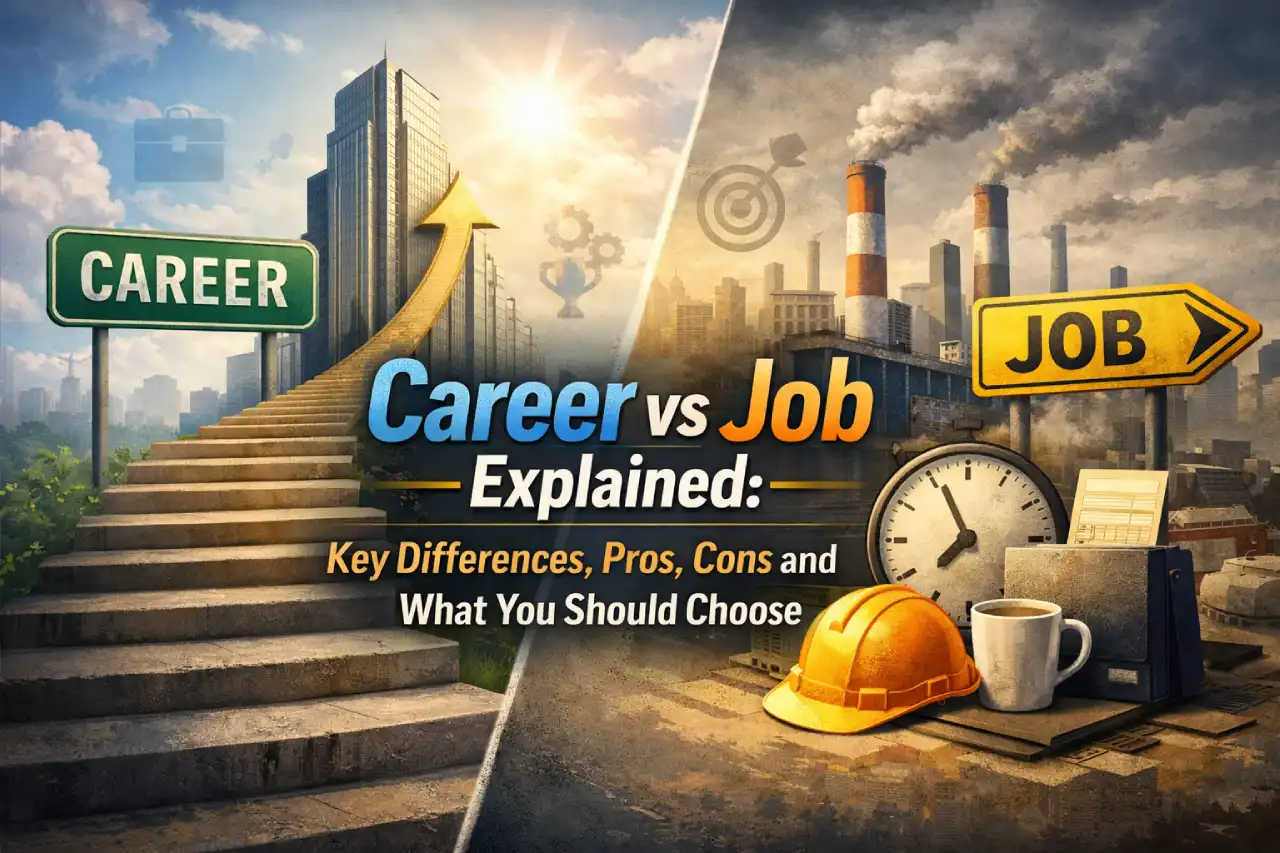
Career vs Job Explained Clearly: Key Differences, Examples and How to Choose the Right Path

Career vs Job Explained Clearly: Key Differences, Examples and How to Choose the Right Path

If you are confused between a job and a career, you are not alone. Many people use these two words interchangeably, but they actually mean different things. A job is something you do to earn money, usually for a short-term purpose, while a career is a long-term journey built around your skills, interests, and goals. Understanding this difference is important, especially if you are planning your future or thinking about what you really want to achieve in life.

I am writing about this because I have seen many students and even working professionals struggle with this confusion. Some people jump from one job to another without direction, while others feel stuck because they are not sure what they are working towards. Knowing the difference between a job and a career can help you make better decisions, stay focused, and build a path that gives both financial stability and personal satisfaction.

What is a Job

A job is a role where you work for a company or organisation in exchange for money.

Key features of a job:

  • Short-term focus
  • Mainly done to earn income
  • Limited connection with long-term goals
  • Fixed responsibilities
  • Less emphasis on growth or passion

For example, working as a cashier, delivery executive, or temporary office assistant can be considered a job.

What is a Career

A career is a long-term professional journey where you grow, learn, and build your identity over time.

Key features of a career:

  • Long-term vision
  • Focus on growth and development
  • Connected with your interests and skills
  • Offers progression and opportunities
  • Builds expertise over time

For example, becoming a teacher, engineer, doctor, or writer is part of a career path.

Career vs Job: Key Differences

Here is a simple comparison to understand the difference clearly:

AspectJobCareer
DurationShort-termLong-term
PurposeEarn moneyBuild future
GrowthLimitedContinuous
MotivationSalaryPassion + growth
StabilityTemporaryMore stable over time

From my perspective, a job can be a part of your career, but not every job leads to a meaningful career.

Can a Job Become a Career

Yes, a job can turn into a career if you approach it with the right mindset.

  • If you learn new skills in your job
  • If you grow within the same field
  • If you set long-term goals

For example, starting as a junior employee and growing into a manager or expert can turn a job into a career.

Why Understanding the Difference Matters

Knowing the difference can help you:

  • Make better career decisions
  • Avoid feeling lost or stuck
  • Choose jobs that align with your goals
  • Plan your future more effectively

In my opinion, this clarity can save you years of confusion and frustration.

How to Choose Between a Job and a Career

If you are just starting out, it is okay to take a job. But over time, you should think about building a career.

Ask yourself:

  • What are my interests and strengths
  • Where do I see myself in 5 or 10 years
  • Am I learning something valuable in my current role
  • Does this job help me grow

Your answers will guide your decisions.

Common Mistakes People Make

Many people unknowingly make these mistakes:

  • Choosing jobs only based on salary
  • Not planning long-term goals
  • Ignoring skill development
  • Staying in comfort zones for too long

From what I have seen, avoiding these mistakes can make a big difference in your journey.

Tips to Build a Strong Career

If you want to move from a job mindset to a career mindset, here are some simple tips:

  • Keep learning and upgrading your skills
  • Set clear long-term goals
  • Network with people in your field
  • Take calculated risks
  • Stay consistent and patient

Building a career takes time, but it is worth the effort.

Leave a Comment

End of Article

Loading more posts...