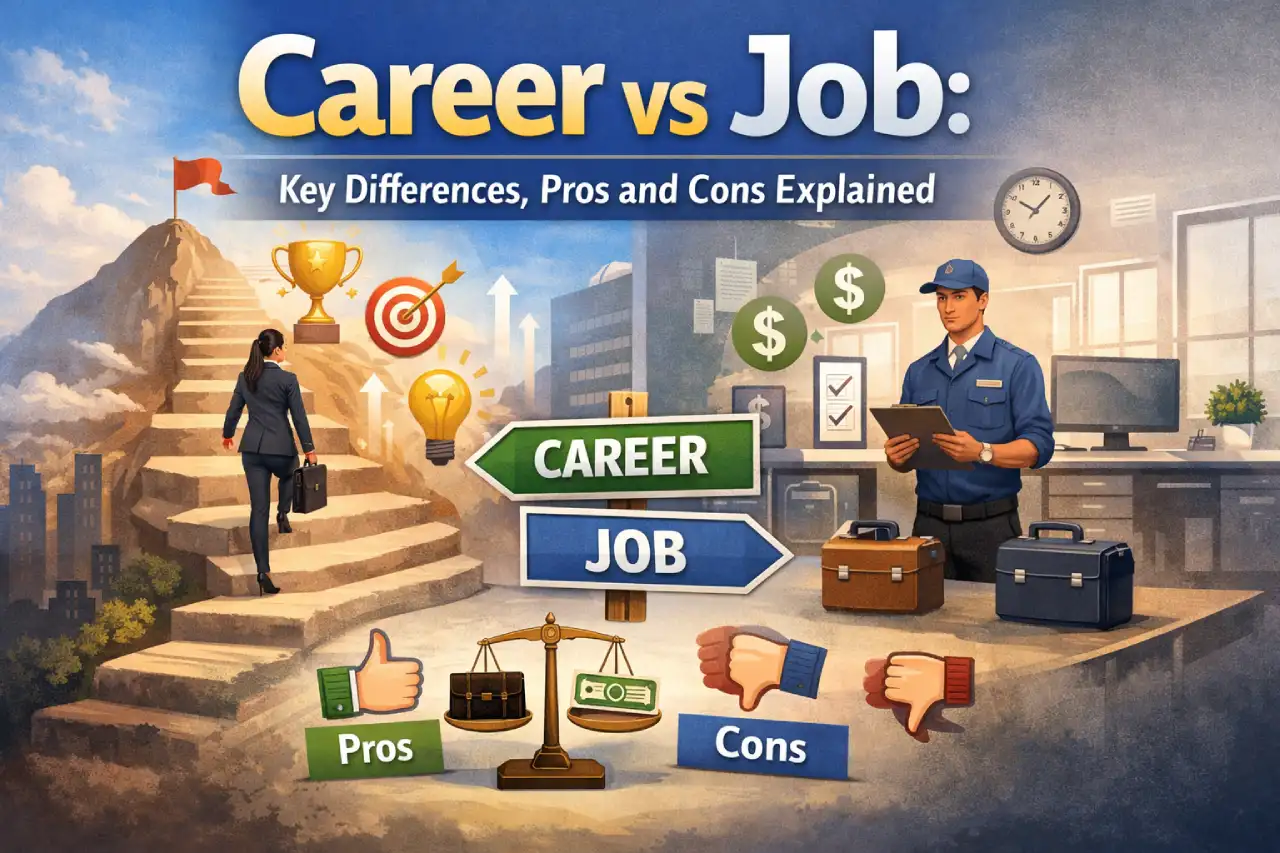
Choosing between a career and a job is one of the biggest decisions most of us make in our lives. Many people use these two words interchangeably, but they are not the same. A job is often seen as a way to earn money in the short term, while a career is a long-term professional journey built around passion, growth and goals. Understanding the difference can help you make smarter decisions about your future.
I am writing about this topic because I have seen many students and young professionals struggle with confusion. Some chase high-paying jobs without thinking long term, while others pursue passion without planning financial stability. The truth is, both paths have advantages and disadvantages. Knowing the pros and cons can help you avoid regret later and make choices that match your personality, needs and ambitions.
Career vs Job: What Is the Real Difference?
Before talking about pros and cons, let us understand the basic difference.
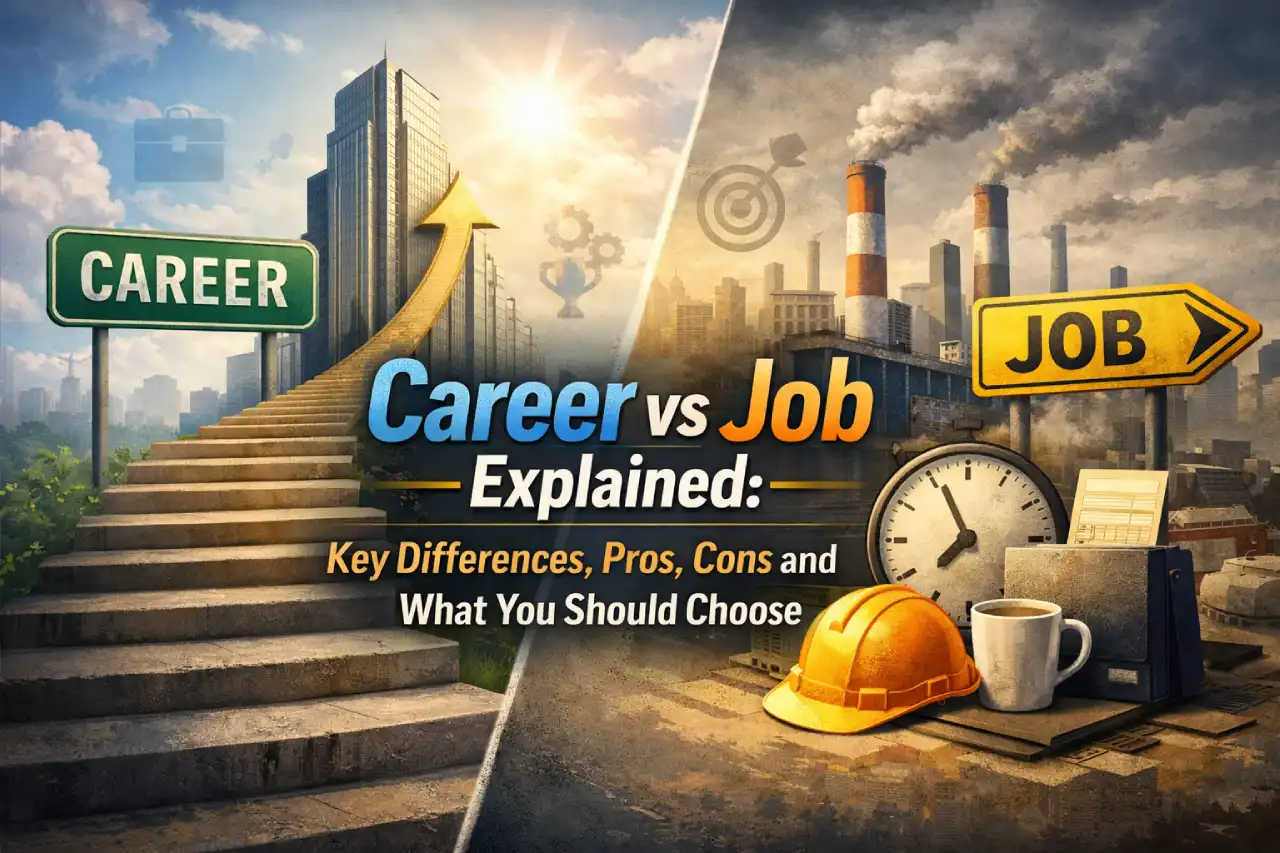
A job is usually a position you take to earn income. It may or may not be related to your long-term goals. You work fixed hours, receive a salary and perform assigned tasks.
A career, on the other hand, is a long-term professional journey. It involves continuous learning, skill development and growth in a particular field. A career often reflects your interests, values and long-term vision.
In simple words, a job pays your bills. A career builds your future.
Pros and Cons of Choosing a Job
Let us first look at the advantages and disadvantages of focusing mainly on a job.
Pros of a Job
• Immediate income and financial stability
• Less long-term pressure or commitment
• Easier to switch if you are unhappy
• Suitable for those who need urgent financial support
Many people take up jobs right after graduation because they need to support their families or repay education loans. In such situations, a job becomes practical and necessary.
Cons of a Job
• Limited long-term growth if not aligned with your interests
• Risk of dissatisfaction or burnout
• Less personal fulfilment
• May feel stuck without clear progression
If you stay in a job only for salary without skill growth, you may feel frustrated after a few years.
Pros and Cons of Choosing a Career
Now let us understand what happens when you focus on building a career.
Pros of a Career
• Long-term growth and promotions
• Higher earning potential over time
• Greater job satisfaction
• Strong professional identity
• Continuous learning and development
When you build a career in a field you truly care about, work feels more meaningful. You are not just earning; you are growing.
Cons of a Career
• May take time to establish financial stability
• Requires patience and consistent effort
• Sometimes involves risk and uncertainty
• Competitive environment in many fields
For example, starting a career in creative fields, research or entrepreneurship may not give instant financial rewards. It requires planning and resilience.
Which One Should You Choose?
This is the direct question many people ask: should I choose a career or a job?
The honest answer is that it depends on your current situation.
If you need immediate income, a job may be the right first step. There is nothing wrong with that. In fact, many successful professionals started with small jobs before building strong careers.
If you have clarity about your passion and can plan long term, focusing on a career can bring deeper satisfaction and financial growth in the future.
In my opinion, the smartest approach is to balance both. Start with a job if needed, but always think about how it fits into your long-term career plan. Do not stay comfortable for too long if it is not helping you grow.
Questions You Should Ask Yourself
Before deciding, ask yourself:
• What are my long-term goals?
• What skills do I want to develop?
• Do I need immediate financial support?
• What kind of life do I see myself living in 10 years?
• Am I ready to take risks for long-term growth?
These questions can give clarity and reduce confusion.