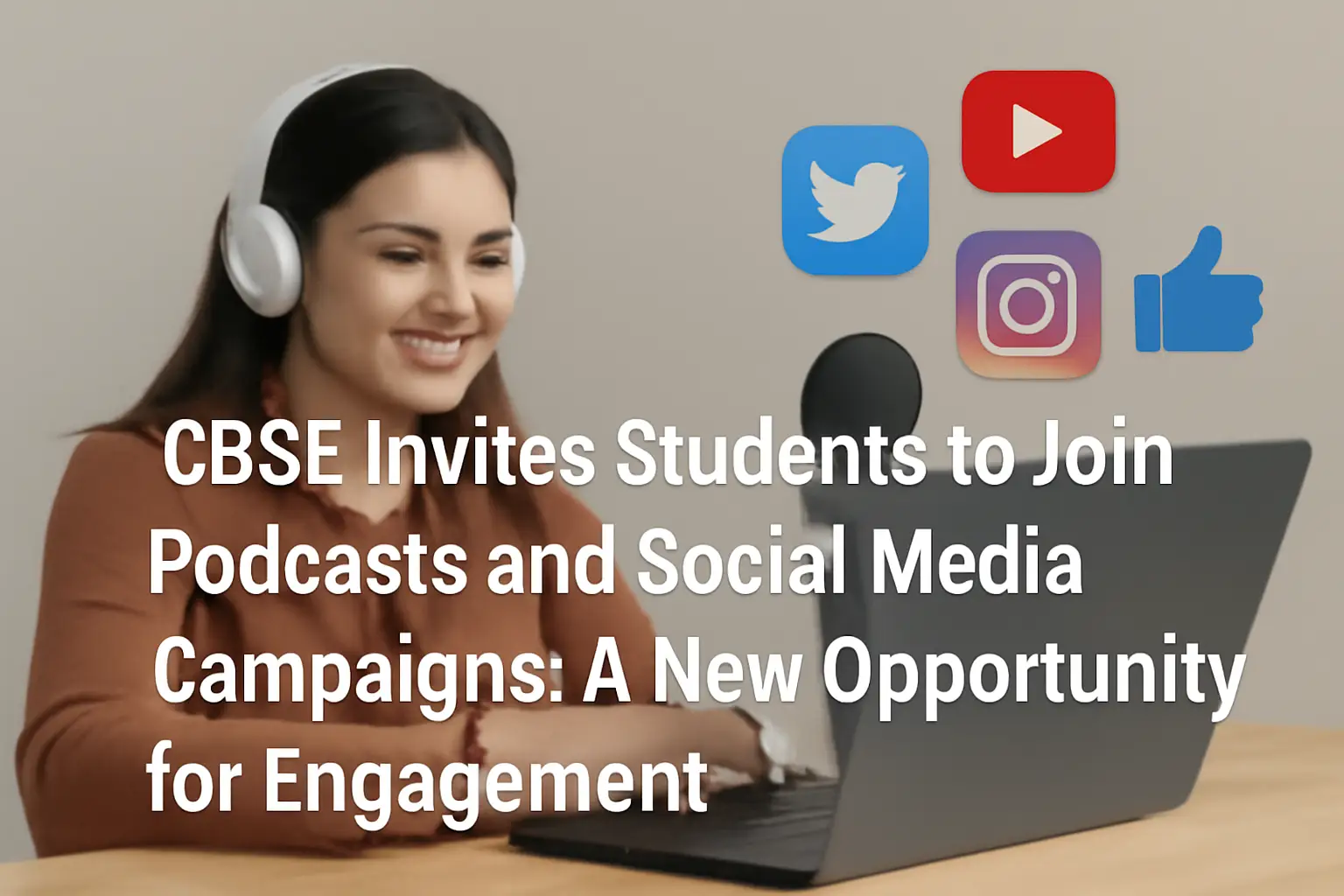
In a move to engage students more actively, the Central Board of Secondary Education (CBSE) has opened up exciting new opportunities for students to participate in its podcasts and social media initiatives. This initiative is designed to involve students in discussions about various educational topics, academic growth, and social awareness. The CBSE is encouraging students from across the country to share their thoughts and ideas, thereby creating a more interactive and inclusive platform for dialogue.
The CBSE’s decision to include students in these initiatives reflects its commitment to modernizing the educational experience and making it more relevant to today’s digital age. As the education sector continues to evolve, initiatives like these offer students a chance to voice their opinions, learn from others, and gain exposure to new mediums of communication, including podcasts and social media platforms. In this article, we’ll dive deeper into why this initiative is a significant step forward for CBSE and how students can make the most of it.
CBSE’s Podcasts and Social Media Initiatives: A New Platform for Student Engagement
1. Why This Initiative Matters
CBSE has always been at the forefront of educational reforms, and with this new initiative, it is aiming to build a more inclusive and interactive education system. Traditionally, schools have been confined to the classroom, but this new project brings education to the digital realm, making it more accessible and relevant to the current generation of learners. By allowing students to participate in podcasts and social media initiatives, CBSE is enabling them to become active contributors to the educational discourse.
This initiative goes beyond just listening or reading about topics; it gives students the power to share their experiences, ideas, and opinions in real time. It also allows them to engage with a wider audience, which could include fellow students, educators, and even experts from various fields. Such initiatives make education more engaging, dynamic, and connected to the world outside the classroom.
2. How Students Can Get Involved
The CBSE is calling on students to participate in podcasts that focus on various topics, ranging from academic subjects to life skills, mental health, and personal development. Students can share their stories, offer tips on effective learning, discuss career options, and engage in discussions about global issues that affect their generation. This initiative will not only allow students to learn but also enhance their communication and presentation skills.
Additionally, CBSE has also expanded its social media presence, allowing students to participate in online campaigns and discussions. By leveraging platforms like Twitter, Instagram, and YouTube, CBSE aims to reach students on a larger scale and offer them an interactive platform to voice their concerns, share achievements, and learn from peers.
3. The Impact of Social Media on Student Learning
Social media is no longer just a platform for entertainment; it has become an integral part of the educational process. With the rise of online learning platforms, social media initiatives have gained considerable traction in the educational sector. CBSE’s social media initiatives aim to use these platforms to complement traditional learning methods and engage students outside the classroom.
Students who participate in CBSE’s social media initiatives will gain firsthand experience in digital communication, content creation, and social media management. These are valuable skills in today’s job market and offer students a unique opportunity to develop competencies that extend beyond academic knowledge.
Benefits of CBSE’s Social Media and Podcast Initiatives
1. Enhanced Learning Experience
By participating in podcasts and social media campaigns, students will not only improve their communication and writing skills but also enhance their understanding of various subjects. Engaging with experts and peers on platforms like these provides exposure to diverse viewpoints and promotes critical thinking. The initiative also encourages students to research, reflect, and present their ideas more effectively.
2. Fostering Creativity and Expression
Through podcasts, students will have the freedom to express their thoughts creatively. Whether they are discussing the importance of environmental conservation or sharing tips on time management for students, these initiatives will allow students to explore their creativity and become content creators in their own right. This can be an incredibly fulfilling experience and also build their confidence in public speaking and self-expression.
3. Networking and Community Building
These initiatives also foster a sense of community and collaboration. Students from various parts of India can connect with one another, share their ideas, and learn from each other. The CBSE’s social media platforms will also allow students to engage with teachers, professionals, and educationalists, creating opportunities for mentorship, guidance, and collaboration that extend beyond the classroom.
A Step Toward Digital Literacy
With the increasing importance of digital literacy in education, CBSE’s decision to include students in podcasts and social media initiatives is a timely move. It prepares students for the future, equipping them with digital communication tools and helping them build a stronger online presence. These initiatives will also give students a voice in the digital world, empowering them to express their opinions and advocate for causes they believe in.