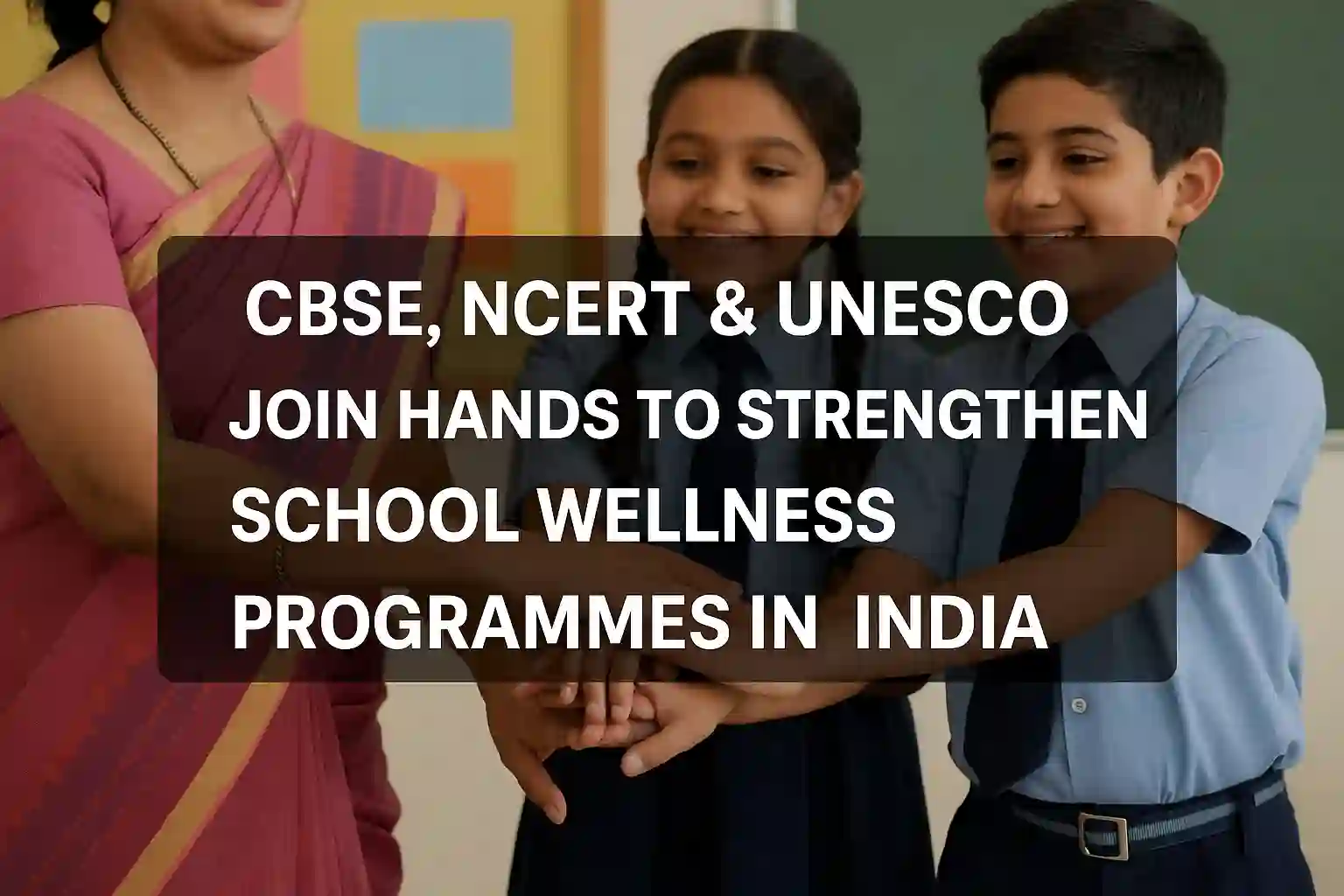
CBSE, NCERT and UNESCO are coming together to expand wellness programmes in schools across India. The aim is to make mental health, emotional wellbeing and life skills a more regular part of school life. Under this partnership, teachers will be trained, wellness content will be updated and students will be encouraged to talk openly about mental health, relationships and stress management. It is expected to benefit lakhs of students across the country.
I decided to write about this because student wellness is one of the most urgent and often neglected issues in our education system. While academic results are regularly discussed, mental health, anxiety, bullying and peer pressure are often brushed under the carpet. Today’s children are under more pressure than ever—board exams, tuition classes, expectations from parents, and even social media. A wellness-focused programme in schools can give them tools to cope better and create a more open, kind and understanding school environment. The fact that top organisations like CBSE, NCERT and UNESCO are coming together on this shows how serious the issue has become.
What’s the Plan?
The project aims to expand the Whole School Approach to Health and Wellness framework already rolled out in some schools under the School Health and Wellness Programme. Now, with support from UNESCO, this will reach more CBSE and Kendriya Vidyalayas, and eventually state government schools.
Key elements of the programme:
- Training for school teachers as Health and Wellness Ambassadors
- Life skills education for students from class 6 to 12
- Inclusion of mental health topics in classroom discussions
- Use of peer educators for better student engagement
- Special focus on topics like gender equality, body positivity, consent, cyber safety and emotional regulation
UNESCO will also provide technical guidance and monitoring support so that the programme stays on track.
Why It Matters in Today’s Time
Many children, especially in urban areas, deal with stress silently. Reports have shown a sharp rise in anxiety and depression among teenagers. In smaller towns and villages, there is still a taboo around mental health. When wellness education becomes a regular part of school life, it helps students:
- Understand their emotions better
- Speak up when they’re in trouble
- Help their friends in times of need
- Break gender stereotypes
- Manage relationships and peer pressure in healthy ways
Also, training teachers in wellness makes a huge difference. A teacher who knows how to spot early signs of stress or trauma in a student can give timely help or alert parents or counsellors.
How Schools Will Roll It Out
The programme will use interactive sessions, activity-based learning, storytelling and open discussions. There will be no separate marks or exams, so the pressure is minimal. It will be done in a friendly, age-appropriate way.
- Schools may hold Wellness Wednesdays or weekly wellness periods
- Special workshops for parents and teachers may also be planned
- Materials will be provided in multiple Indian languages so that regional schools can use them easily
Some schools may also appoint student peer mentors to lead group discussions and create a buddy system.
A Step Towards Holistic Education
Education is not just about marks and degrees. A truly educated person is one who knows how to stay calm under stress, handle failure, respect others and look after their own mental and physical health. I personally believe these values are as important as any science or maths formula. And if schools take the lead in teaching these values, we’ll see stronger, kinder and more confident young citizens in the future.