
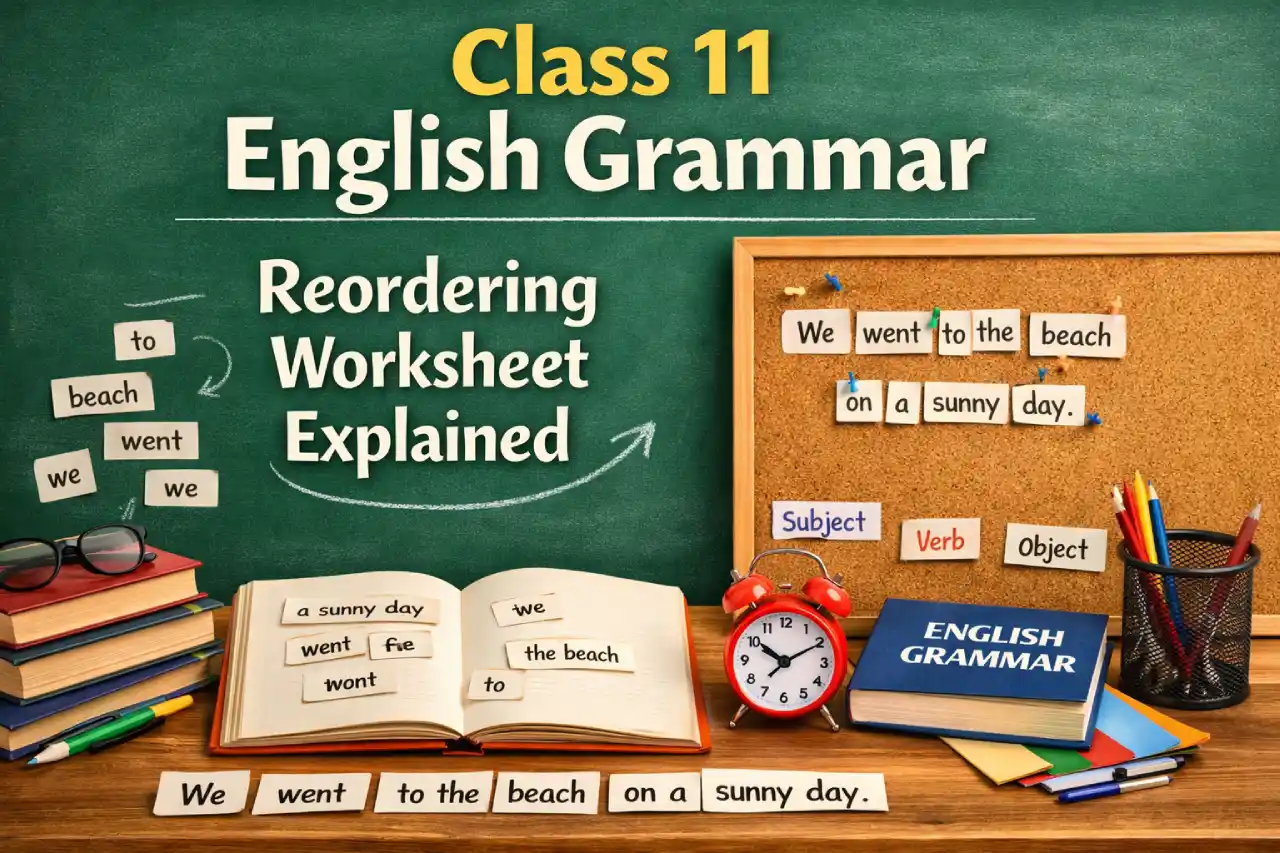
The uploaded PDF contains a comprehensive worksheet on Grammar Reordering for Class 11 English Core. This worksheet focuses on one of the most scoring yet tricky areas of grammar, sentence reordering and jumbled sentences. It includes a wide variety of exercises such as choosing the correct sequence of sentences, rearranging jumbled words into meaningful sentences, transforming sentences, and longer rearrangement tasks based on short passages.
I am writing about this worksheet because reordering questions regularly appear in Class 11 English examinations and also play a major role in competitive exams. Many students know grammar rules but still struggle to arrange words and sentences logically. A well-designed worksheet like this helps students practise sentence structure, logical flow, and coherence, which are essential for improving both writing and comprehension skills.
As seen in the uploaded worksheet PDF Grammar Reordering WS, the questions are arranged across multiple sections and increase in difficulty level.
Overview of the Worksheet
The worksheet is divided into Sections A, B, and C, covering short reordering tasks as well as passage-level rearrangements.
It includes:
• Choosing the correct sequence of sentences
• Rearranging jumbled words into meaningful sentences
• Identifying grammatically correct word order
• Reordering sets of sentences to form short paragraphs
• Transformation of sentences
This variety ensures practice at different levels.
Sentence Reordering Exercises
Many questions require students to arrange four sentences in a logical sequence.
Examples include:
• A short narrative about lighting a cigarette and coughing
• A story about a noble king who lived with his wife and daughters
• Events showing a person jumping out of bed on Saturday morning
These questions test understanding of sequence, cause and effect, and continuity.
Word-Level Jumbled Sentences
A large portion of the worksheet focuses on rearranging words to form correct sentences.
Common examples include:
• The brave alone deserve the fair
• The oil industry depends on the forests
• A library is a place where books are stored and kept for reading
Such exercises strengthen knowledge of subject–verb–object order and modifiers.
Download this Grammar Reordering WS PDF File: Click Here
Everyday Context Sentences
The worksheet uses real-life contexts to make learning practical.
Examples include:
• Inviting friends to a birthday party
• Packing clothes and food for a trip
• Playing cards after a train whistles off
• Kneading dough and keeping it in the fridge
These help students relate grammar to daily situations.
Rearranging Short Paragraphs
Students are asked to reorder multiple sentences to form a coherent paragraph.
Examples include:
• A sequence about the Giant and children playing in his garden
• A passage about poor farmers paying high taxes
• Sentences describing camels storing fat and using it as energy
This improves paragraph organisation skills.
Grammar Concepts Reinforced
Through practice, students automatically revise:
• Sentence structure
• Subject–verb agreement
• Use of connectors
• Tense consistency
• Logical flow of ideas
Without directly teaching theory, the worksheet strengthens these areas.
Why This Worksheet Is Important
From my experience, regular practice of reordering questions helps students:
• Think logically while forming sentences
• Improve writing fluency
• Score better in grammar sections
• Build confidence in sentence construction
It is especially useful for students who struggle with framing correct sentences.
How to Use This Worksheet Effectively
• Read each jumbled set carefully
• Identify the subject and verb first
• Look for connectors like when, because, and, then
• Form a rough sentence mentally
• Check grammar and punctuation
Practising daily for 15–20 minutes makes a big difference.

















