JOIN WHATSAPP
STORIES

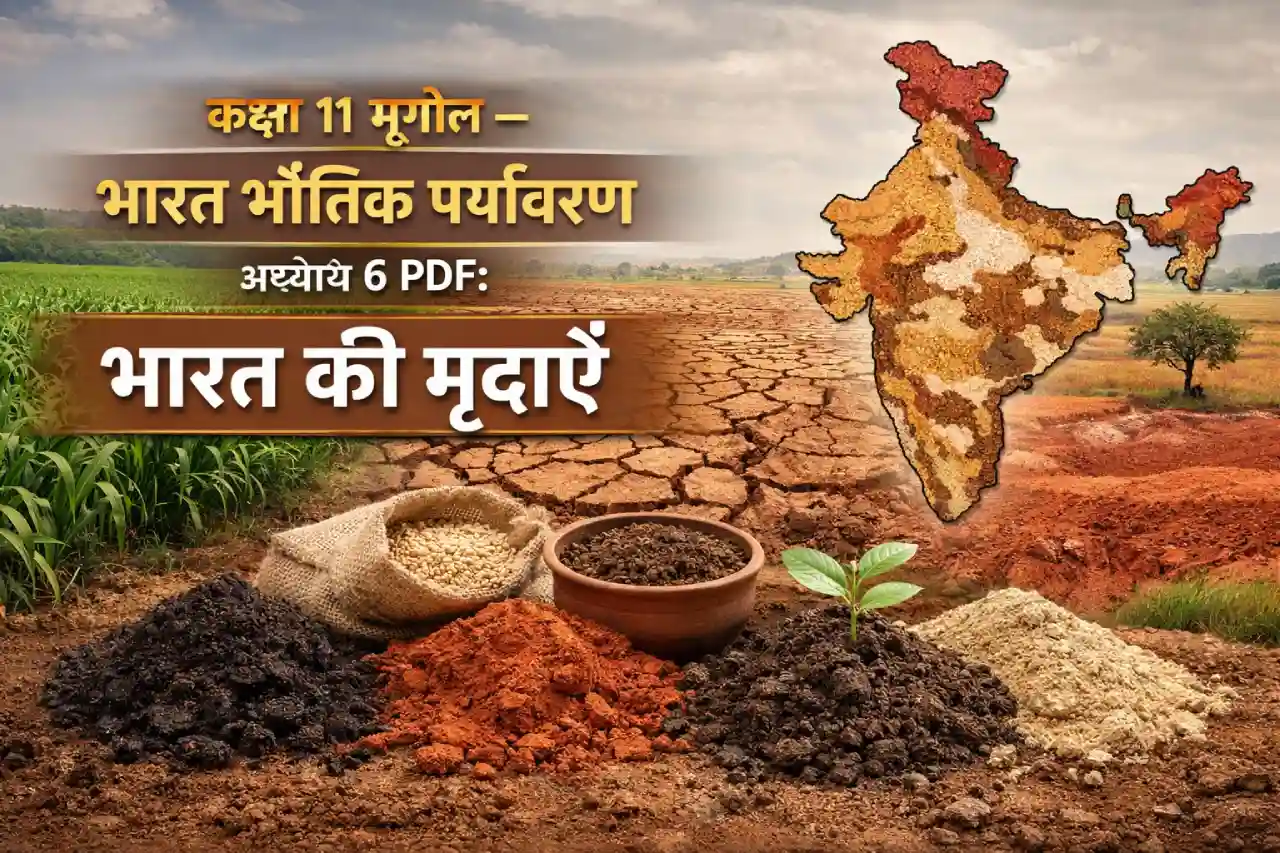
Class 11 Geography – Bhart Bhautik Paryabaran Chapter 6 PDF: भारत की मृदाएँ

Class 11 Geography – Bhart Bhautik Paryabaran Chapter 6 PDF: भारत की मृदाएँ

NCERT Class 11 Geography, India Physical Environment Chapter 6 भारत की मृदाएँ (Soils of India) explains the major soil types found in India, their characteristics, distribution, and usefulness for agriculture. This chapter helps students understand why certain crops grow better in specific regions and how soil plays a vital role in India’s farming system.

I am writing about this chapter because soil-related questions are commonly asked in school examinations as well as in competitive exams. Many students find it difficult to remember soil types and their features, but with clear explanations and regular revision, this chapter becomes quite easy. Having the NCERT PDF also makes last-minute revision simple and stress-free.

What This Chapter Covers

Chapter 6 mainly discusses:

  • Factors affecting soil formation
  • Major soil types of India
  • Characteristics and distribution of each soil type
  • Soil conservation methods

Factors Affecting Soil Formation

Soil is formed through a long natural process influenced by:

  • Parent rock
  • Climate
  • Relief
  • Natural vegetation
  • Time

These factors decide the texture, colour, and fertility of soil.

Major Types of Soils in India

India has several major soil groups.

Alluvial Soil

  • Found in Northern Plains and river valleys
  • Very fertile
  • Good for wheat, rice, sugarcane

Black Soil (Regur)

  • Deccan Plateau
  • Retains moisture well
  • Ideal for cotton

Red and Yellow Soil

  • Eastern and southern parts of India
  • Suitable for millets and pulses

Laterite Soil

  • Western Ghats, Eastern Ghats, North-East
  • Formed under heavy rainfall

Arid Soil

  • Rajasthan and dry regions
  • Low humus content

Forest and Mountain Soil

  • Himalayan region
  • Supports forests and orchards

Importance of Soil Conservation

  • Prevents erosion
  • Maintains fertility
  • Supports sustainable farming

Methods include afforestation, contour ploughing, and terrace farming.

How to Download NCERT Class 11 Geography Chapter 6 PDF

Students can download the official chapter PDF from the NCERT website by following these steps:

Always use the official source to ensure you get the latest and authentic textbook.

Leave a Comment

End of Article

Class 11 Sanskrit Shashwati Chapter 11 PDF: नवद्रव्याणि Explained

Class 11 Sanskrit Shashwati Chapter 11 PDF: नवद्रव्याणि Explained

NCERT Class 11 Sanskrit Shashwati Chapter 11, titled “नवद्रव्याणि”, introduces students to an important concept from Indian philosophy—the nine fundamental substances that make up the universe. The chapter explains these elements in a simple and structured way, helping students understand how ancient thinkers tried to explain the nature of reality through observation and logic.

I am writing about this chapter because many students search for the official NCERT PDF along with a simple explanation before exams. In my experience, topics like “नवद्रव्याणि” may feel slightly abstract at first, but once you understand the list and their meanings, it becomes quite easy to remember and revise. This chapter is important not only for Sanskrit exams but also for gaining a basic idea of traditional Indian philosophy. It helps students connect language learning with deeper concepts. Studying from the official NCERT book and revising regularly can make this chapter scoring and easy to handle.

About the Chapter: नवद्रव्याणि

The term “नवद्रव्याणि” means “nine substances.” These are considered the basic elements that exist in the universe according to classical Indian thought.

The chapter explains each of these substances and their role in the functioning of the world.

The Nine Substances Explained

Here is a simple table to understand the nine dravyas:

Sanskrit TermMeaning (Simple English)
पृथ्वी (Prithvi)Earth
आपः (Apah)Water
तेजः (Tejas)Fire
वायु (Vayu)Air
आकाश (Akasha)Space
काल (Kala)Time
दिशा (Disha)Direction
आत्मा (Atma)Soul
मनः (Manas)Mind

These elements together explain the physical and non-physical aspects of existence.

Key Ideas in the Chapter

1. Understanding the Universe

The chapter explains how everything in the world is made up of basic substances.

2. Physical and Non-Physical Elements

Some substances like earth and water are physical, while others like time and soul are abstract.

3. Connection Between Mind and Body

The inclusion of “मनः” (mind) and “आत्मा” (soul) shows the importance of inner consciousness.

Why This Chapter Is Important for Students

  • Helps understand basic philosophical concepts
  • Improves Sanskrit reading and comprehension
  • Important for exam questions and explanations
  • Builds logical and conceptual thinking

Students who understand the list properly can easily score marks.

Study Tips for Chapter 11

  • Memorise the nine dravyas and their meanings
  • Understand the difference between physical and abstract elements
  • Practise writing short explanations
  • Revise regularly using a table format

This makes the chapter easier to revise before exams.

How to Download NCERT Class 11 Sanskrit Shashwati Chapter 11 PDF

Students can download the official chapter PDF from the National Council of Educational Research and Training website by following these steps:

Always use the official NCERT website to ensure you get the correct and updated version.

Leave a Comment

End of Article

Loading more posts...
















