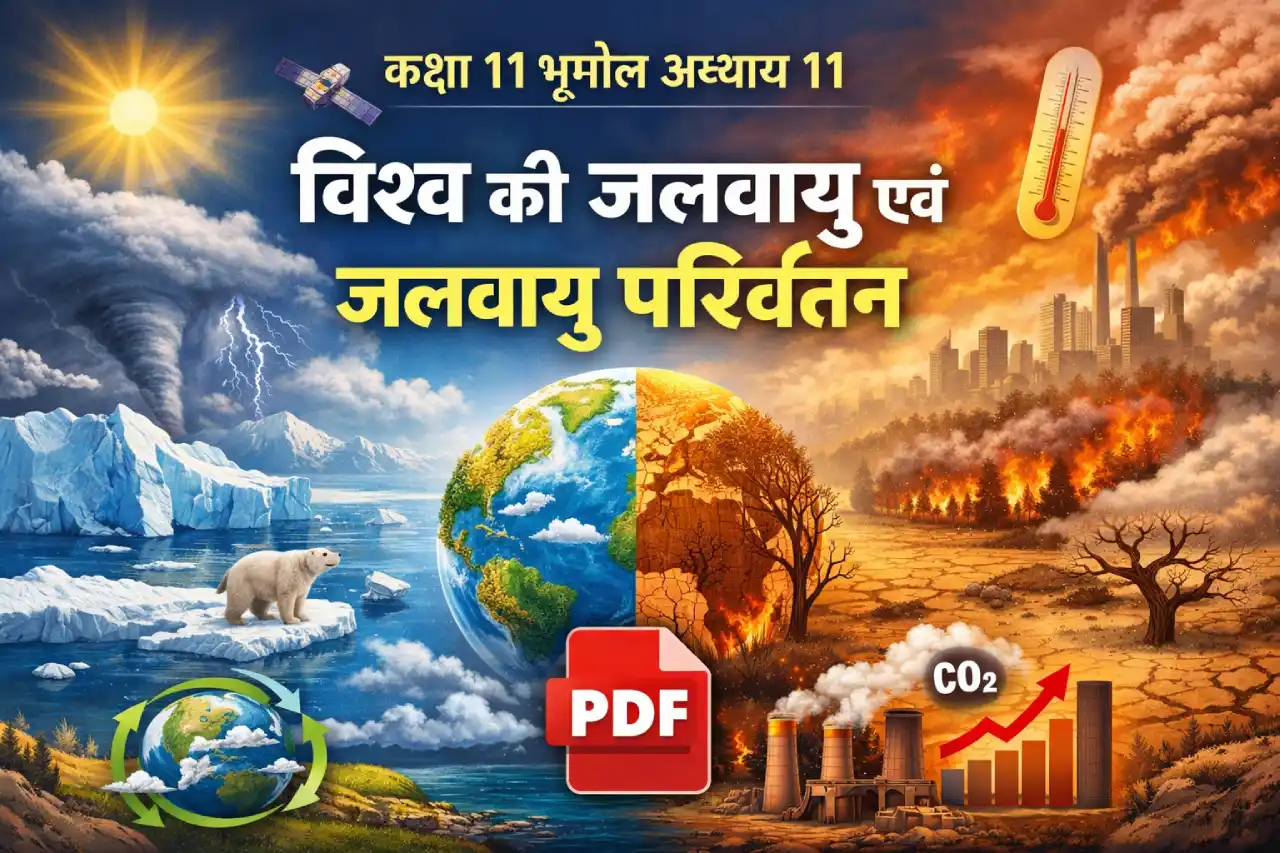
NCERT Class 11 Geography Chapter 11, विश्व की जलवायु एवं जलवायु परिवर्तन, explains how climate patterns differ across the world and why climate change has become a serious global concern. This chapter introduces students to major climate types, their distribution, and the natural as well as human factors influencing climate. It also discusses long-term climate change, its causes, and its visible impacts on different regions of the world.
I am writing about this chapter because many students confuse weather with climate and struggle to link climate change with real-world events. Chapter 11 clears this confusion by explaining climate in a structured way, starting from global climate patterns and moving towards climate change. This chapter is extremely relevant today because issues like global warming, melting glaciers, rising sea levels, and extreme weather events are no longer theoretical. For Class 11 students, this topic is important not only for exams but also for building awareness about environmental challenges they hear about daily in news and discussions. A strong understanding here also helps later in topics related to Indian climate, geography of resources, and environmental studies.
What This Chapter Covers
Chapter 11 focuses on global climate systems and how they are changing over time. It explains why the Earth has different climate zones and what happens when these systems are disturbed.
Major Climate Types of the World
The chapter explains different climate regions of the world based on temperature and rainfall patterns. Some major climate types discussed include:
- Equatorial climate
- Tropical monsoon climate
- Desert climate
- Mediterranean climate
- Temperate climate
- Polar climate
Students are expected to understand their characteristics and locate them on a world map.
Factors Controlling World Climate
This section explains why climates differ from one place to another. Important controlling factors include:
- Latitude
- Altitude
- Distance from the sea
- Ocean currents
- Pressure and wind systems
These factors are frequently asked in short and long answer questions.
Understanding Climate Change
One of the most important parts of this chapter is climate change. It explains how Earth’s climate changes over long periods and how recent changes are faster due to human activities. Key points covered include:
- Greenhouse effect
- Global warming
- Role of carbon dioxide and other gases
- Human activities like deforestation and industrialisation
This section helps students connect geography with environmental science.
Impacts of Climate Change
The chapter clearly links climate change with real-world impacts such as:
- Rising global temperatures
- Melting of glaciers and polar ice
- Sea-level rise
- Changes in rainfall patterns
- Increase in floods, droughts, and cyclones
These examples are useful for writing well-structured answers in exams.
Why Chapter 11 Is Important for Exams
Questions from this chapter are often conceptual and analytical. Students are commonly asked about:
- Difference between weather and climate
- Factors affecting world climate
- Causes and effects of climate change
Clear understanding and use of examples can easily fetch good marks.
How to Download NCERT Class 11 Geography Chapter 11 PDF (Hindi)
Students can download the official Hindi PDF by following these steps:
- Visit the official NCERT website
- Go to the Textbooks / E-Books section
- Select Class 11
- Choose Geography
- Open Fundamentals of Physical Geography (Hindi)
- Click on Chapter 11: विश्व की जलवायु एवं जलवायु परिवर्तन
- Download the PDF for free
Always rely on the official NCERT PDF to ensure correct content and updated syllabus.