
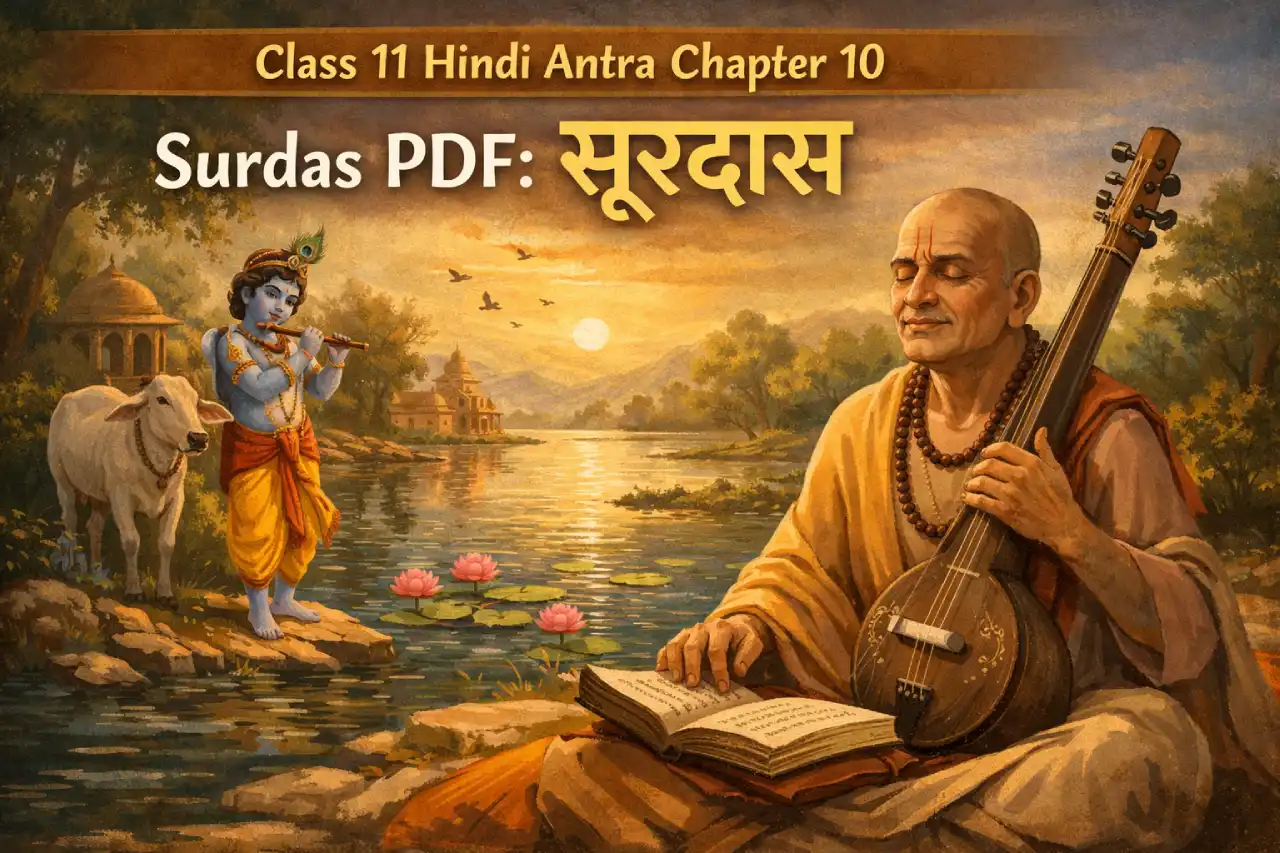
NCERT Class 11 Hindi Antra Chapter 10 introduces students to the devotional poetry of Surdas, one of the most celebrated poets of the Bhakti tradition. This chapter mainly focuses on Surdas’s devotion to Lord Krishna, especially his vivid descriptions of Krishna’s childhood. Written in Braj Bhasha, Surdas’s poetry is emotional, visual, and deeply rooted in Indian culture. For Class 11 students, this chapter is important because it represents a major stream of Hindi literature where devotion, emotion, and artistic expression come together in a powerful way.
I am writing about this chapter because many students treat Surdas’s poetry as just another syllabus topic, without really understanding why his work still matters. Surdas does not merely praise Krishna; he brings divine stories closer to everyday human emotions like love, care, joy, and pain. From an exam perspective, questions are often asked on the poet’s introduction, central theme, poetic style, and emotional appeal of the verses. A clear understanding helps students frame well-structured answers instead of memorised lines. Beyond exams, Surdas’s poetry helps readers appreciate how literature can express devotion in a deeply human and relatable form, which makes this chapter worth studying with attention.
Who Was Surdas
Surdas was a prominent poet of the Bhakti movement and is traditionally believed to be a devotee of Lord Krishna. His poetry mainly revolves around Krishna’s बाल लीला (childhood activities).
Key points about Surdas:
- Known for Krishna-bhakti poetry
- Wrote mainly in Braj Bhasha
- Associated with the Vallabhacharya tradition
- His compositions are part of Sur Sagar
These points are frequently asked in short-answer questions.
Central Themes of the Chapter
The poems included in this chapter highlight:
- Deep devotion towards Lord Krishna
- Mother-child relationship, especially Yashoda and Krishna
- Innocence and playfulness of Krishna
- Emotional connection between devotee and God
Students should focus on how emotions are expressed rather than only retelling the story.
Language and Poetic Style
Surdas’s language is simple, musical, and full of imagery. His verses create clear visual scenes in the reader’s mind.
Important features of his style include:
- Use of Braj Bhasha
- Strong emotional appeal
- Descriptive and lyrical expression
- Focus on bhakti rasa
These aspects help in writing analytical answers in exams.
Why This Chapter Is Important for Exams
From an academic point of view, this chapter helps students understand:
- Bhakti movement literature
- Devotional poetry as a literary form
- Emotional expression in Hindi poetry
Questions often ask for theme explanation, poet introduction, or interpretation of verses.
How to Download NCERT Class 11 Hindi Antra Chapter 10 PDF
Students can download the official chapter PDF by following these steps:
- Visit the official NCERT website
- Go to the Textbooks section
- Select Class 11
- Choose Hindi – Antra
- Click on Chapter 10: सूरदास
- Download the PDF for study and revision
Always rely on the official NCERT source to ensure syllabus accuracy.

















