JOIN WHATSAPP
STORIES

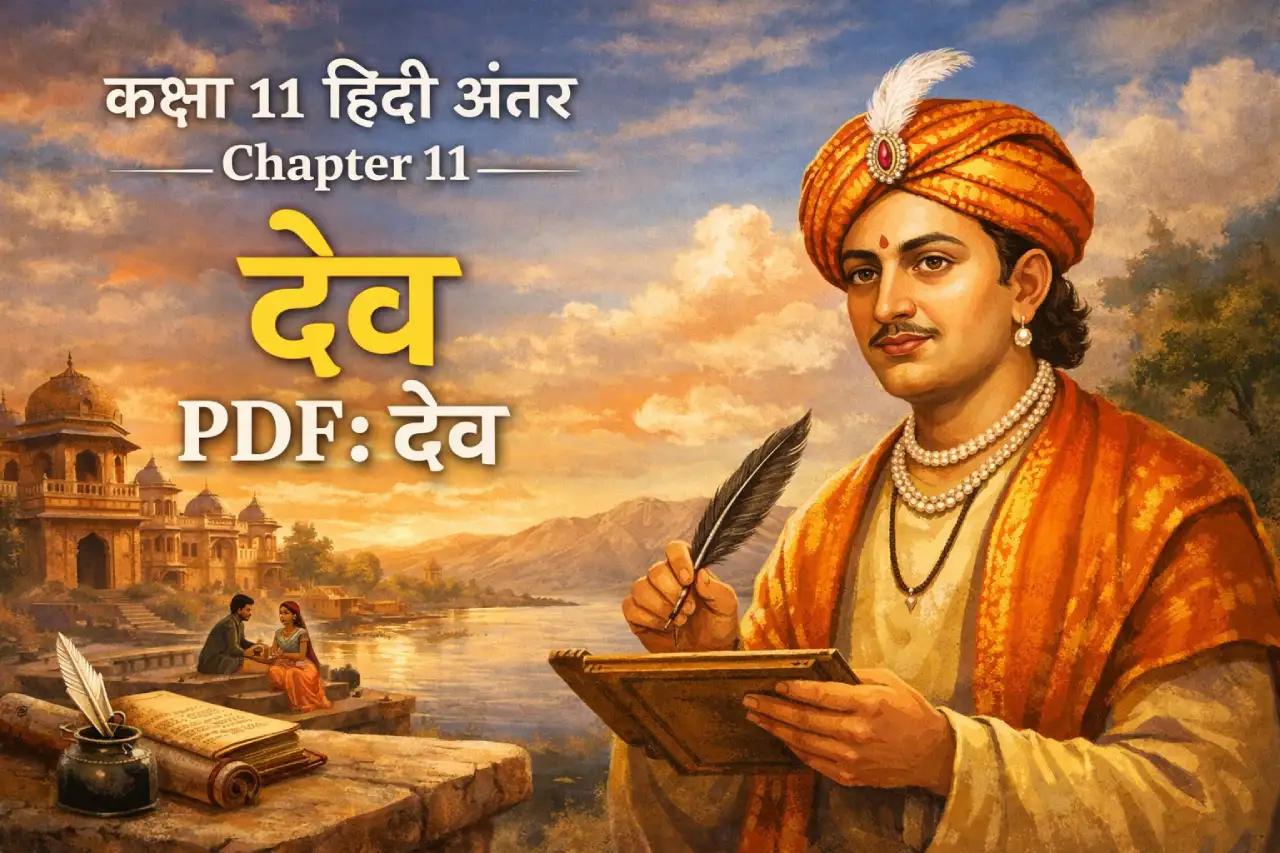
Class 11 Hindi Antra Chapter 11 Dev PDF: देव

Class 11 Hindi Antra Chapter 11 Dev PDF: देव

NCERT Class 11 Hindi Antra Chapter 11 introduces students to the poetry of Dev, a well-known poet of the Riti Kaal tradition. This chapter highlights Dev’s mastery over language, emotions, and poetic expression, especially his portrayal of love, beauty, and human feelings. His poetry is rich in imagery and reflects the cultural and literary tastes of his time. For Class 11 students, this chapter is important because it represents a major phase of Hindi literature where ornamentation, emotion, and aesthetic beauty were given special importance.

I am writing about this chapter because Dev’s poetry often feels difficult to students at first glance. The language looks decorative, and the emotions seem layered, which can confuse readers who try to memorise meanings without understanding the context. This chapter deserves attention because it helps students learn how Hindi poetry evolved from devotional themes to refined expressions of love and beauty. From an exam point of view, questions are regularly asked about the poet’s introduction, literary features, and central themes. If students clearly understand why Dev wrote the way he did, writing answers becomes much easier and more natural, instead of sounding forced or bookish.

Who Was Dev

Dev was an important poet of the Riti Kaal, a period known for its focus on shringaar rasa and poetic elegance. His works are admired for emotional depth and artistic beauty.

Important points about Dev:

  • Belonged to the Riti Kaal tradition
  • Known for refined love poetry
  • Used rich imagery and emotional expressions
  • Focused on shringaar rasa

These points are useful for short and long answer questions.

Central Themes of the Chapter

The poems included in this chapter mainly focus on:

  • Love and attraction
  • Emotional sensitivity
  • Beauty and grace
  • Human relationships

Students should note how emotions are described indirectly through imagery and expressions.

Language and Poetic Style

Dev’s language is polished and expressive. His poetry reflects a deep understanding of emotions and aesthetics.

Key features of his style include:

  • Decorative and refined language
  • Strong use of imagery
  • Emotional intensity
  • Focus on poetic beauty

These features are often asked in analytical exam questions.

Why This Chapter Matters for Class 11 Students

This chapter helps students understand:

  • The Riti Kaal phase of Hindi literature
  • How poetry can express emotions artistically
  • The importance of language and style in literature

Understanding these aspects improves answer quality in exams.

How to Download NCERT Class 11 Hindi Antra Chapter 11 PDF

Students can download the official PDF by following these steps:

  • Visit the official NCERT website
  • Go to the Textbooks section
  • Select Class 11
  • Choose Hindi – Antra
  • Click on Chapter 11: देव
  • Download the PDF for regular study and revision

Always use the official NCERT website to stay aligned with the current syllabus.
Leave a Comment

End of Article

Class 11 Sanskrit Shashwati Chapter 11 PDF: नवद्रव्याणि Explained

Class 11 Sanskrit Shashwati Chapter 11 PDF: नवद्रव्याणि Explained

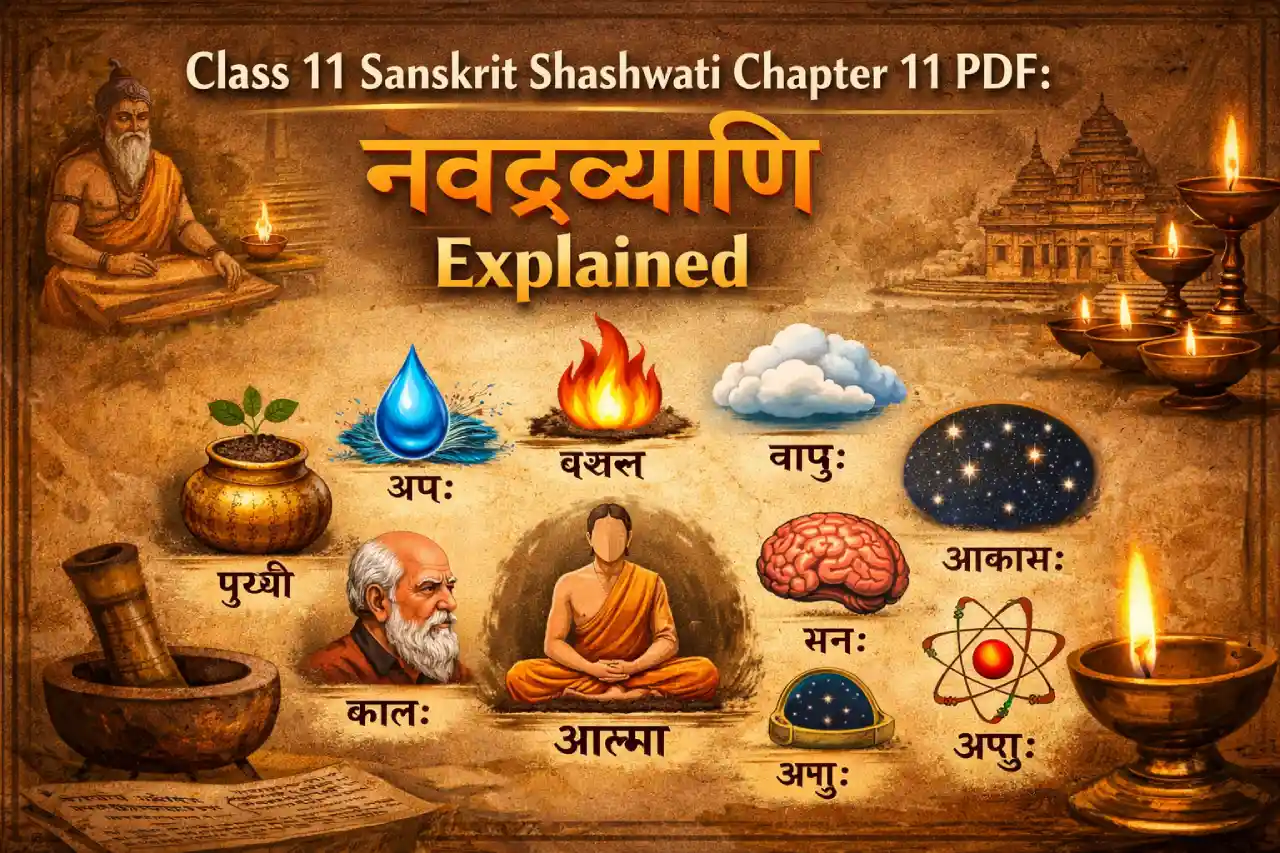
NCERT Class 11 Sanskrit Shashwati Chapter 11, titled “नवद्रव्याणि”, introduces students to an important concept from Indian philosophy—the nine fundamental substances that make up the universe. The chapter explains these elements in a simple and structured way, helping students understand how ancient thinkers tried to explain the nature of reality through observation and logic.

I am writing about this chapter because many students search for the official NCERT PDF along with a simple explanation before exams. In my experience, topics like “नवद्रव्याणि” may feel slightly abstract at first, but once you understand the list and their meanings, it becomes quite easy to remember and revise. This chapter is important not only for Sanskrit exams but also for gaining a basic idea of traditional Indian philosophy. It helps students connect language learning with deeper concepts. Studying from the official NCERT book and revising regularly can make this chapter scoring and easy to handle.

About the Chapter: नवद्रव्याणि

The term “नवद्रव्याणि” means “nine substances.” These are considered the basic elements that exist in the universe according to classical Indian thought.

The chapter explains each of these substances and their role in the functioning of the world.

The Nine Substances Explained

Here is a simple table to understand the nine dravyas:

Sanskrit TermMeaning (Simple English)
पृथ्वी (Prithvi)Earth
आपः (Apah)Water
तेजः (Tejas)Fire
वायु (Vayu)Air
आकाश (Akasha)Space
काल (Kala)Time
दिशा (Disha)Direction
आत्मा (Atma)Soul
मनः (Manas)Mind

These elements together explain the physical and non-physical aspects of existence.

Key Ideas in the Chapter

1. Understanding the Universe

The chapter explains how everything in the world is made up of basic substances.

2. Physical and Non-Physical Elements

Some substances like earth and water are physical, while others like time and soul are abstract.

3. Connection Between Mind and Body

The inclusion of “मनः” (mind) and “आत्मा” (soul) shows the importance of inner consciousness.

Why This Chapter Is Important for Students

  • Helps understand basic philosophical concepts
  • Improves Sanskrit reading and comprehension
  • Important for exam questions and explanations
  • Builds logical and conceptual thinking

Students who understand the list properly can easily score marks.

Study Tips for Chapter 11

  • Memorise the nine dravyas and their meanings
  • Understand the difference between physical and abstract elements
  • Practise writing short explanations
  • Revise regularly using a table format

This makes the chapter easier to revise before exams.

How to Download NCERT Class 11 Sanskrit Shashwati Chapter 11 PDF

Students can download the official chapter PDF from the National Council of Educational Research and Training website by following these steps:

Always use the official NCERT website to ensure you get the correct and updated version.

Leave a Comment

End of Article

Loading more posts...