JOIN WHATSAPP
STORIES

Class 11 Hindi Antra Chapter 3 PDF: टॉर्च बेचनेवाले

Class 11 Hindi Antra Chapter 3 PDF: टॉर्च बेचनेवाले

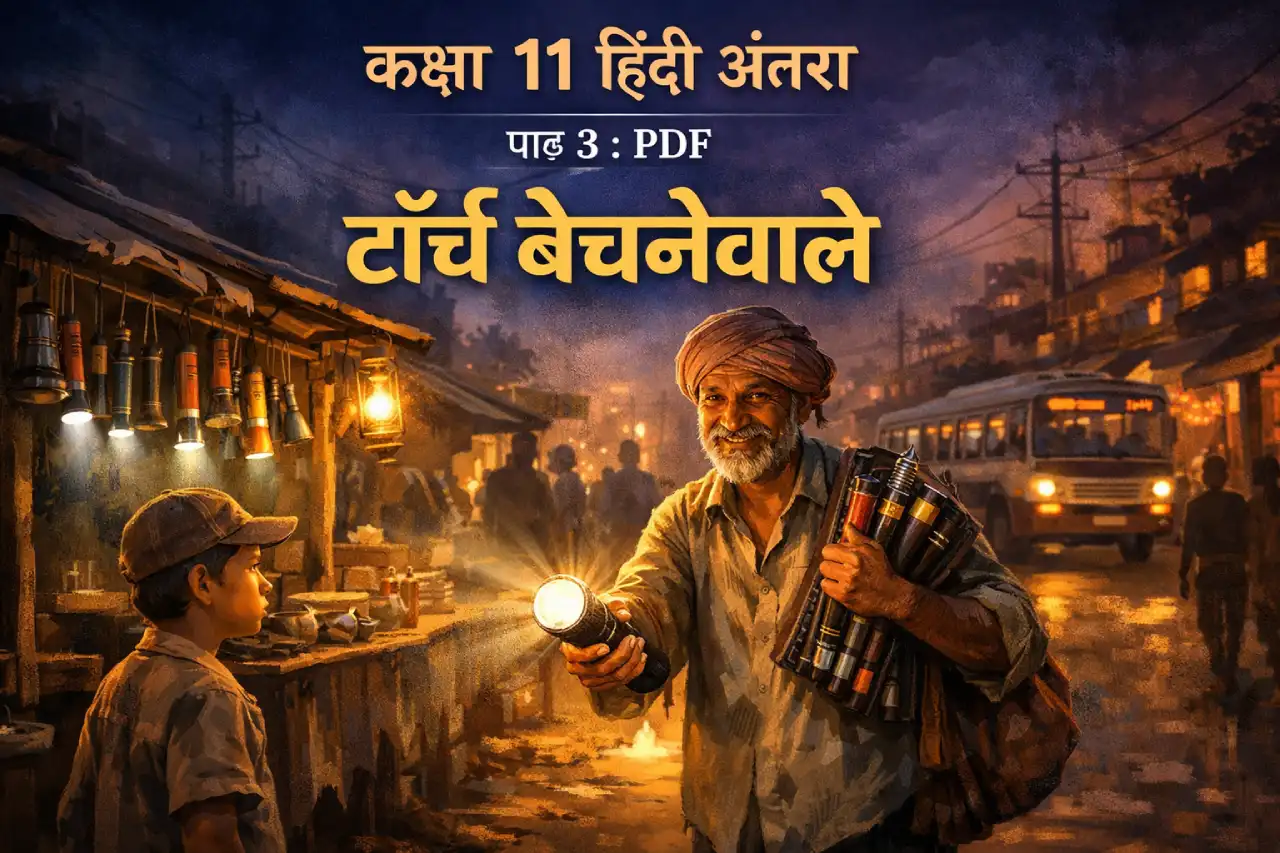
NCERT Class 11 Hindi Antra Chapter 3, टॉर्च बेचनेवाले, is a sharp and thought-provoking short story that talks about hope, illusion, and social reality in a very subtle way. Written by Harishankar Parsai, the chapter presents an ordinary torch seller whose words promise light, but whose reality exposes a deeper darkness in society. The story may look simple on the surface, but it carries strong symbolic meaning that connects directly with human psychology and social behaviour.

I am writing about this chapter because टॉर्च बेचनेवाले is one of those lessons that students often memorise for exams without truly understanding its message. This chapter is important because it goes beyond storytelling and questions how easily people get influenced by false promises. It reflects how society often looks for shortcuts, miracles, and instant solutions instead of real change. For Class 11 students, this lesson helps develop analytical thinking and prepares them for long-answer questions where interpretation matters more than narration. Once you understand the symbolism of the torch and the seller, the chapter becomes extremely easy to write about in exams.

About the Story: टॉर्च बेचनेवाले

The story revolves around a man who sells torches by making big claims about the light they can spread. However, the irony lies in the fact that neither the torch nor the seller truly removes darkness. Through this simple setup, the writer exposes social hypocrisy and blind faith.

Harishankar Parsai uses satire to show how people believe in loud speeches rather than truth. The story does not preach directly but leaves the reader uncomfortable, which is exactly its strength.

Symbolism Used in the Chapter

This chapter is full of symbolic elements:

  • Torch represents fake hope and superficial solutions
  • Darkness stands for ignorance, corruption, and social problems
  • Torch seller symbolises leaders or individuals who sell dreams without substance

Understanding these symbols is very important for writing good exam answers.

Major Themes Students Should Remember

Some key themes of this chapter include:

  • Social satire
  • Blind faith and illusion
  • Hypocrisy in society
  • Gap between words and reality
  • Exploitation of human hope

These themes are frequently asked in board-level questions.

Why This Chapter Matters for Exams

From an exam point of view, this chapter is highly scoring because:

  • Questions are mostly analytical
  • Symbolism-based answers fetch better marks
  • The language is simple but meaning is deep

If you explain the message clearly instead of retelling the story, examiners usually reward well-structured answers.

How to Download NCERT Class 11 Hindi Antra Chapter 3 PDF

Students can download the official chapter PDF by following these steps:

Always use the official NCERT PDF to stay aligned with the current syllabus.
Leave a Comment

End of Article

Class 11 Sanskrit Shashwati Chapter 11 PDF: नवद्रव्याणि Explained

Class 11 Sanskrit Shashwati Chapter 11 PDF: नवद्रव्याणि Explained

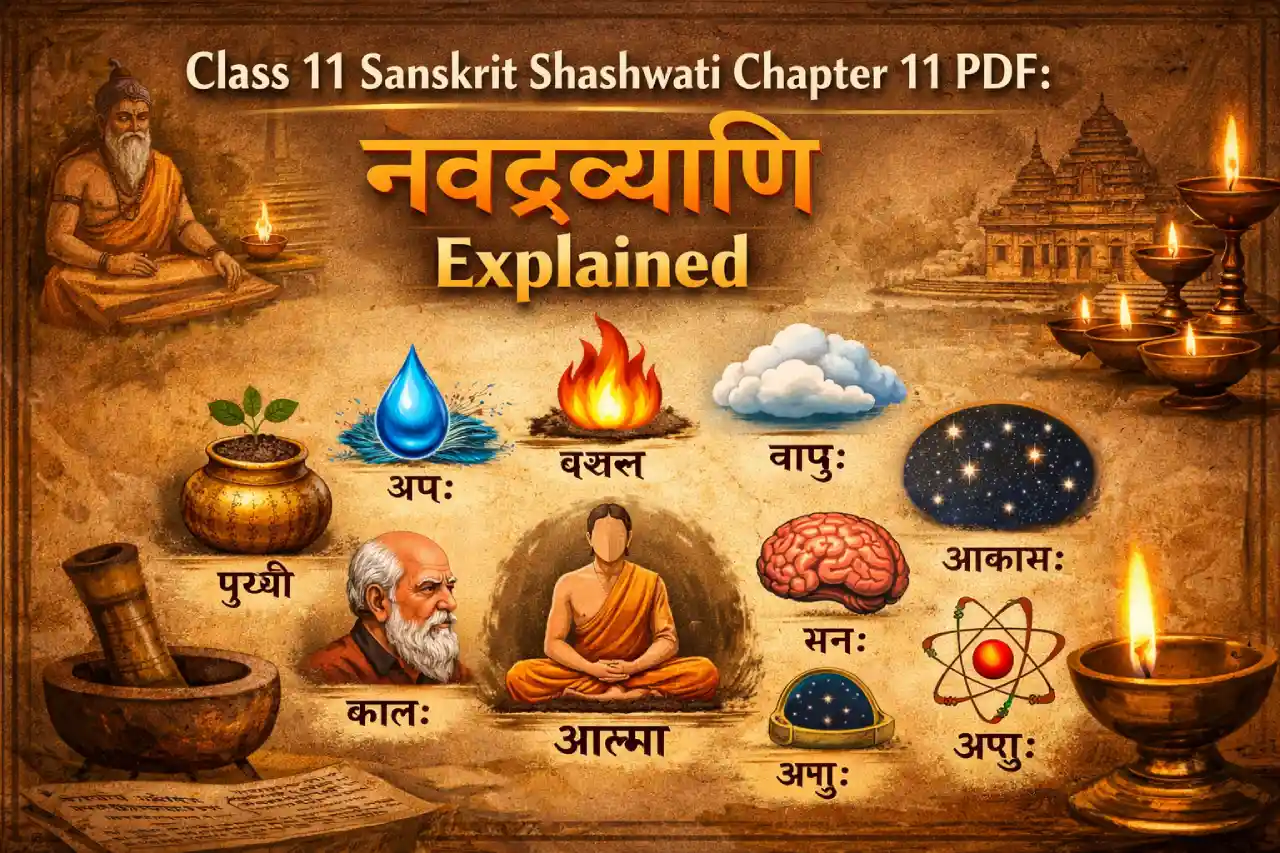
NCERT Class 11 Sanskrit Shashwati Chapter 11, titled “नवद्रव्याणि”, introduces students to an important concept from Indian philosophy—the nine fundamental substances that make up the universe. The chapter explains these elements in a simple and structured way, helping students understand how ancient thinkers tried to explain the nature of reality through observation and logic.

I am writing about this chapter because many students search for the official NCERT PDF along with a simple explanation before exams. In my experience, topics like “नवद्रव्याणि” may feel slightly abstract at first, but once you understand the list and their meanings, it becomes quite easy to remember and revise. This chapter is important not only for Sanskrit exams but also for gaining a basic idea of traditional Indian philosophy. It helps students connect language learning with deeper concepts. Studying from the official NCERT book and revising regularly can make this chapter scoring and easy to handle.

About the Chapter: नवद्रव्याणि

The term “नवद्रव्याणि” means “nine substances.” These are considered the basic elements that exist in the universe according to classical Indian thought.

The chapter explains each of these substances and their role in the functioning of the world.

The Nine Substances Explained

Here is a simple table to understand the nine dravyas:

Sanskrit TermMeaning (Simple English)
पृथ्वी (Prithvi)Earth
आपः (Apah)Water
तेजः (Tejas)Fire
वायु (Vayu)Air
आकाश (Akasha)Space
काल (Kala)Time
दिशा (Disha)Direction
आत्मा (Atma)Soul
मनः (Manas)Mind

These elements together explain the physical and non-physical aspects of existence.

Key Ideas in the Chapter

1. Understanding the Universe

The chapter explains how everything in the world is made up of basic substances.

2. Physical and Non-Physical Elements

Some substances like earth and water are physical, while others like time and soul are abstract.

3. Connection Between Mind and Body

The inclusion of “मनः” (mind) and “आत्मा” (soul) shows the importance of inner consciousness.

Why This Chapter Is Important for Students

  • Helps understand basic philosophical concepts
  • Improves Sanskrit reading and comprehension
  • Important for exam questions and explanations
  • Builds logical and conceptual thinking

Students who understand the list properly can easily score marks.

Study Tips for Chapter 11

  • Memorise the nine dravyas and their meanings
  • Understand the difference between physical and abstract elements
  • Practise writing short explanations
  • Revise regularly using a table format

This makes the chapter easier to revise before exams.

How to Download NCERT Class 11 Sanskrit Shashwati Chapter 11 PDF

Students can download the official chapter PDF from the National Council of Educational Research and Training website by following these steps:

Always use the official NCERT website to ensure you get the correct and updated version.

Leave a Comment

End of Article

Loading more posts...