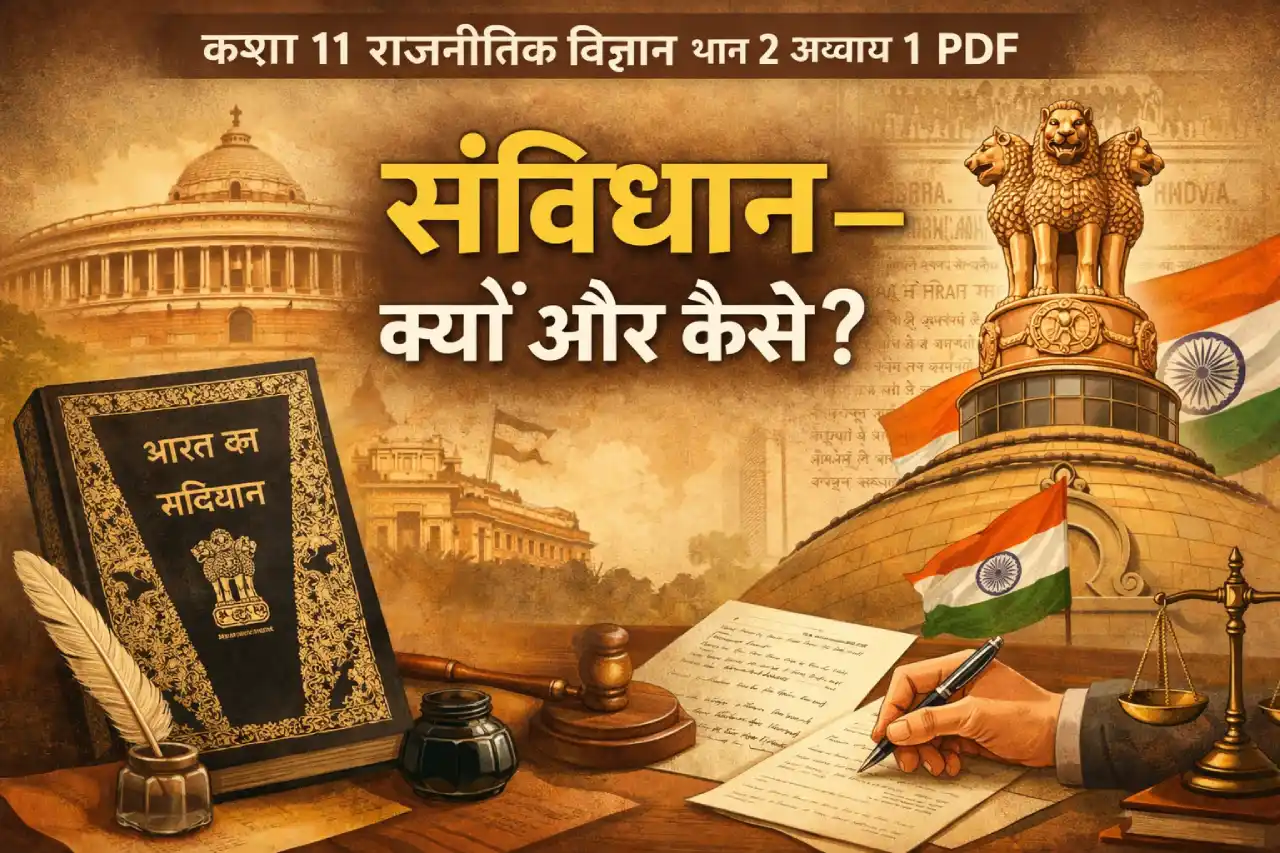
Chapter 1 of Class 11 Political Science Part 2 (Hindi Medium), संविधान – क्यों और कैसे?, introduces students to the idea of a constitution and explains why every modern state needs one. This chapter answers two basic but powerful questions: why a constitution is necessary and how it is made. It explains how a constitution lays down the basic rules of a country, defines the powers of the government, and protects the rights of citizens. Instead of focusing only on legal terms, the chapter helps students understand the constitution as a living document that guides political life.
I chose to write about this chapter because many students see the Constitution as a long and complex book meant only for lawyers or judges. In reality, it affects our daily life more than we realise. From the right to vote to freedom of expression, everything flows from the Constitution. This chapter helps students understand how a constitution brings stability, trust, and fairness into a political system. It also explains how the Indian Constitution was carefully framed after years of struggle and debate. Understanding this chapter gives students clarity about democracy, governance, and citizenship, and helps them appreciate why constitutional values are so important even today.
About Chapter 1: संविधान – क्यों और कैसे?
This chapter explains the meaning, importance, and making of a constitution in a clear and logical way.
What Is a Constitution?
A constitution is a set of fundamental rules that guide how a country is governed. It explains:
- Who has the power to make laws
- How the government is formed
- What limits are placed on power
- What rights citizens enjoy
In simple terms, it is the rulebook of a nation.
Why Do We Need a Constitution?
The chapter clearly explains why a constitution is essential for any democracy.
A constitution is needed because it:
- Creates trust among citizens
- Limits the power of the government
- Protects fundamental rights
- Provides a clear framework for governance
- Helps manage social diversity
Without a constitution, power could be misused and citizens would have no guaranteed protection.
How Is a Constitution Made?
This chapter highlights that making a constitution is not a quick or simple process. It requires:
- Wide public discussion
- Representation of different social groups
- Careful debate and compromise
- Clear principles and values
In India, the Constituent Assembly took nearly three years to frame the Constitution, reflecting the country’s diversity and democratic aspirations.
Key Features of the Indian Constitution
Some important features discussed in the chapter include:
- Written and detailed document
- Federal structure
- Fundamental Rights
- Separation of powers
- Independent judiciary
These features help maintain balance and fairness in governance.
Constitution as a Living Document
The chapter also explains that a constitution is not rigid. It can be amended to meet new challenges and changing social needs, while still protecting core values like justice, liberty, equality, and fraternity.
NCERT Class 11 Political Science Part 2 Chapter 1 PDF Download (Hindi Medium)
Students can download the official NCERT PDF by following these steps:
- Visit the official NCERT website
- Click on E-Books
- Select Class 11
- Choose Political Science
- Open Part 2 – Indian Constitution at Work (Hindi Medium)
- Click on Chapter 1: संविधान – क्यों और कैसे?
- Download the PDF for regular study and revision
Always use the official NCERT website to ensure accurate and updated content.