JOIN WHATSAPP
STORIES

CUO Joins Hands with Four Central Universities to Boost Tribal Research and Higher Education

CUO Joins Hands with Four Central Universities to Boost Tribal Research and Higher Education

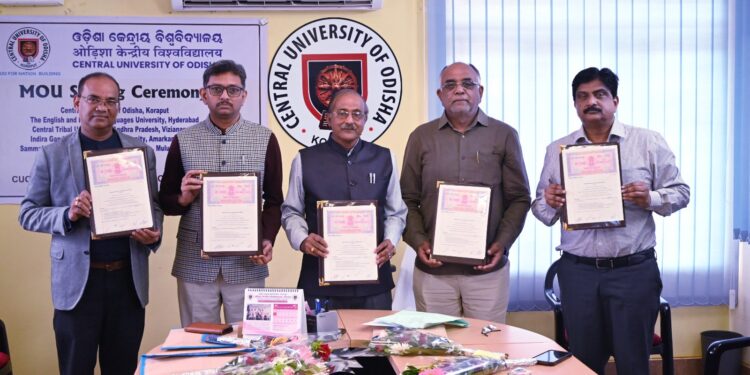
The Central University of Odisha (CUO) has entered into a collaboration with four other central universities to promote tribal research and improve opportunities in higher education. This partnership is designed to create knowledge-sharing platforms, conduct joint research, and strengthen academic resources for tribal development. It marks a step towards addressing educational gaps faced by tribal communities while building a stronger base for inclusive growth.

I decided to write about this because tribal education and research rarely get the spotlight they deserve, even though they are vital for balanced development in India. Tribal communities contribute richly to our culture, ecology, and social diversity, yet they face challenges in access to quality education and representation in higher learning. By working together, CUO and its partner universities can create meaningful change, from improving educational infrastructure to driving policy-level discussions on tribal issues. This collaboration is not just about academics but about giving a voice to communities that have long been left behind. Highlighting such initiatives is important because it sets an example of how education can be used to bring social justice and equal opportunities.

Universities Involved in the Partnership

The Central University of Odisha has signed MoUs with the following institutions:

  • Central University of Jharkhand
  • Indira Gandhi National Tribal University, Madhya Pradesh
  • Central University of Gujarat
  • Central University of South Bihar

Together, these universities aim to create a framework for joint research, academic exchanges, and capacity building for students and faculty members.

Key Objectives of the Collaboration

Some of the main focus areas of the partnership include:

  • Promoting tribal studies and research across multiple disciplines
  • Encouraging student and faculty exchange programmes
  • Jointly organising conferences, seminars, and workshops on tribal development
  • Developing resources for language, culture, and heritage preservation
  • Supporting policy research to improve the socio-economic condition of tribal communities

Importance of Tribal Research in Higher Education

Tribal communities often face double disadvantages – limited access to education and low representation in policymaking. Research in tribal studies is not just about academics but also about understanding indigenous knowledge systems, traditional livelihoods, and cultural practices. Integrating these aspects into higher education ensures that tribal voices are included in national development conversations.

How This Initiative Can Create Impact

This collaboration can make a difference in several ways:

  • Students from tribal areas may get better access to higher education opportunities
  • Universities can develop specialised courses and research centres on tribal issues
  • Policy recommendations backed by research can influence government programmes
  • Cross-university networks can help tribal students connect with mentors and career opportunities
Leave a Comment

End of Article

Maharashtra to Recruit 5,500 Assistant Professors by June: Minister Chandrakant Patil Gives Timeline

Maharashtra to Recruit 5,500 Assistant Professors by June: Minister Chandrakant Patil Gives Timeline

Maharashtra’s Higher Education Minister Chandrakant Patil has assured that the long-awaited recruitment of 5,500 assistant professors across state universities will be completed by June 2026. This announcement comes after the initial deadline of March was missed due to administrative and procedural delays. The recruitment drive is aimed at filling vacant teaching positions in government and aided institutions, which have been affecting the quality of education and overall academic functioning in the state.

I am writing about this because faculty shortages have been a major concern in higher education for quite some time. From what I have seen, students often struggle due to a lack of permanent teachers, which directly impacts classroom learning and research opportunities. This update is important not just for job aspirants but also for students and institutions, as it promises to improve the student-teacher ratio and bring stability to the academic environment.

What the Minister Announced

Higher Education Minister Chandrakant Patil has clearly stated that the recruitment process is now on track.

Key points from the announcement:

  • 5,500 assistant professor posts to be filled
  • New deadline set for June 2026
  • Delay caused by administrative and procedural issues
  • Recruitment to cover multiple universities and colleges

The government has assured that efforts are being made to complete the process without further delay.

Why the Recruitment Was Delayed

The recruitment drive was initially expected to be completed by March but faced several challenges.

Some major reasons include:

  • Complexities in finalising eligibility criteria
  • Large number of applications to be reviewed
  • Scheduling of examinations and interviews
  • Inclusion of newly established colleges and institutions

From my understanding, these delays are common in large-scale recruitment, but they often create uncertainty among candidates.

Role of MPSC in the Recruitment Process

The Maharashtra Public Service Commission (MPSC) is handling the recruitment process.

  • Responsible for conducting exams and interviews
  • Ensures selection based on merit and transparency
  • Evaluates academic qualifications and performance

The commission is currently working to finalise the list of eligible candidates.

Selection Process Explained

The recruitment will follow a structured and rigorous selection process.

  • Screening of applications
  • Evaluation of academic credentials
  • Interviews conducted as per guidelines
  • Final selection based on merit

This process is aligned with University Grants Commission (UGC) norms.

Why This Recruitment is Important

Filling these vacancies is crucial for improving higher education in the state.

  • Helps improve student-teacher ratio
  • Ensures better classroom interaction and learning
  • Strengthens research and academic output
  • Provides stability in teaching staff

In my opinion, qualified faculty is the backbone of any strong education system.

Concerns Raised by Students and Academic Bodies

There have been growing concerns regarding the delay.

  • Student unions have highlighted lack of teachers
  • Academic bodies have raised issues about declining quality
  • Vacant posts affecting regular classes and research work

The latest assurance from the government is expected to address these concerns.

Government’s Broader Education Plan

The recruitment is part of a larger plan to improve higher education.

  • Focus on strengthening infrastructure and resources
  • Bringing in skilled and experienced faculty
  • Improving overall education standards
  • Aligning with future academic and industry needs

The government aims to create a more competitive and modern education system.

Key Highlights at a Glance

ParticularsDetails
Total Vacancies5,500 Assistant Professors
Revised DeadlineJune 2026
Conducting AuthorityMPSC
Recruitment TypeGovernment & Aided Institutions
Selection ProcessMerit-based with interviews

What This Means for Aspirants

For candidates waiting for these jobs, this update is quite important.

  • Recruitment process is moving forward
  • Clear timeline now available
  • Opportunity to secure teaching positions
  • Need to stay prepared for upcoming stages

From what I have seen, staying updated and prepared is key during such recruitment cycles.

Leave a Comment

End of Article

Loading more posts...