JOIN WHATSAPP
STORIES

Download NCERT Class 10 Hindi Sparsh Chapter 5 PDF – तोप

Download NCERT Class 10 Hindi Sparsh Chapter 5 PDF – तोप

The fifth chapter of the NCERT Class 10 Hindi Sparsh book, titled “तोप” (Top), is a powerful poem written by Suryakant Tripathi ‘Nirala’, one of the leading poets of modern Hindi literature. The poem portrays the image of an old cannon standing silently in a fort, symbolising the futility of war, power, and pride. Students studying this poem can download the NCERT Class 10 Hindi Sparsh Chapter 5 PDF to read the complete text and understand its depth.

I chose to write about this poem because “Top” is not just about a weapon; it’s about human history, politics, and the moral questions around violence and power. For students, this poem offers a chance to think beyond words—it encourages them to question what true strength means. In today’s world, where conflicts and competitions dominate headlines, Nirala’s message still feels relevant. Understanding this poem helps students see how literature can make us reflect on society and human behaviour. It’s important to study this chapter not just for exams, but to learn how poetic symbolism can express deep truths about life and power.

About “तोप” – Poem Overview

The poem “Top” by Suryakant Tripathi ‘Nirala’ uses the image of an abandoned cannon on a fort to reflect on time, war, and human arrogance. Once a mighty weapon of war, the cannon now stands unused and silent, covered in rust. This contrast between its glorious past and its lifeless present shows how power and violence eventually lose their meaning.

Nirala masterfully uses this image to highlight the temporary nature of human pride. The poem invites readers to think about the destruction caused by war and how the same weapons that once symbolised strength become mere showpieces of the past.

Main Highlights of the Poem:

  • The cannon represents the arrogance of kings and rulers
  • It shows the transition from power to silence, strength to decay
  • The poem questions the relevance of war and violence
  • It uses deep symbolism to show the victory of peace over power

Significance of This Chapter for Class 10 Students

For Class 10 students, “Top” is not only an important part of the Hindi syllabus but also a meaningful piece of poetry that provokes thought. It helps students understand how great poets like Nirala used everyday objects to express big ideas.

Why It’s Important:

  • Enhances analytical and critical thinking about symbols in poetry
  • Builds awareness about human values like peace and humility
  • Introduces students to Nirala’s Chhayavaad style, which blends emotion and philosophy
  • Helps in developing interpretation skills for unseen poems and literary analysis

This poem also helps students appreciate how literature can serve as a mirror to history, showing how power fades but art and thought remain eternal.

Download NCERT Class 10 Hindi Sparsh Chapter 5 PDF

Students who want to read the full text of the poem can easily download the NCERT Class 10 Hindi Sparsh Chapter 5 – तोप PDF from here.
Leave a Comment

End of Article

Class 11 Sanskrit Shashwati Chapter 11 PDF: नवद्रव्याणि Explained

Class 11 Sanskrit Shashwati Chapter 11 PDF: नवद्रव्याणि Explained

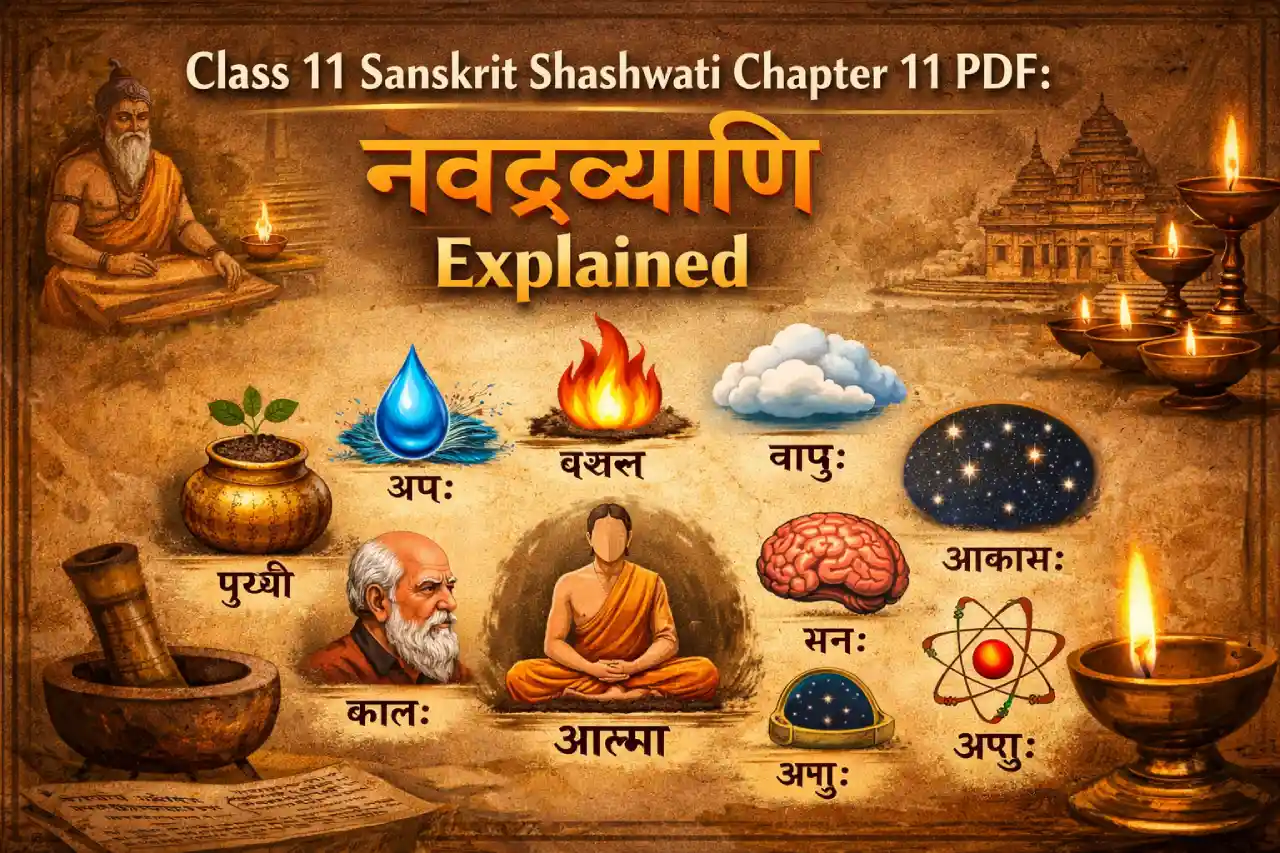
NCERT Class 11 Sanskrit Shashwati Chapter 11, titled “नवद्रव्याणि”, introduces students to an important concept from Indian philosophy—the nine fundamental substances that make up the universe. The chapter explains these elements in a simple and structured way, helping students understand how ancient thinkers tried to explain the nature of reality through observation and logic.

I am writing about this chapter because many students search for the official NCERT PDF along with a simple explanation before exams. In my experience, topics like “नवद्रव्याणि” may feel slightly abstract at first, but once you understand the list and their meanings, it becomes quite easy to remember and revise. This chapter is important not only for Sanskrit exams but also for gaining a basic idea of traditional Indian philosophy. It helps students connect language learning with deeper concepts. Studying from the official NCERT book and revising regularly can make this chapter scoring and easy to handle.

About the Chapter: नवद्रव्याणि

The term “नवद्रव्याणि” means “nine substances.” These are considered the basic elements that exist in the universe according to classical Indian thought.

The chapter explains each of these substances and their role in the functioning of the world.

The Nine Substances Explained

Here is a simple table to understand the nine dravyas:

Sanskrit TermMeaning (Simple English)
पृथ्वी (Prithvi)Earth
आपः (Apah)Water
तेजः (Tejas)Fire
वायु (Vayu)Air
आकाश (Akasha)Space
काल (Kala)Time
दिशा (Disha)Direction
आत्मा (Atma)Soul
मनः (Manas)Mind

These elements together explain the physical and non-physical aspects of existence.

Key Ideas in the Chapter

1. Understanding the Universe

The chapter explains how everything in the world is made up of basic substances.

2. Physical and Non-Physical Elements

Some substances like earth and water are physical, while others like time and soul are abstract.

3. Connection Between Mind and Body

The inclusion of “मनः” (mind) and “आत्मा” (soul) shows the importance of inner consciousness.

Why This Chapter Is Important for Students

  • Helps understand basic philosophical concepts
  • Improves Sanskrit reading and comprehension
  • Important for exam questions and explanations
  • Builds logical and conceptual thinking

Students who understand the list properly can easily score marks.

Study Tips for Chapter 11

  • Memorise the nine dravyas and their meanings
  • Understand the difference between physical and abstract elements
  • Practise writing short explanations
  • Revise regularly using a table format

This makes the chapter easier to revise before exams.

How to Download NCERT Class 11 Sanskrit Shashwati Chapter 11 PDF

Students can download the official chapter PDF from the National Council of Educational Research and Training website by following these steps:

Always use the official NCERT website to ensure you get the correct and updated version.

Leave a Comment

End of Article

Loading more posts...















