JOIN WHATSAPP
STORIES

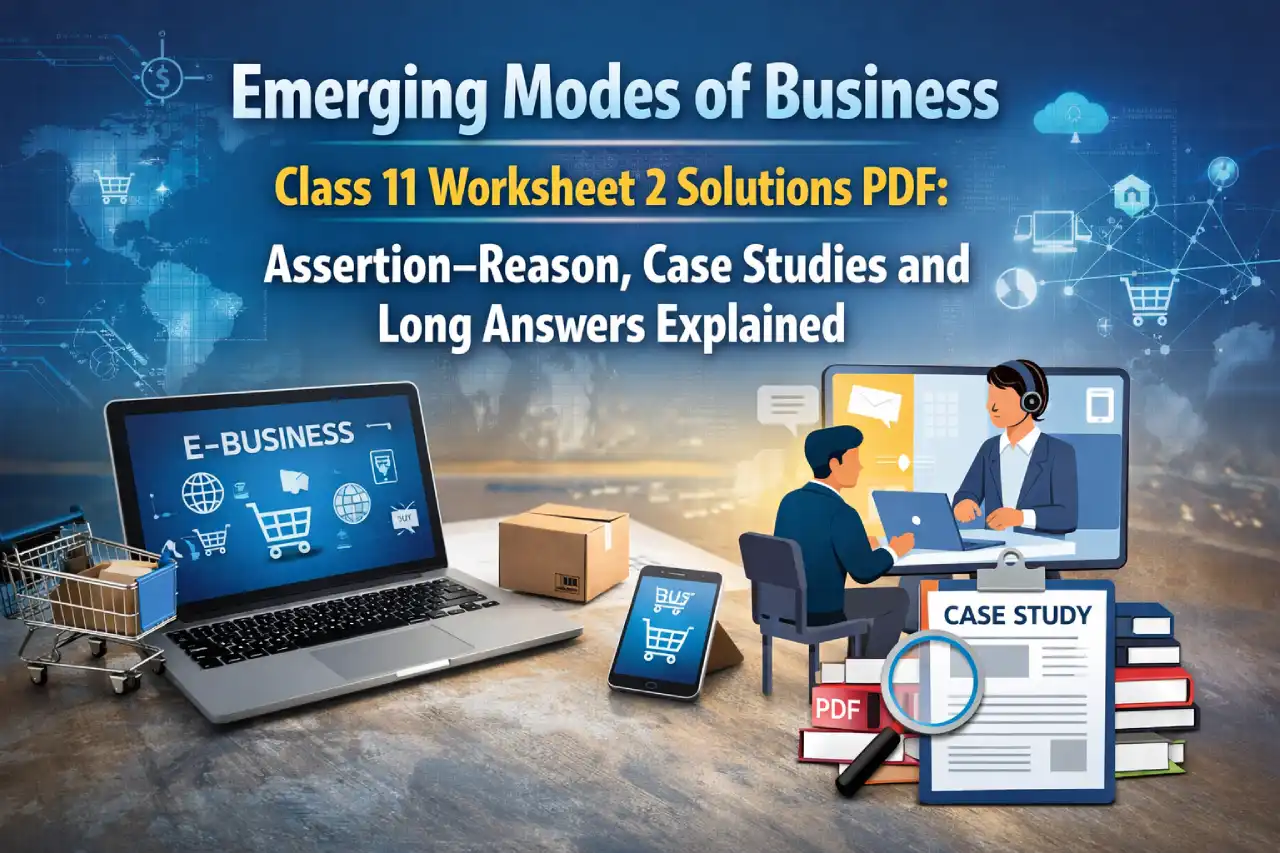
Emerging Modes of Business Class 11 Worksheet 2 Solutions PDF: Assertion–Reason, Case Studies and Long Answers Explained

Emerging Modes of Business Class 11 Worksheet 2 Solutions PDF: Assertion–Reason, Case Studies and Long Answers Explained

Emerging Modes of Business is a key chapter in Class 11 Business Studies that explains how business activities are increasingly carried out through digital networks. The uploaded Emerging Modes of Business WS 2 Sol PDF is a detailed solutions booklet that provides correct answers and explanations for assertion–reason questions, short answers, case studies, long answers, and true–false statements based on this chapter. It strictly follows the CBSE syllabus and focuses on helping students understand e-business, e-commerce, and different types of electronic transactions.

I am writing about this solutions PDF because students often practise worksheets but remain unsure whether their answers are correct or not. A structured solution set removes this confusion. It helps learners cross-check their responses, understand reasoning behind answers, and improve their presentation style for examinations. For a concept-heavy chapter like Emerging Modes of Business, such clarity is extremely important.

What This Emerging Modes of Business WS 2 Solutions PDF Contains

The solutions PDF is organised into four sections.

  • Section A: Assertion–Reason solutions
  • Section B: Short answer and case-based solutions
  • Section C: Long answer solutions
  • Section D: True or False solutions

Each section is designed in an exam-oriented manner.

Section A – Assertion–Reason Solutions

This section explains answers for statements related to:

  • Greater transaction risk in e-business due to distance and anonymity
  • B2C commerce involving firms and customers
  • B2E commerce supporting human resource management
  • Intra-B commerce enabling flexible manufacturing and customised products
  • Direct vertical and horizontal communication in e-business
  • B2B commerce historically using EDI technology
  • E-business having ease of going global
  • Traditional business allowing physical pre-sampling of products
  • Direct contact with customers in e-business
  • No locational requirements for e-business

Each answer clearly states whether both statements are true or false and whether the reason correctly explains the assertion.

Download this Emerging Modes of Business WS 2 Sol PDF File: Click Here

Section B – Short Answer and Case-Based Solutions

This section covers:

  • Difference between e-business and e-commerce
  • Meaning of e-business
  • Identification of B2C, C2C, and Intra-B commerce through real-life cases
  • Benefits of e-commerce during demonetisation
  • Meaning and utility of ATM
  • Data storage and transmission risks such as virus and hacking
  • Branches of e-business like B2B, B2C, C2C, and Intra-B commerce

The answers are concise and suitable for 3-mark questions.

Section C – Long Answer Solutions

Detailed answers are provided on:

  • Meaning and benefits of e-business
  • Types of e-business transactions
  • Difference between traditional business and e-business
  • Limitations of e-business
  • Transaction risks in e-business
  • Intra-B commerce and B2E commerce
  • C2C commerce with examples like OLX and eBay
  • Factors responsible for growth of outsourcing

These answers help students frame proper 6-mark responses.

Section D – True or False Solutions

The final section provides correct answers with explanations for true or false statements related to:

  • B2E commerce
  • Online banking
  • Smart cards
  • Electronic wallets
  • Intra-B commerce
  • Scope of e-business

This section is useful for quick revision
Leave a Comment

End of Article

Class 11 Sanskrit Shashwati Chapter 11 PDF: नवद्रव्याणि Explained

Class 11 Sanskrit Shashwati Chapter 11 PDF: नवद्रव्याणि Explained

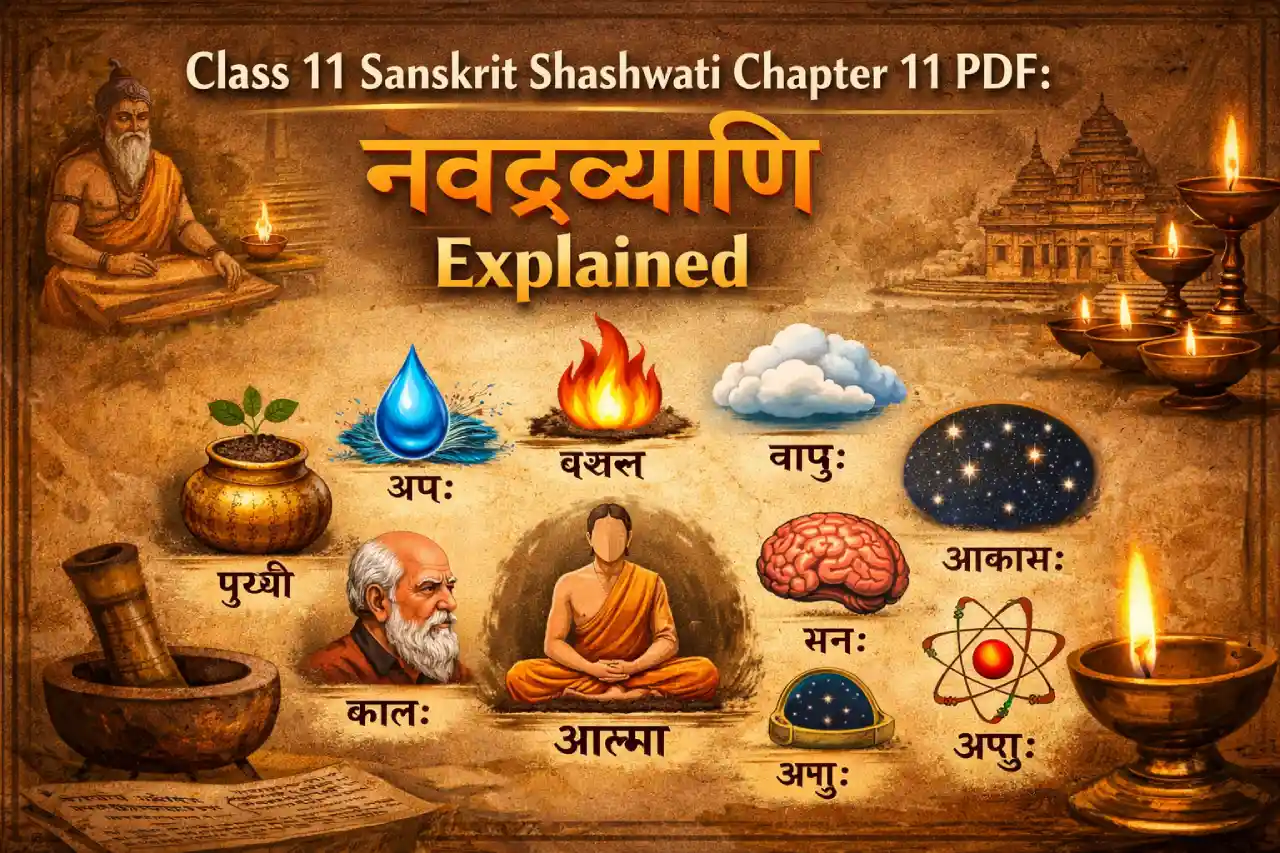
NCERT Class 11 Sanskrit Shashwati Chapter 11, titled “नवद्रव्याणि”, introduces students to an important concept from Indian philosophy—the nine fundamental substances that make up the universe. The chapter explains these elements in a simple and structured way, helping students understand how ancient thinkers tried to explain the nature of reality through observation and logic.

I am writing about this chapter because many students search for the official NCERT PDF along with a simple explanation before exams. In my experience, topics like “नवद्रव्याणि” may feel slightly abstract at first, but once you understand the list and their meanings, it becomes quite easy to remember and revise. This chapter is important not only for Sanskrit exams but also for gaining a basic idea of traditional Indian philosophy. It helps students connect language learning with deeper concepts. Studying from the official NCERT book and revising regularly can make this chapter scoring and easy to handle.

About the Chapter: नवद्रव्याणि

The term “नवद्रव्याणि” means “nine substances.” These are considered the basic elements that exist in the universe according to classical Indian thought.

The chapter explains each of these substances and their role in the functioning of the world.

The Nine Substances Explained

Here is a simple table to understand the nine dravyas:

Sanskrit TermMeaning (Simple English)
पृथ्वी (Prithvi)Earth
आपः (Apah)Water
तेजः (Tejas)Fire
वायु (Vayu)Air
आकाश (Akasha)Space
काल (Kala)Time
दिशा (Disha)Direction
आत्मा (Atma)Soul
मनः (Manas)Mind

These elements together explain the physical and non-physical aspects of existence.

Key Ideas in the Chapter

1. Understanding the Universe

The chapter explains how everything in the world is made up of basic substances.

2. Physical and Non-Physical Elements

Some substances like earth and water are physical, while others like time and soul are abstract.

3. Connection Between Mind and Body

The inclusion of “मनः” (mind) and “आत्मा” (soul) shows the importance of inner consciousness.

Why This Chapter Is Important for Students

  • Helps understand basic philosophical concepts
  • Improves Sanskrit reading and comprehension
  • Important for exam questions and explanations
  • Builds logical and conceptual thinking

Students who understand the list properly can easily score marks.

Study Tips for Chapter 11

  • Memorise the nine dravyas and their meanings
  • Understand the difference between physical and abstract elements
  • Practise writing short explanations
  • Revise regularly using a table format

This makes the chapter easier to revise before exams.

How to Download NCERT Class 11 Sanskrit Shashwati Chapter 11 PDF

Students can download the official chapter PDF from the National Council of Educational Research and Training website by following these steps:

Always use the official NCERT website to ensure you get the correct and updated version.

Leave a Comment

End of Article

Loading more posts...