JOIN WHATSAPP
STORIES

Finance Careers in 2026: Best Roles, Skills and Courses for Students

Finance Careers in 2026: Best Roles, Skills and Courses for Students

The finance sector in 2026 continues to be one of the most stable and opportunity-rich career options for students. From traditional roles in banking and accounting to newer paths in fintech, data-driven finance, and risk management, the field has expanded far beyond what it was a decade ago. Students today can choose from a wide range of finance careers that combine numbers, technology, strategy, and decision-making, making the sector suitable for different interests and skill sets.

I am writing this guide because many students still think finance is only about becoming a banker or a chartered accountant. That is no longer true. With changing markets, digital payments, and stricter regulations, finance professionals are needed in almost every industry. Understanding the available options early helps students plan their education, choose the right courses, and avoid confusion later when career decisions become urgent.

Why the Finance Sector Is a Strong Career Choice in 2026

Finance remains relevant regardless of economic cycles. Every organisation needs people who can manage money, analyse risks, and plan growth.

Some reasons why finance is a smart choice include:

  • Consistent demand across industries
  • Clear career progression paths
  • Good salary growth with experience
  • Opportunities in both India and abroad
  • Increasing integration with technology and data

For students who enjoy problem-solving and structured thinking, finance offers long-term stability.

Popular Finance Career Options for Students

The finance sector offers diverse roles depending on education and interest.

Banking and Financial Services

This remains a core area for finance graduates.

Common roles include:

  • Bank Officer
  • Credit Analyst
  • Relationship Manager
  • Treasury Executive

Institutions regulated by bodies like the Reserve Bank of India offer structured careers with job security.

Accounting and Auditing

Students with a strong interest in accounting standards and compliance often choose this path.

Key roles include:

  • Chartered Accountant
  • Cost and Management Accountant
  • Internal Auditor
  • Tax Consultant

These roles are essential for businesses of all sizes.

Investment Banking and Capital Markets

This area attracts students interested in markets, deals, and financial strategy.

Career options include:

  • Investment Banking Analyst
  • Equity Research Analyst
  • Portfolio Manager
  • Financial Modelling Expert

These roles are demanding but offer high growth for skilled professionals.

Fintech and Digital Finance

One of the fastest-growing areas in 2026 is fintech.

Roles include:

  • Fintech Product Analyst
  • Digital Payments Specialist
  • Financial Data Analyst
  • Risk and Fraud Analyst

This field suits students who like finance combined with technology.

Courses and Qualifications to Enter Finance

Choosing the right course is critical for building a finance career.

Popular options include:

  • BCom, BBA in Finance
  • MBA in Finance
  • Chartered Accountancy
  • CFA (Chartered Financial Analyst)
  • CMA and ACCA

Regulatory understanding guided by institutions like the Securities and Exchange Board of India is also important in many finance roles.

Skills Students Need to Succeed in Finance

Degrees alone are not enough in 2026. Employers look for practical skills.

Important skills include:

  • Financial analysis and interpretation
  • Excel and data handling
  • Understanding of financial laws and ethics
  • Communication and presentation skills
  • Basic knowledge of analytics tools

From my experience, students who start building these skills early find it easier to crack interviews and internships.

Career Planning Tips for Finance Students

A few practical steps can make a big difference.

  • Choose a specialisation based on interest, not trends alone
  • Do internships during college years
  • Follow financial news and market updates regularly
  • Build certifications alongside degree courses
  • Focus on long-term learning, not just first salary

Finance rewards patience and continuous improvement.

Leave a Comment

End of Article

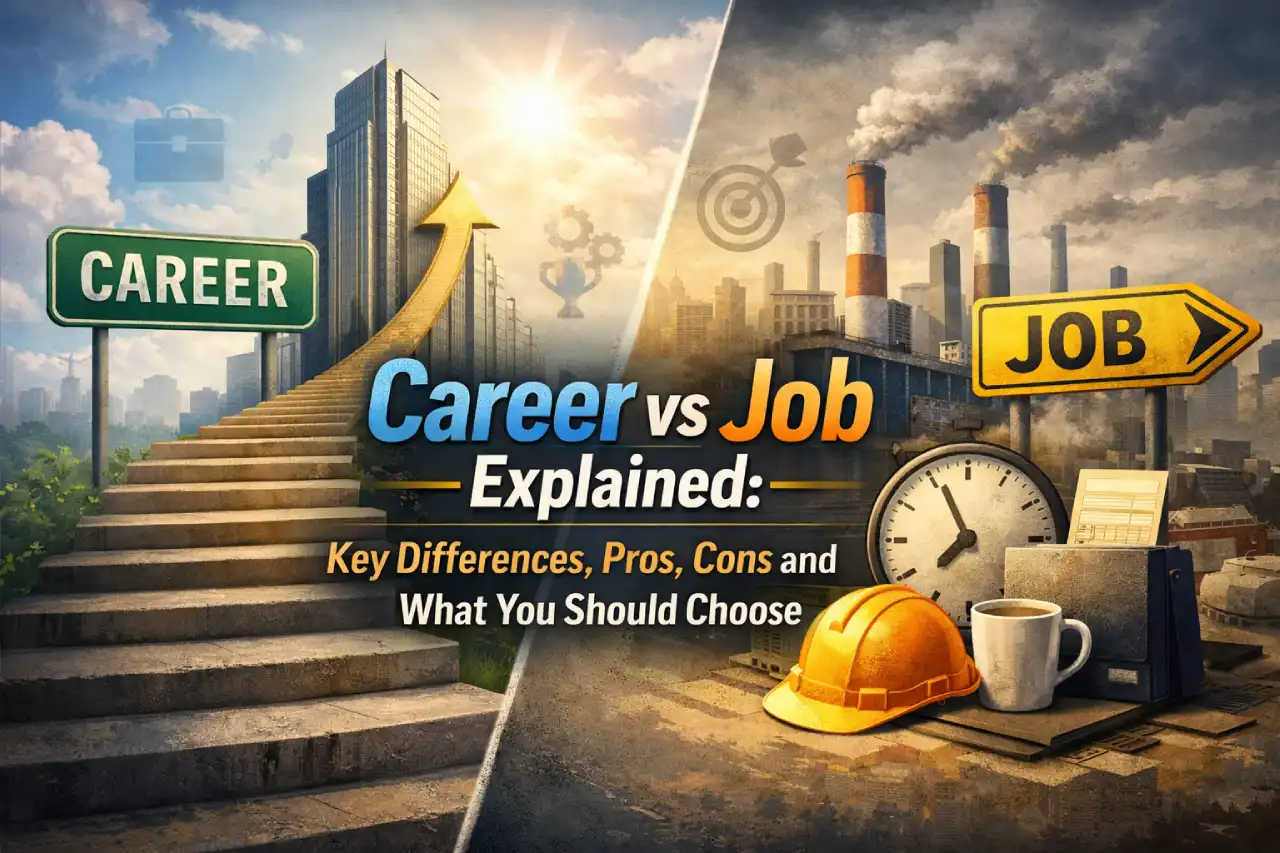
Career vs Job Explained Clearly: Key Differences, Examples and How to Choose the Right Path

Career vs Job Explained Clearly: Key Differences, Examples and How to Choose the Right Path

If you are confused between a job and a career, you are not alone. Many people use these two words interchangeably, but they actually mean different things. A job is something you do to earn money, usually for a short-term purpose, while a career is a long-term journey built around your skills, interests, and goals. Understanding this difference is important, especially if you are planning your future or thinking about what you really want to achieve in life.

I am writing about this because I have seen many students and even working professionals struggle with this confusion. Some people jump from one job to another without direction, while others feel stuck because they are not sure what they are working towards. Knowing the difference between a job and a career can help you make better decisions, stay focused, and build a path that gives both financial stability and personal satisfaction.

What is a Job

A job is a role where you work for a company or organisation in exchange for money.

Key features of a job:

  • Short-term focus
  • Mainly done to earn income
  • Limited connection with long-term goals
  • Fixed responsibilities
  • Less emphasis on growth or passion

For example, working as a cashier, delivery executive, or temporary office assistant can be considered a job.

What is a Career

A career is a long-term professional journey where you grow, learn, and build your identity over time.

Key features of a career:

  • Long-term vision
  • Focus on growth and development
  • Connected with your interests and skills
  • Offers progression and opportunities
  • Builds expertise over time

For example, becoming a teacher, engineer, doctor, or writer is part of a career path.

Career vs Job: Key Differences

Here is a simple comparison to understand the difference clearly:

AspectJobCareer
DurationShort-termLong-term
PurposeEarn moneyBuild future
GrowthLimitedContinuous
MotivationSalaryPassion + growth
StabilityTemporaryMore stable over time

From my perspective, a job can be a part of your career, but not every job leads to a meaningful career.

Can a Job Become a Career

Yes, a job can turn into a career if you approach it with the right mindset.

  • If you learn new skills in your job
  • If you grow within the same field
  • If you set long-term goals

For example, starting as a junior employee and growing into a manager or expert can turn a job into a career.

Why Understanding the Difference Matters

Knowing the difference can help you:

  • Make better career decisions
  • Avoid feeling lost or stuck
  • Choose jobs that align with your goals
  • Plan your future more effectively

In my opinion, this clarity can save you years of confusion and frustration.

How to Choose Between a Job and a Career

If you are just starting out, it is okay to take a job. But over time, you should think about building a career.

Ask yourself:

  • What are my interests and strengths
  • Where do I see myself in 5 or 10 years
  • Am I learning something valuable in my current role
  • Does this job help me grow

Your answers will guide your decisions.

Common Mistakes People Make

Many people unknowingly make these mistakes:

  • Choosing jobs only based on salary
  • Not planning long-term goals
  • Ignoring skill development
  • Staying in comfort zones for too long

From what I have seen, avoiding these mistakes can make a big difference in your journey.

Tips to Build a Strong Career

If you want to move from a job mindset to a career mindset, here are some simple tips:

  • Keep learning and upgrading your skills
  • Set clear long-term goals
  • Network with people in your field
  • Take calculated risks
  • Stay consistent and patient

Building a career takes time, but it is worth the effort.

Leave a Comment

End of Article

Loading more posts...