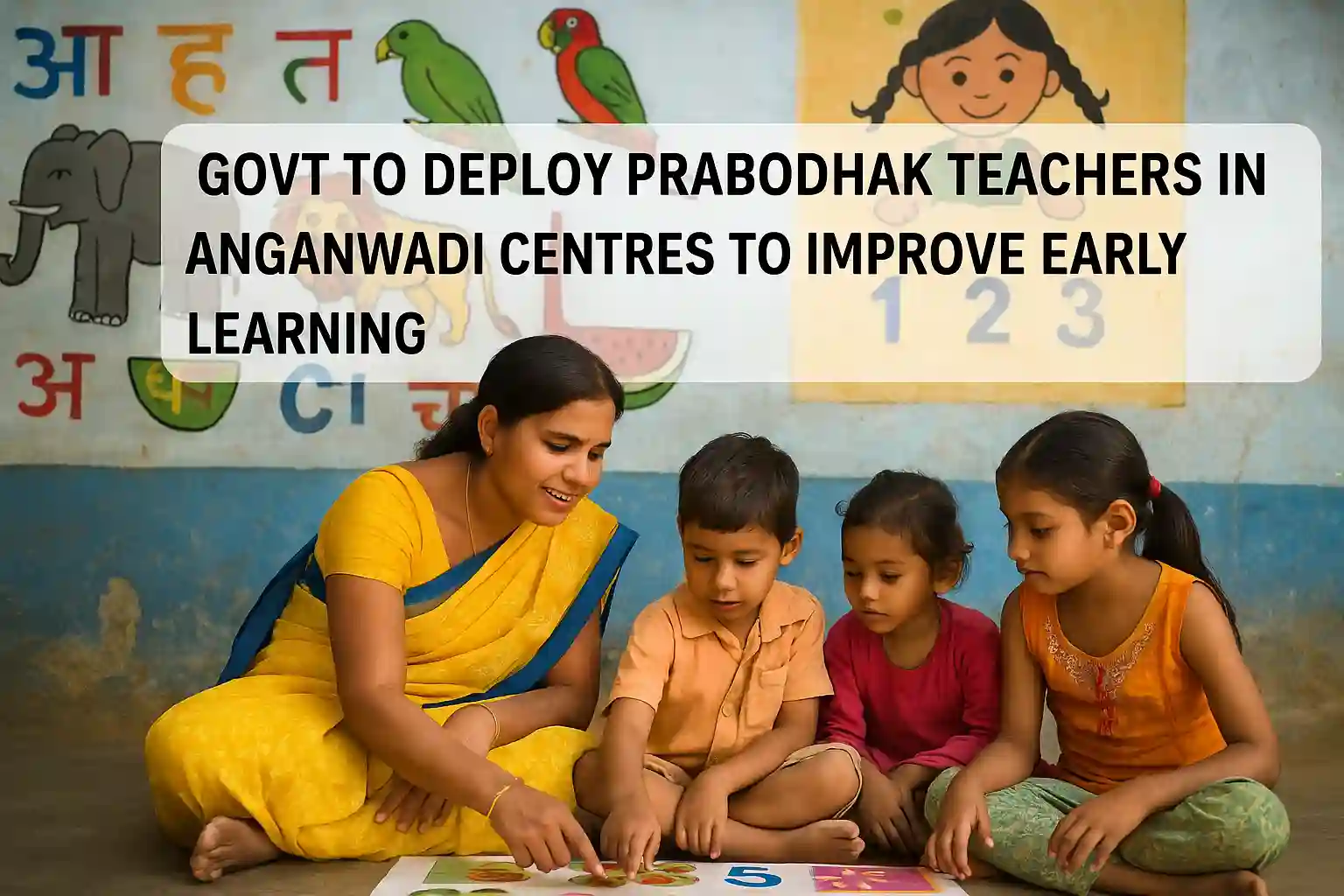
The Education Department has decided to place trained “Prabodhak” teachers in selected Anganwadi centres to boost foundational literacy and numeracy among young children. This move aims to bridge the early learning gap and ensure children are better prepared before they enter primary school. The teachers will work alongside Anganwadi workers to provide structured early education support, especially in language, numbers, and basic classroom behaviour. The deployment will begin in districts where learning outcomes in early years have been found lacking.
I felt this topic is important to write about because it touches the root of our education system—early childhood learning. Many children in rural and even urban areas enter school without basic readiness skills, which puts them at a disadvantage right from the beginning. By assigning trained educators in Anganwadi centres, the government is finally taking early years education more seriously. This step reflects a much-needed shift from just focusing on mid-day meals and health to also emphasising the learning needs of pre-schoolers. For parents, educators, and policy watchers, this initiative could offer real change on the ground—if implemented sincerely.
What is the Role of Prabodhak Teachers?
The term Prabodhak refers to instructors trained specifically to teach children in the age group of 3 to 6 years. Their main goal will be to help children build foundational skills in:
- Language: letter recognition, vocabulary, and oral communication
- Numeracy: identifying numbers, counting objects, basic concepts of measurement
- Motor Skills: activities like drawing, building blocks, and sorting games
- Classroom Readiness: sitting in one place, listening to stories, following instructions
These teachers will not replace the existing Anganwadi workers but work in partnership with them. While Anganwadi workers focus on health, nutrition, and administrative duties, Prabodhak teachers will handle the educational side.
Why This Move Matters
Several national surveys have shown that a huge number of children in Class 1 and 2 cannot read basic sentences or do simple addition, especially in government schools. One big reason is that they start school without any formal pre-primary education. The National Education Policy (NEP) 2020 stressed on universalisation of early childhood care and education (ECCE). Deploying Prabodhak teachers is a practical step towards meeting this target.
If children don’t learn basics in the early years, they struggle throughout school. It leads to dropouts, low confidence, and poor performance in higher classes. This intervention can help stop that at the source.
Where Will These Teachers Be Deployed?
To begin with, the department is focusing on areas where early grade learning outcomes are especially poor. The deployment will be district-wise, based on:
- Local performance in early literacy benchmarks
- Availability of trained manpower
- Community engagement at Anganwadi centres
- Strength of current enrolment numbers
In many cases, retired teachers or candidates who have completed D.El.Ed or equivalent courses will be considered for the Prabodhak role.
Challenges and What to Watch
While the decision is welcome, it comes with some key challenges:
- Coordination between Anganwadi workers and Prabodhaks
- Availability of enough trained teachers
- Ensuring regular monitoring and quality control
- Infrastructure support like books, toys, and learning materials
The success of this programme will depend a lot on how well it is planned at the local level. Just placing a teacher is not enough—training, support, and accountability will be equally important.