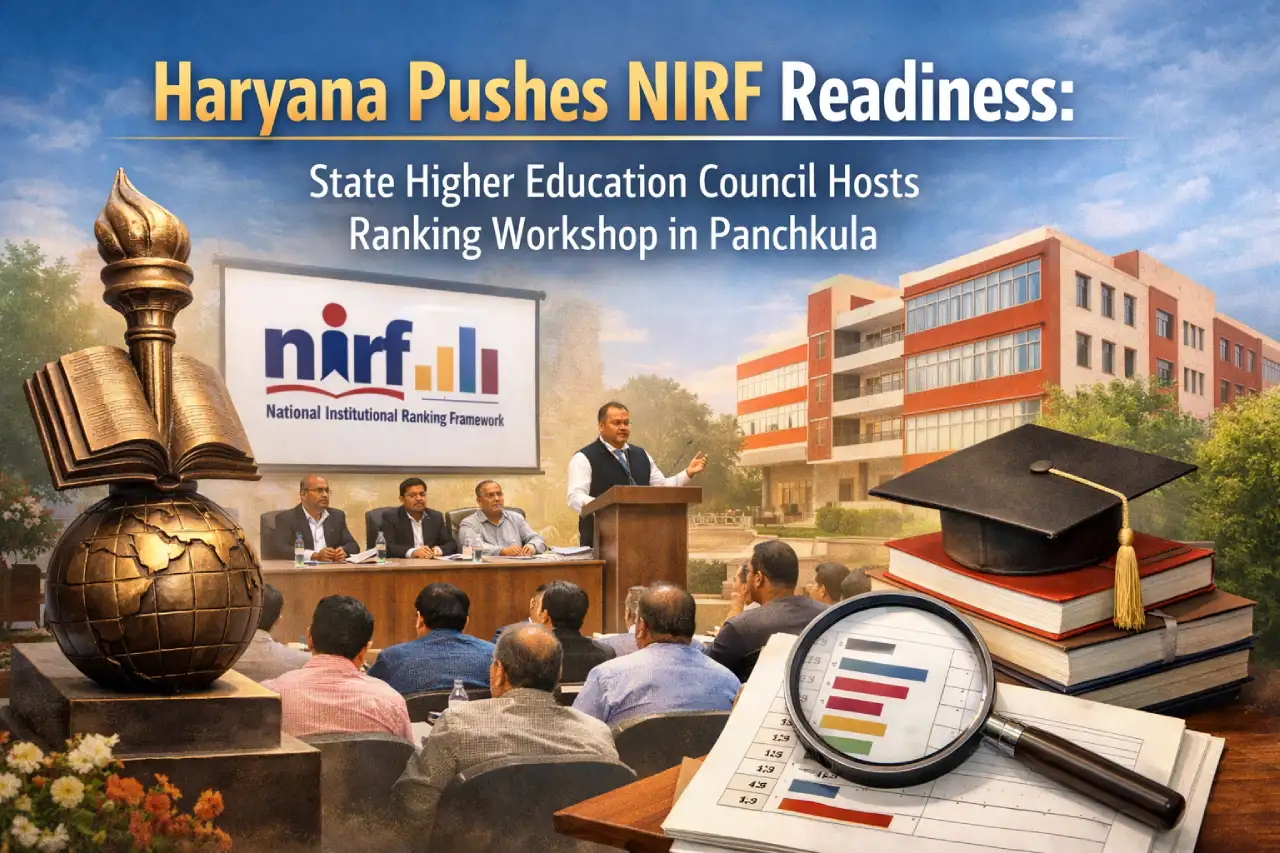
The Haryana State Higher Education Council organised a one-day workshop in Panchkula to strengthen institutional preparedness for the National Institutional Ranking Framework. The workshop focused on helping universities and colleges better understand ranking parameters, data submission processes, and quality benchmarks. It brought together key academic administrators to ensure that higher education institutions across the state are more confident and consistent in their participation in national rankings.
I am writing about this because national rankings now play a major role in how institutions are perceived by students, parents, and policymakers. When colleges and universities understand ranking frameworks clearly, they are better placed to improve academic quality rather than treating rankings as a paperwork exercise. Workshops like this help bridge knowledge gaps and bring uniformity in how institutions approach quality assurance and performance reporting.
Who Organised the NIRF Workshop
The workshop was organised by the Haryana State Higher Education Council in association with the Department of Higher Education and the Department of Technical Education. The aim was to improve awareness and readiness among state-funded institutions for participating in the National Institutional Ranking Framework.
By involving multiple departments, the organisers ensured that both academic and technical institutions were equally represented.
Participation From Universities and Colleges
Directors of Internal Quality Assurance Cells from all state-funded universities attended the workshop in person. Their role is crucial, as IQACs are responsible for maintaining academic standards and coordinating data-related activities within institutions.
Principals of government colleges from across Haryana joined the session online. This hybrid format allowed wider participation without disrupting academic schedules and ensured that even smaller colleges could benefit from the discussions.
What the Workshop Focused On
The workshop covered practical and policy-level aspects of NIRF participation. Officials and experts explained how institutions should approach rankings as a tool for improvement rather than just competition.
Key focus areas included:
- Understanding NIRF parameters and weightage
- Accurate and ethical data collection
- Role of IQACs in quality benchmarking
- Common mistakes made during data submission
- Aligning institutional goals with national quality standards
Participants were encouraged to ask questions and share challenges faced at the ground level.
Why NIRF Preparedness Matters for Haryana
Haryana has been working to strengthen its higher education ecosystem, and improved participation in national rankings is part of that effort. Better rankings can help institutions attract students, faculty, and research opportunities.
More importantly, the process of preparing for NIRF pushes institutions to:
- Improve teaching and learning outcomes
- Strengthen research and innovation
- Enhance infrastructure and student services
- Build transparent data systems
These changes benefit students directly, regardless of ranking outcomes.
Role of IQACs in Driving Quality
A major takeaway from the workshop was the importance of Internal Quality Assurance Cells. IQACs act as the backbone of quality initiatives within institutions and play a key role in maintaining consistency and accountability.
By empowering IQAC directors with clearer guidance on NIRF expectations, the council hopes to create a more systematic approach to quality improvement across universities and colleges.
What Happens After the Workshop
Officials indicated that this workshop is part of a broader effort to support institutions throughout the ranking cycle. Follow-up guidance, data reviews, and coordination with departments are expected to continue in the coming months.
Institutions have been advised to treat rankings as a continuous process rather than a one-time annual task.