JOIN WHATSAPP
STORIES

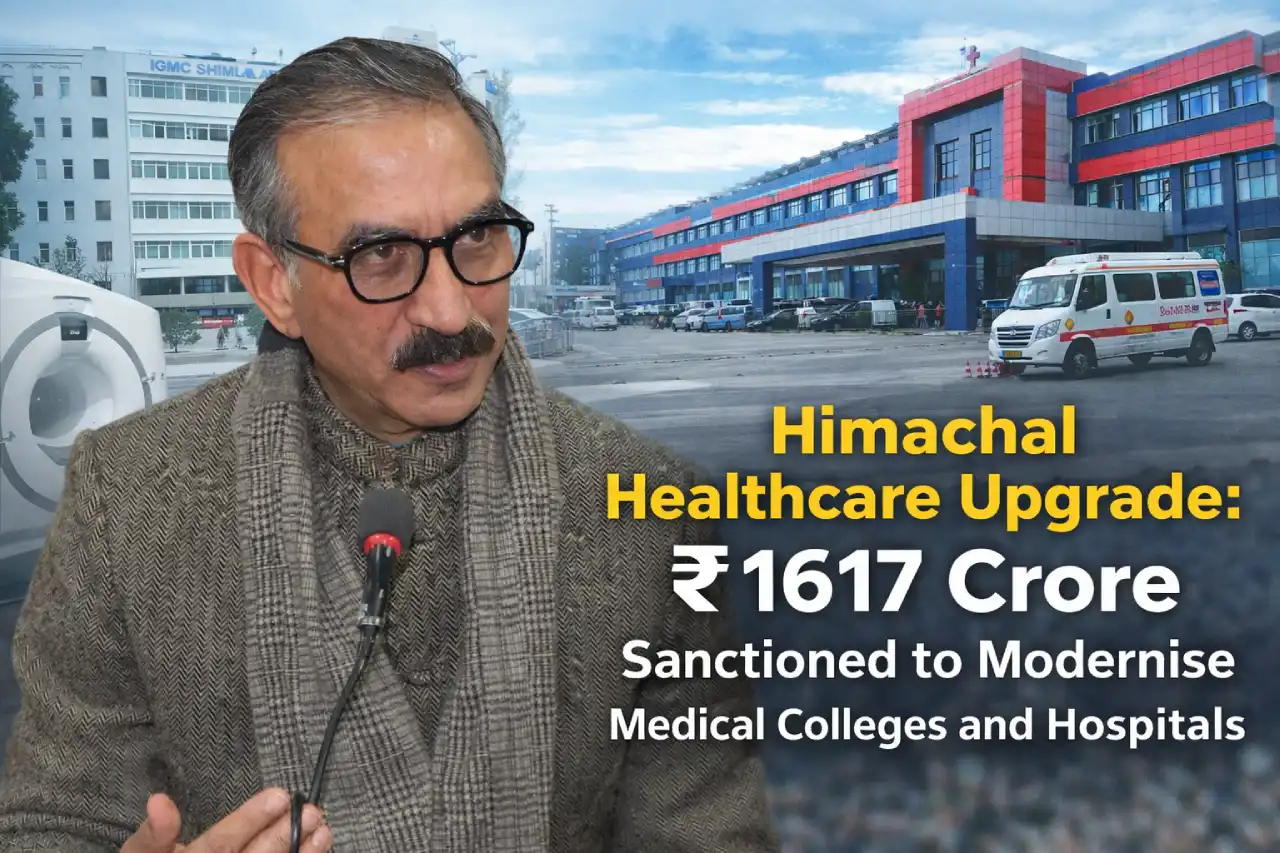
Himachal Healthcare Upgrade: ₹1617 Crore Sanctioned to Modernise Medical Colleges and Hospitals

Himachal Healthcare Upgrade: ₹1617 Crore Sanctioned to Modernise Medical Colleges and Hospitals

The Himachal Pradesh government has given its nod to a massive ₹1,617 crore investment aimed at upgrading medical education and healthcare infrastructure across the state. This approval comes as part of the first phase of a broader ₹3,000 crore healthcare modernisation initiative that focuses on improving facilities in Government Medical Colleges, Super Speciality Centres and Adarsh Swasthya Sansthans. The project is scheduled to be implemented over a five-year period, from April 1, 2026, to April 30, 2031.

I am writing about this development because it directly affects patients, medical students, and healthcare workers in Himachal Pradesh. Better infrastructure means better treatment, stronger training for future doctors, and improved access to specialised services closer to home. For a hill state where many people still travel long distances for advanced care, this decision has the potential to bring real and lasting change.

What the ₹1,617 Crore Approval Covers

The first phase of the healthcare modernisation plan focuses on strengthening existing institutions.

Key areas include:

  • Upgradation of buildings and hospital blocks
  • Modern medical equipment and technology
  • Expansion of teaching and training facilities
  • Improvement in patient care infrastructure

These upgrades are expected to raise the overall quality of healthcare delivery.

Focus on Government Medical Colleges

Government Medical Colleges will be one of the main beneficiaries of this funding.

Planned improvements include:

  • New academic blocks and hostels
  • Advanced laboratories and simulation centres
  • Better lecture halls and libraries
  • Strengthening of clinical departments

This will help create a better learning environment for students and faculty.

Strengthening Super Speciality Centres

Super Speciality Centres play a crucial role in treating complex and critical cases.

Under this project:

  • Existing departments will be upgraded
  • New super speciality services may be added
  • High-end diagnostic and treatment equipment will be installed

This reduces the need for patients to seek treatment outside the state.

Role of Adarsh Swasthya Sansthans

Adarsh Swasthya Sansthans are envisioned as model healthcare institutions.

The funding will support:

  • Infrastructure modernisation
  • Improved patient facilities
  • Better staff working conditions

These centres can serve as benchmarks for quality healthcare.

Implementation Timeline

The project will be implemented in a phased manner.

Important points:

  • Start date: April 1, 2026
  • End date: April 30, 2031
  • Continuous monitoring and evaluation

This long-term approach allows systematic development.

Why This Investment Matters

From my point of view, this decision is not just about buildings and machines. It is about building confidence in the public healthcare system. When people trust government hospitals, they seek care earlier, avoid financial stress, and get timely treatment.

Expected Benefits

  • Better access to specialised healthcare
  • Improved medical education standards
  • Reduced patient load on metro hospitals
  • More job opportunities in the health sector

Overall, the state’s healthcare ecosystem will become stronger.

Leave a Comment

End of Article

Maharashtra to Recruit 5,500 Assistant Professors by June: Minister Chandrakant Patil Gives Timeline

Maharashtra to Recruit 5,500 Assistant Professors by June: Minister Chandrakant Patil Gives Timeline

Maharashtra’s Higher Education Minister Chandrakant Patil has assured that the long-awaited recruitment of 5,500 assistant professors across state universities will be completed by June 2026. This announcement comes after the initial deadline of March was missed due to administrative and procedural delays. The recruitment drive is aimed at filling vacant teaching positions in government and aided institutions, which have been affecting the quality of education and overall academic functioning in the state.

I am writing about this because faculty shortages have been a major concern in higher education for quite some time. From what I have seen, students often struggle due to a lack of permanent teachers, which directly impacts classroom learning and research opportunities. This update is important not just for job aspirants but also for students and institutions, as it promises to improve the student-teacher ratio and bring stability to the academic environment.

What the Minister Announced

Higher Education Minister Chandrakant Patil has clearly stated that the recruitment process is now on track.

Key points from the announcement:

  • 5,500 assistant professor posts to be filled
  • New deadline set for June 2026
  • Delay caused by administrative and procedural issues
  • Recruitment to cover multiple universities and colleges

The government has assured that efforts are being made to complete the process without further delay.

Why the Recruitment Was Delayed

The recruitment drive was initially expected to be completed by March but faced several challenges.

Some major reasons include:

  • Complexities in finalising eligibility criteria
  • Large number of applications to be reviewed
  • Scheduling of examinations and interviews
  • Inclusion of newly established colleges and institutions

From my understanding, these delays are common in large-scale recruitment, but they often create uncertainty among candidates.

Role of MPSC in the Recruitment Process

The Maharashtra Public Service Commission (MPSC) is handling the recruitment process.

  • Responsible for conducting exams and interviews
  • Ensures selection based on merit and transparency
  • Evaluates academic qualifications and performance

The commission is currently working to finalise the list of eligible candidates.

Selection Process Explained

The recruitment will follow a structured and rigorous selection process.

  • Screening of applications
  • Evaluation of academic credentials
  • Interviews conducted as per guidelines
  • Final selection based on merit

This process is aligned with University Grants Commission (UGC) norms.

Why This Recruitment is Important

Filling these vacancies is crucial for improving higher education in the state.

  • Helps improve student-teacher ratio
  • Ensures better classroom interaction and learning
  • Strengthens research and academic output
  • Provides stability in teaching staff

In my opinion, qualified faculty is the backbone of any strong education system.

Concerns Raised by Students and Academic Bodies

There have been growing concerns regarding the delay.

  • Student unions have highlighted lack of teachers
  • Academic bodies have raised issues about declining quality
  • Vacant posts affecting regular classes and research work

The latest assurance from the government is expected to address these concerns.

Government’s Broader Education Plan

The recruitment is part of a larger plan to improve higher education.

  • Focus on strengthening infrastructure and resources
  • Bringing in skilled and experienced faculty
  • Improving overall education standards
  • Aligning with future academic and industry needs

The government aims to create a more competitive and modern education system.

Key Highlights at a Glance

ParticularsDetails
Total Vacancies5,500 Assistant Professors
Revised DeadlineJune 2026
Conducting AuthorityMPSC
Recruitment TypeGovernment & Aided Institutions
Selection ProcessMerit-based with interviews

What This Means for Aspirants

For candidates waiting for these jobs, this update is quite important.

  • Recruitment process is moving forward
  • Clear timeline now available
  • Opportunity to secure teaching positions
  • Need to stay prepared for upcoming stages

From what I have seen, staying updated and prepared is key during such recruitment cycles.

Leave a Comment

End of Article

Loading more posts...