JOIN WHATSAPP
STORIES

IGNOU & Skill Ministry Join Hands to Launch PMKVY Skill Centres Across India

IGNOU & Skill Ministry Join Hands to Launch PMKVY Skill Centres Across India

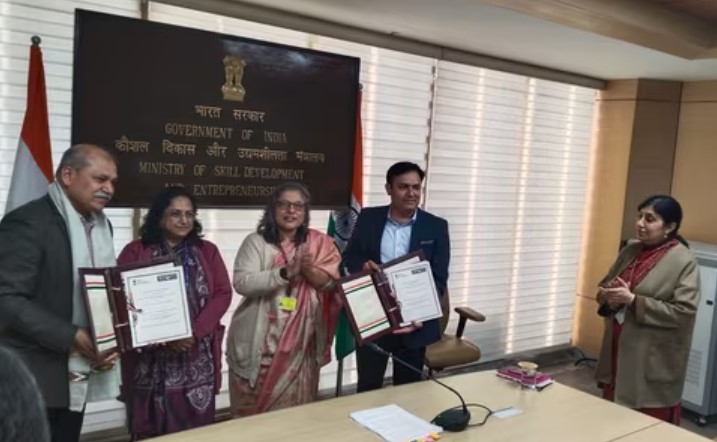
The Indira Gandhi National Open University (IGNOU) has entered into a new partnership with the Ministry of Skill Development and Entrepreneurship (MSDE) to expand skill training opportunities across India. Under this collaboration, skill centres will be launched in different parts of the country under the Pradhan Mantri Kaushal Vikas Yojana (PMKVY). The MoU was signed on December 9 at Kaushal Bhawan, New Delhi, in the presence of key officials from both sides, including Prof. Uma Kanjilal, Vice Chancellor of IGNOU, and Debashree Mukherjee, Secretary, MSDE.

When such training becomes available through an institution like IGNOU, it gives credibility, structure and affordable access, especially for students who cannot afford private training centres. The partnership aligns with the country’s need to prepare students and youth for real-world jobs in industries such as manufacturing, digital services, retail, health, tourism, and emerging sectors that are actively hiring skilled professionals. Strengthening skill training across India can support economic growth by building a ready workforce for modern industries.

What the IGNOU–MSDE Partnership Aims to Do

This collaboration focuses on making skill education widely accessible. Major objectives include:

  • Setting up PMKVY skill centres at IGNOU’s regional and local centres
  • Offering industry-focused training programmes
  • Providing nationally recognised skill certificates
  • Creating opportunities for employment and entrepreneurship
  • Extending training to remote and rural learners

These centres are expected to support both students and working professionals who want to upgrade their skills or explore new career opportunities.

How the New Skill Centres Will Benefit Youth

The skill centres will offer training based on industry demand, helping learners develop job-specific abilities. Key benefits include:

  • Courses linked directly to employment opportunities
  • Hands-on training with a practical approach
  • Affordable access to skill programmes
  • Opportunities in both jobs and self-employment
  • Certification that supports career growth

IGNOU already has a strong network of learners, making it easier to reach students from diverse backgrounds.

Why This Move Matters for India’s Workforce

India has a young population, but many individuals lack formal training that industries look for. With the government promoting Make in India, Digital India, and entrepreneurship, job-readiness is now more important than ever. By using IGNOU’s network, trained manpower can reach areas where private institutions seldom operate, bridging the skill gap.
Leave a Comment

End of Article

NCERT to Introduce AI Education in Senior Classes with New Textbooks

NCERT to Introduce AI Education in Senior Classes with New Textbooks

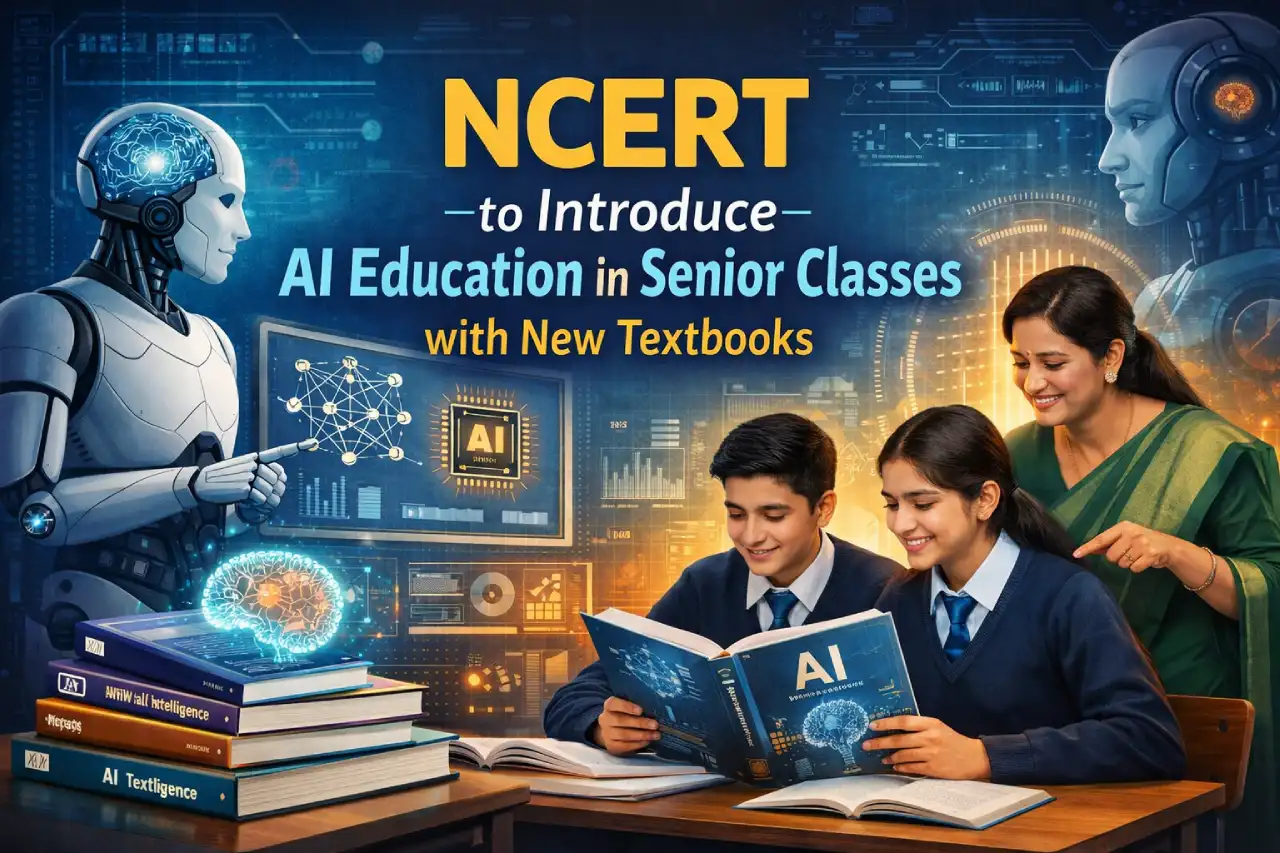
The National Council of Educational Research and Training has taken a major step towards modernising school education by constituting a dedicated team to develop Artificial Intelligence textbooks for Classes 11 and 12. The move is aimed at introducing students to AI concepts in a structured and age-appropriate manner. According to officials, the textbooks will focus on building foundational understanding, practical awareness, and ethical use of AI, keeping in line with India’s evolving education and technology goals.

I am writing about this development because Artificial Intelligence is no longer a niche subject limited to higher education or specialised careers. It is already shaping daily life, careers, and future job markets. Introducing AI at the senior secondary level ensures that students are not just passive users of technology but informed learners who understand how it works. This step also signals a shift in school education from rote learning towards skills that matter in the real world.

Why NCERT Is Introducing AI Textbooks

NCERT’s decision comes at a time when AI is influencing almost every sector, from healthcare and finance to education and governance. The idea is to familiarise students early with emerging technologies so they are better prepared for higher studies and future careers.

By developing dedicated textbooks, NCERT aims to move beyond short modules and offer a clear, well-designed curriculum.

What the AI Textbooks Are Expected to Cover

The upcoming textbooks for Classes 11 and 12 are expected to include:

  • Basic concepts of Artificial Intelligence
  • Real-life applications of AI
  • Introduction to data, algorithms, and automation
  • Ethical issues, bias, and responsible use of AI
  • Simple project-based learning and case studies

The focus will be on understanding concepts rather than heavy technical coding.

Who Is Part of the Textbook Development Team

NCERT has brought together subject experts, academicians, and technology professionals to work on the AI textbooks. This multidisciplinary approach is meant to ensure that the content is accurate, student-friendly, and aligned with global standards.

Experts will also ensure that the language and examples remain accessible to students from different backgrounds.

How This Fits into the National Education Vision

The move aligns with the broader goals of the National Education Policy, which emphasises skill-based learning, critical thinking, and exposure to emerging technologies. AI education at the school level supports the vision of creating future-ready learners.

It also encourages curiosity and problem-solving rather than memorisation.

What This Means for Students and Teachers

For students, AI textbooks open up early exposure to a high-demand field and help them make informed career choices. Teachers will receive structured material and training support, making it easier to teach a subject that is often seen as complex.

Schools may also gradually introduce practical activities linked to AI learning.

Challenges and Expectations

While the move has been widely welcomed, successful implementation will depend on teacher training, availability of resources, and clear assessment methods. NCERT will need to ensure that schools across regions can adopt the curriculum smoothly.

Balanced rollout will be key to avoiding a digital divide.

Leave a Comment

End of Article

Loading more posts...