


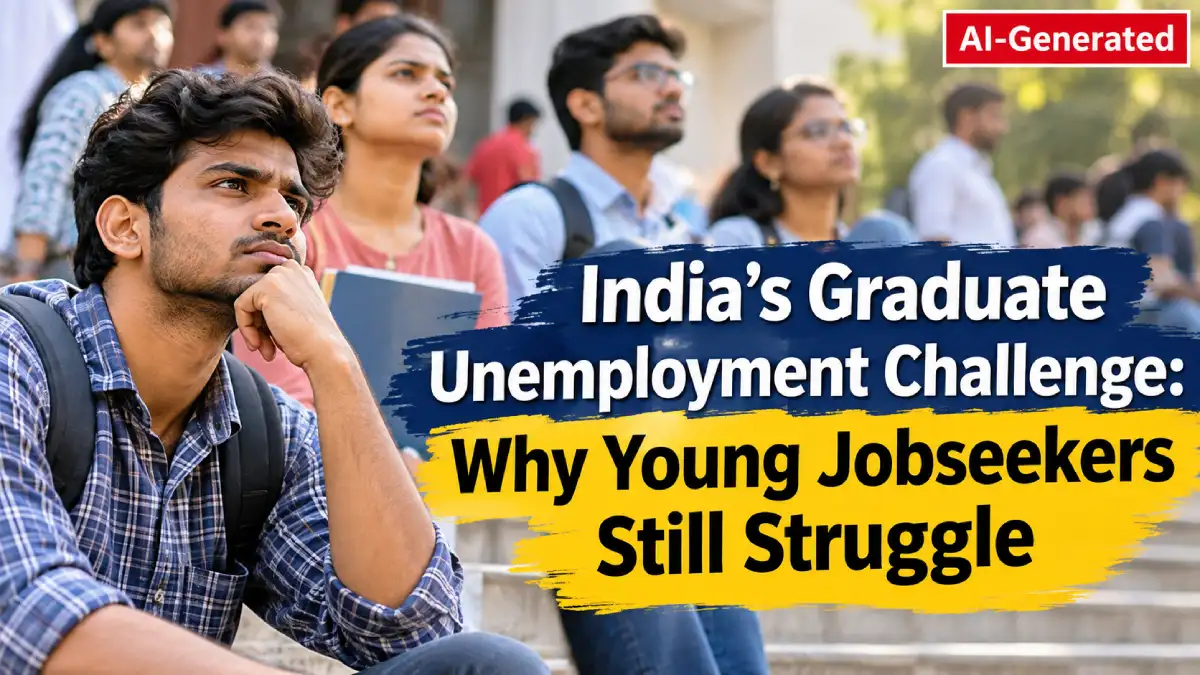
India has a striking employment contradiction. The country has a large and growing young population, expanding industries and a rapidly developing economy, yet finding a stable job remains difficult for many educated youngsters. Every year, universities produce lakhs of graduates, but the number of suitable opportunities does not always match their qualifications.
While government vacancies attract enormous competition, private-sector jobs often come with low salaries, temporary contracts and limited job security. The gap between education and employment continues to trouble young jobseekers.
This issue deserves attention because a degree alone is no longer a guarantee of financial independence. Many students spend years preparing for competitive examinations, while others accept jobs below their qualifications simply to start earning.
At the same time, skilled young people are increasingly looking towards major cities or foreign countries for better career prospects. India's economic progress will have greater meaning when its benefits reach ordinary young people through secure, fairly paid and meaningful employment.
One of the biggest reasons behind this situation is the growing mismatch between education and industry requirements. Universities continue to produce large numbers of graduates, but employers often look for practical knowledge, technical abilities and job-ready skills. As a result, young candidates with formal qualifications may still struggle to secure suitable positions.
The pressure is particularly visible in government recruitment. Government jobs are widely preferred because they are associated with stability, regular salaries and long-term security. Consequently, thousands of applicants compete for a limited number of vacancies. Preparing for competitive examinations can consume several important years, leaving candidates uncertain about their future if they do not succeed.
Private employment presents a different set of concerns. Temporary appointments, comparatively low pay and uncertainty over continued employment make it difficult for many young professionals to plan their lives. Even after securing a job, some employees continue searching for better opportunities because their current earnings do not match their expectations or qualifications.
The shortage of suitable jobs is not the only concern. The quality of employment also matters. A growing economy needs workers who can contribute to emerging industries, but this requires stronger technical education, vocational training and practical learning. Courses should be designed with changing workplace requirements in mind so that students leave educational institutions with skills employers actually need.
The article also points towards the importance of supporting small and medium-sized businesses, expanding agriculture-based industries and creating more employment opportunities in rural areas. Startups and self-employment can contribute to job creation, but these options need proper support and access to opportunities to become sustainable career choices.
India's young population can become a major strength, but that advantage will not automatically translate into economic success. More than announcements and employment targets, young people need accessible training, realistic career opportunities and jobs that offer dignity and financial security. The real measure of progress will be whether economic growth creates a future in which a degree leads not just to another qualification, but to a worthwhile livelihood.




Comments ( 0)
Leave a Comment
No comments yet. Be the first to comment!