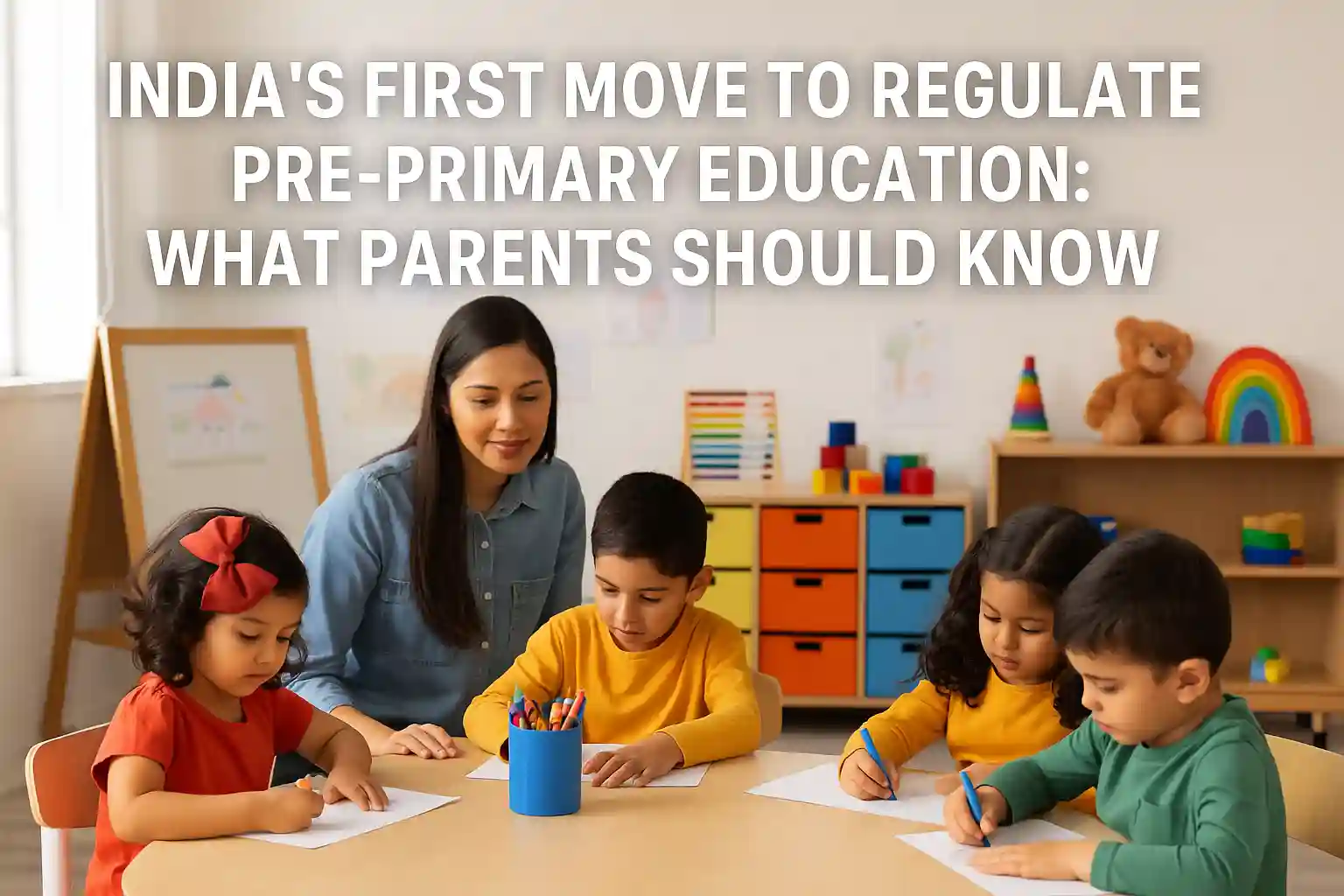
For the first time, a state government has announced plans to bring pre-primary education under regulation. Until now, play schools and nursery centres have largely operated without a clear framework, leading to big variations in fees, teaching quality, and infrastructure. This move aims to create uniform standards, ensure child safety, and give every young learner a fair start in education.
I am writing about this topic because it touches the foundation of learning in India. Most of us tend to think about regulations only in the context of schools and colleges, but the truth is that the early years—nursery, kindergarten, and pre-school—are equally important. When this space is unregulated, parents are often left confused about quality and fairness. Having seen friends and families struggle with the uneven standards of pre-primary schools, I feel this step can change the way early education is delivered. It also matters because the decisions we take for children at this stage often shape their social skills, curiosity, and emotional development for years to come.
Why Regulating Pre-Primary Education Matters
Pre-primary schools have grown rapidly in cities and towns, but most operate like private businesses with little oversight. The lack of common rules has created challenges:
- High and arbitrary fee structures
- Wide gaps in teacher training and qualifications
- Inconsistent safety and hygiene practices
- Absence of a structured learning curriculum
Bringing regulations will make sure that pre-primary centres follow minimum standards, giving parents confidence in the system.
What the State Is Proposing
According to initial reports, the regulation plan may include:
- Registration and recognition norms for all pre-primary schools
- Setting up basic infrastructure and safety requirements
- Mandatory training and qualification standards for teachers
- Guidelines for play-based and activity-based curriculum
- Fee regulation to prevent overcharging
This would bring pre-primary education closer to the structured system already seen in primary and secondary schooling.
Benefits for Parents and Children
Once the framework is in place, parents will have a clearer idea of what to expect. Instead of choosing schools blindly, they can compare recognised centres with verified standards. Children, on the other hand, will benefit from structured activities that prepare them for formal schooling without undue academic pressure.
Challenges Ahead
While the plan is ambitious, there are challenges too. Thousands of private play schools operate informally, and ensuring compliance will take time. There is also the question of whether smaller schools in semi-urban or rural areas can afford the new requirements. Balancing quality with accessibility will be key.