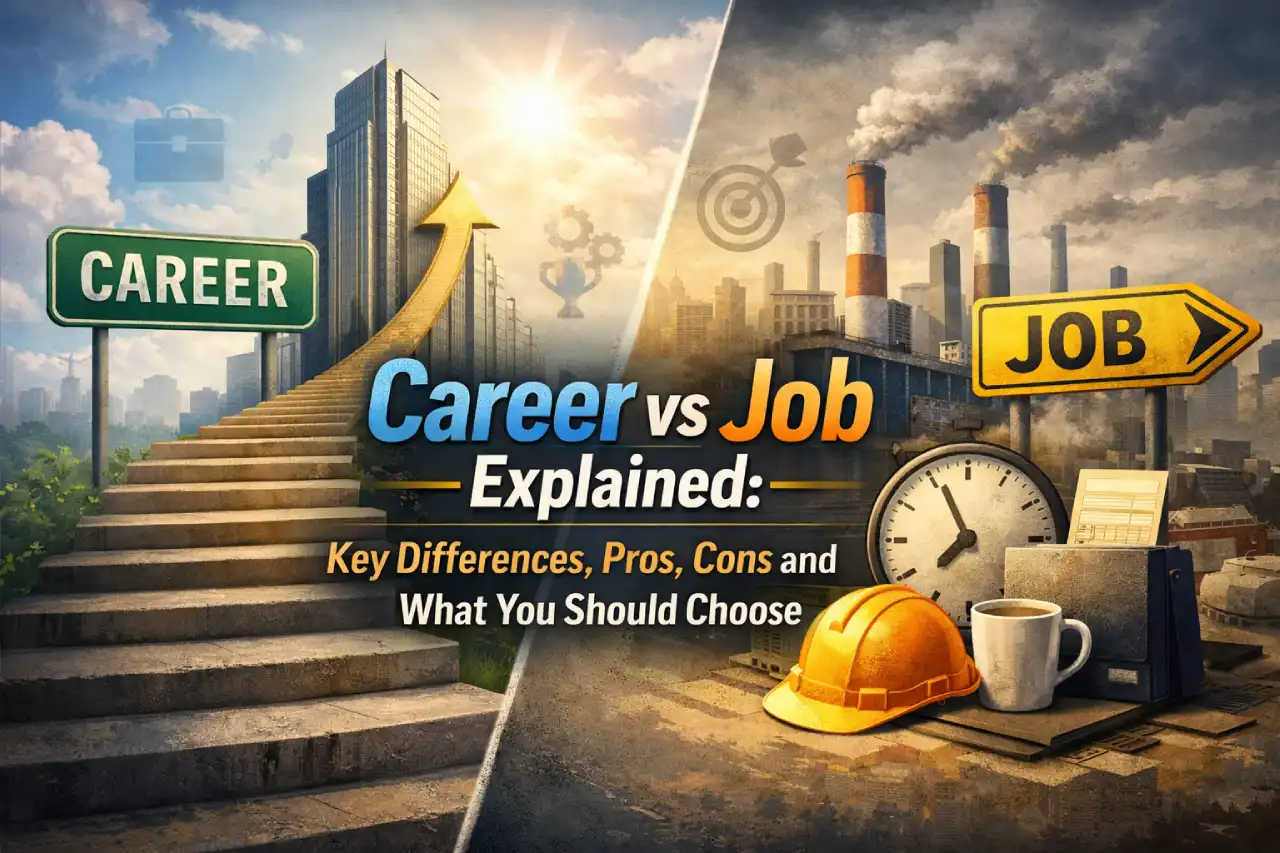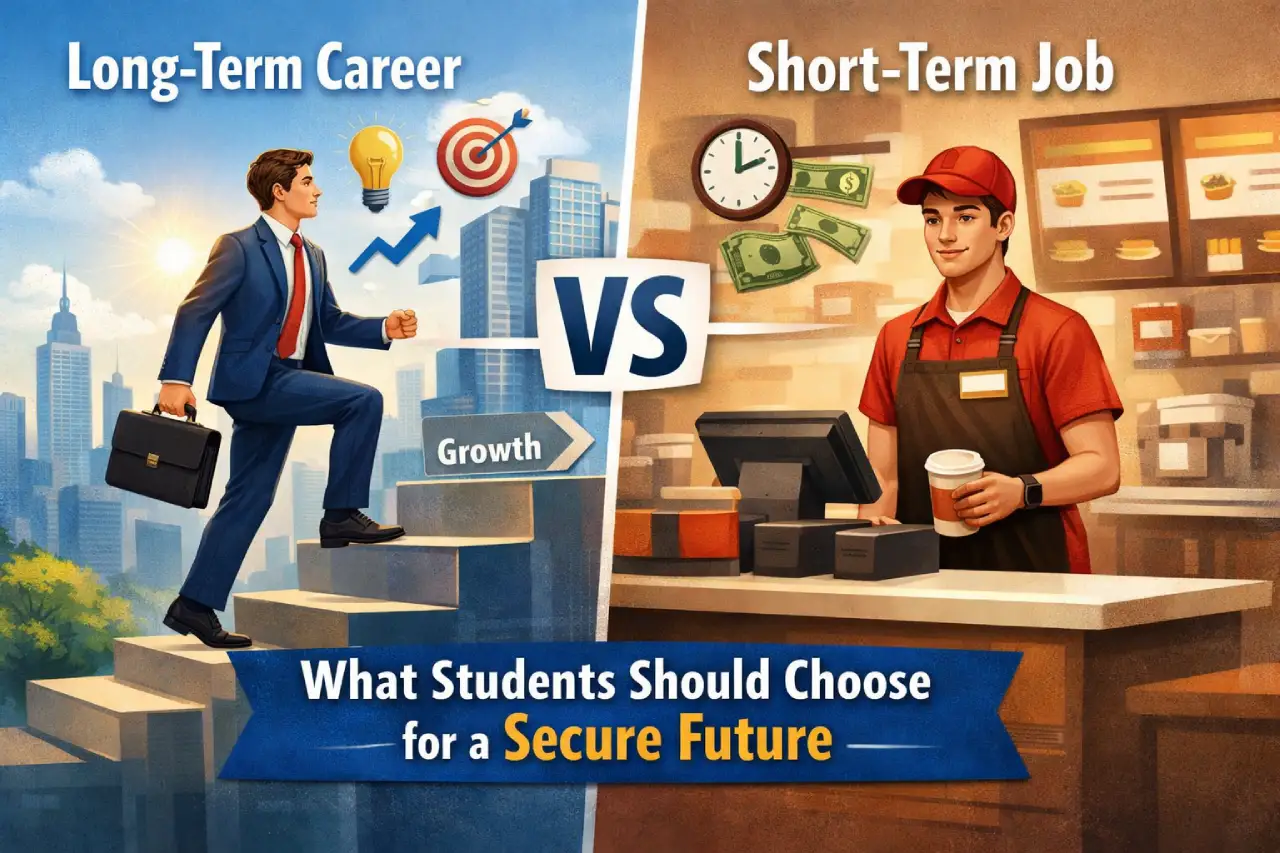
Every student reaches a point where a big question appears: should I take a short-term job immediately after studies or focus on building a long-term career? In today’s fast-moving world, quick earnings and early independence look attractive. At the same time, building a stable and meaningful career requires patience, planning, and sometimes further education or training.
I am writing about this because I have seen many students feel confused at this stage. Some want financial freedom quickly, while others think about long-term stability and growth. This is not just a financial decision; it is about goals, lifestyle, and personal satisfaction. Understanding the difference between a job and a career can help students make a more informed choice.
Understanding the Difference
Before choosing, it is important to understand what we mean by a short-term job and a long-term career.
A short-term job usually:
- Focuses on immediate income
- May not require advanced qualifications
- Has limited growth opportunities
- Can be temporary or contractual
A long-term career usually:
- Is aligned with your skills and interests
- Requires education, training, or experience
- Offers structured growth and promotions
- Provides long-term stability and identity
In simple words, a job pays the bills, while a career shapes your future.
Why Short-Term Jobs Attract Students
There are genuine reasons why students consider short-term jobs.
- Immediate financial support for family
- Independence at an early age
- Pressure to start earning quickly
- Opportunity to gain work experience
For some students, especially from middle-class or financially struggling backgrounds, earning early is not a choice but a necessity. I completely understand that reality cannot be ignored.
Advantages of Building a Long-Term Career
On the other hand, focusing on a long-term career has its own benefits.
- Higher earning potential in the future
- Job security and structured growth
- Professional recognition
- Skill development and expertise
For example, pursuing higher studies, professional courses, or specialised training might delay income initially but can lead to better opportunities later.
The Risk of Choosing Only Short-Term Gains
While short-term jobs offer quick money, they may come with limitations.
- Limited promotions
- Stagnant salary growth
- Less job security
- Fewer skill development opportunities
If students remain in short-term roles without upskilling, they might struggle to grow professionally in the long run.
Can You Balance Both?
The good news is that it does not always have to be one or the other.
Many students:
- Take part-time jobs while studying
- Work temporarily while preparing for competitive exams
- Gain experience through internships
- Upskill through online courses alongside a job
This balanced approach allows financial support without giving up long-term goals.
Questions Every Student Should Ask
Before making a decision, ask yourself:
- What are my long-term goals?
- Do I need immediate income urgently?
- Will this job help me learn something valuable?
- Am I willing to invest time in skill development?
I believe clarity about your personal situation is more important than following what others are doing.
Real-Life Perspective
From a student’s point of view, the pressure can feel overwhelming. Friends might start earning early, social media shows instant success stories, and family expectations add to the stress. But success rarely happens overnight.
Building a meaningful career often requires:
- Patience
- Continuous learning
- Smart planning
- Resilience
Short-term comfort should not block long-term growth.
Final Thoughts: What Should You Choose?
There is no one correct answer. The right choice depends on your circumstances, responsibilities, and ambitions.
If financial urgency is high, taking a short-term job is practical. But do not stop learning and improving your skills. If you have the option to invest in your education and training, focusing on a long-term career may bring greater rewards in the future.