JOIN WHATSAPP
STORIES

Maharashtra Cracks Down on Misleading School Names Using ‘International’ and ‘CBSE’ Tags

Maharashtra Cracks Down on Misleading School Names Using ‘International’ and ‘CBSE’ Tags

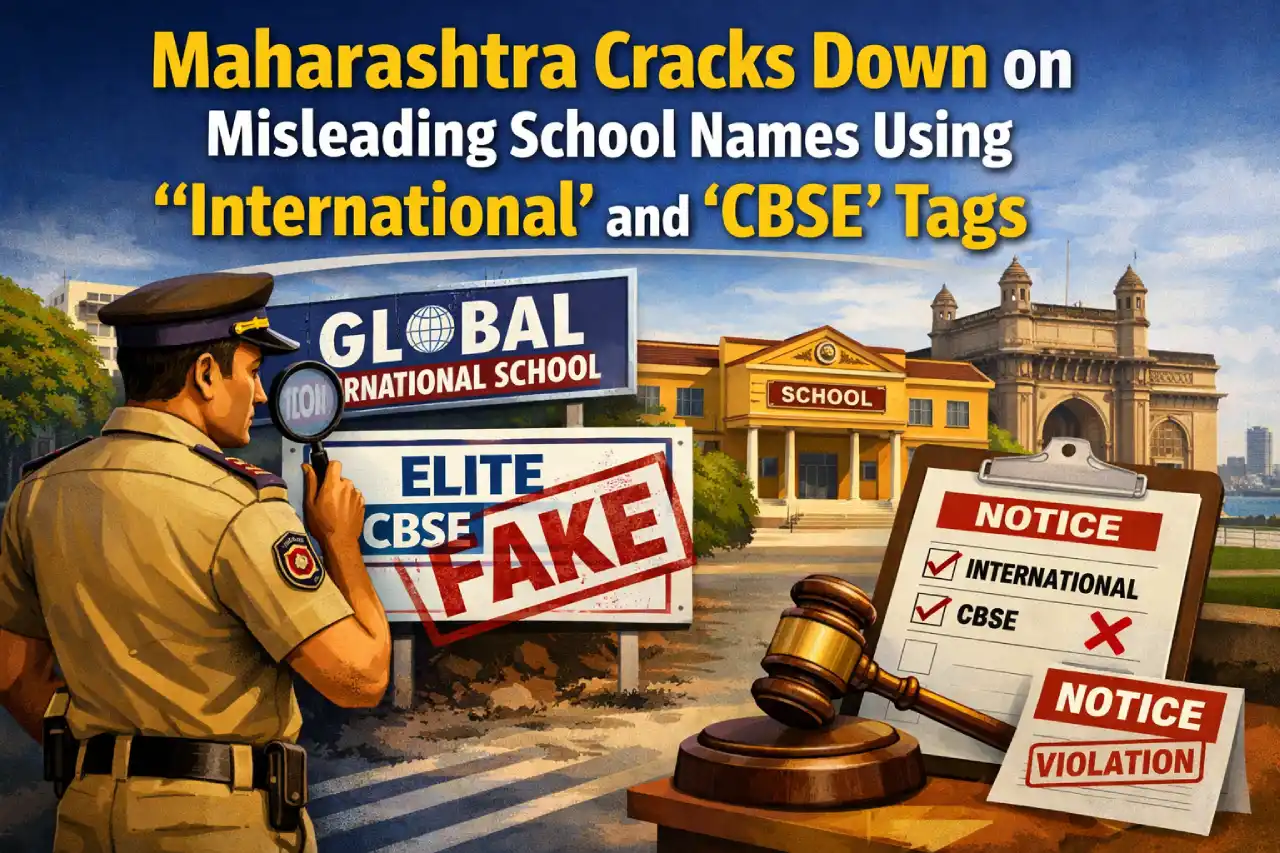
The Government of Maharashtra has decided to closely scrutinise school names that use terms such as “international”, “global”, and “CBSE” without having the required official affiliation. The move comes after repeated complaints that parents are being misled by school branding that suggests foreign links or national board recognition where none exists. Education officials have said the exercise will involve checking approvals, board affiliations, and compliance with naming rules already in force.

I am writing about this issue because school names play a big role in how parents choose where to admit their children. In many cases, the words used in a school’s name create an impression of higher standards or special recognition. When these claims are not backed by proper approvals, it leads to confusion and unfair practices. This decision matters to parents, students, and school managements alike, as it directly affects transparency in the education system.

Why the Maharashtra Government Is Taking This Step

The state education department has observed that several schools are using attractive terms like “international” or “CBSE” purely for marketing purposes. These words often suggest global curricula or affiliation with the Central Board of Secondary Education, even when the school is not officially recognised by the board.

The government believes this misleads parents and creates an uneven playing field for schools that follow the rules.

What the Scrutiny Process Will Involve

Education officials are expected to:

  • Verify board affiliations and recognition certificates
  • Check whether schools are authorised to use specific terms in their names
  • Ask non-compliant schools to rename themselves
  • Take action against repeated or deliberate violations

Schools that fail to comply may face penalties or further administrative action.

What This Means for Schools

Schools using restricted terms without approval may be directed to drop them from their names. This could involve changes to signage, official records, and promotional material. While this may be inconvenient for some institutions, officials say it is necessary to protect parents from misleading information.

Schools with valid approvals will not be affected by the move.

Impact on Parents and Students

For parents, this step brings more clarity while choosing schools. A regulated naming system ensures that what a school claims through its name matches its actual status. Students also benefit indirectly, as transparency helps maintain trust in the education system.

Clear rules reduce confusion and false expectations.

Long-Standing Rules, Stronger Enforcement

Officials have pointed out that rules on school naming already exist, but enforcement has been weak. This renewed scrutiny signals that the state is serious about implementation rather than just guidelines on paper.

It also sends a message that branding cannot replace proper recognition and quality standards.
Leave a Comment

End of Article

Maharashtra College Teachers Seek Higher Retirement Age, Urge UGC to Act

Maharashtra College Teachers Seek Higher Retirement Age, Urge UGC to Act

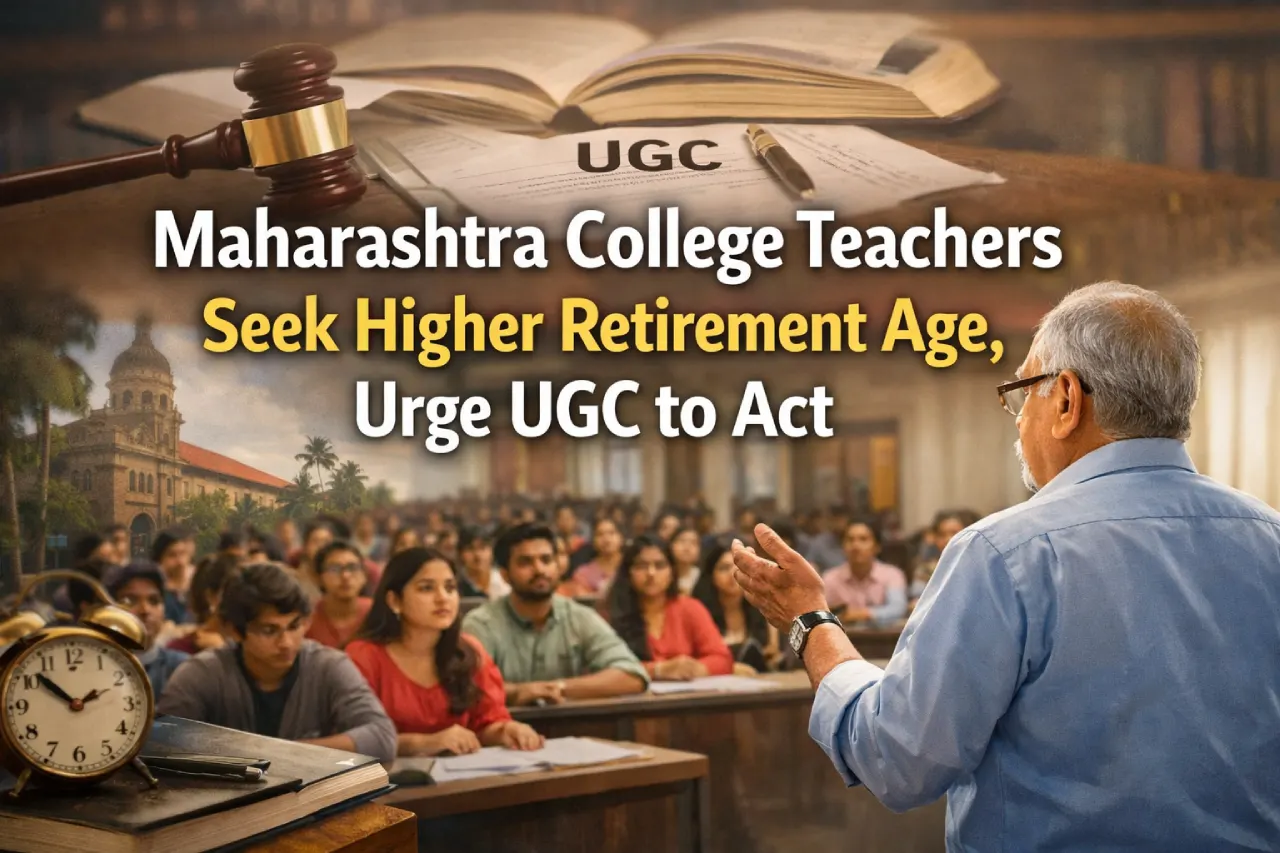
Teachers from colleges across Maharashtra have urged the University Grants Commission to raise the retirement age for teaching faculty from the current 60 years to 65 years. The demand has been made by teachers’ associations who argue that experienced educators are being forced to retire too early, even as colleges continue to face staff shortages. They believe extending the retirement age will help retain academic expertise and improve teaching quality in higher education institutions.

I am writing about this issue because it affects not just teachers, but also students and the overall higher education system. At a time when universities are struggling with vacant posts and delayed recruitments, losing senior faculty creates gaps in teaching, research, and mentorship. The demand also raises a larger question about how India values experience in academia and whether policy needs to evolve with changing life expectancy and professional capability.

What Maharashtra Teachers Are Demanding

Teachers’ bodies have formally requested UGC to revise the retirement age for college and university teachers to 65 years, bringing it in line with several central institutions. They argue that many educators remain academically active and physically fit well beyond 60.

According to them, forcing retirement at 60 leads to a loss of institutional memory and teaching continuity.

Why Teachers Want the Age Limit Raised

Teachers say the demand is based on practical realities. Many colleges face:

  • Acute shortage of qualified faculty
  • Delays in permanent recruitment
  • Heavy teaching loads on existing staff

Extending the retirement age would offer immediate relief without additional recruitment costs.

Comparison with Central Institutions

In several central universities and institutions, teachers are allowed to work up to 65 years, and in some cases even longer through re-employment. Maharashtra teachers feel this creates inequality between state and central institutions.

They believe a uniform retirement policy across the country would be fairer and more effective.

Impact on Students and Academic Quality

Senior teachers often play a key role in mentoring young faculty, guiding research scholars, and maintaining academic standards. Their early retirement disrupts this balance and places extra pressure on junior staff.

Students, especially at postgraduate and research levels, are among the biggest losers.

Concerns About Youth Employment

Some critics argue that extending retirement age could limit opportunities for younger aspirants. Teachers’ associations counter this by saying vacant posts already exist and recruitment processes are slow, so extending service will not block new jobs.

They stress that experience and new talent should coexist.

What UGC’s Role Will Be

UGC has the authority to frame regulations related to service conditions in higher education. Any change in retirement age would require policy review and coordination with state governments.

Teachers are hopeful that the commission will consider the request seriously.

Leave a Comment

End of Article

Loading more posts...