JOIN WHATSAPP
STORIES

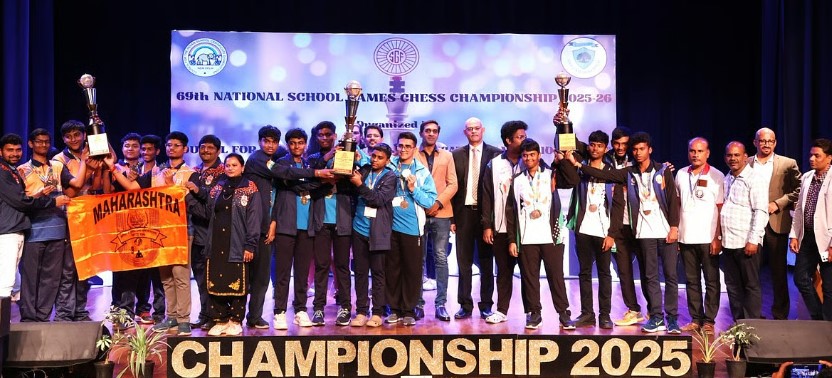
Maharashtra Crowned Champions in Under-19 Girls Chess at 69th National School Games

Maharashtra Crowned Champions in Under-19 Girls Chess at 69th National School Games

Maharashtra claimed a remarkable victory in the Under-19 Girls’ Chess Championship at the 69th National School Games held at Greenwood High International School, Bengaluru. The state team dominated the tournament with a total of 12 match points, securing the first place ahead of some of the strongest school sports boards in the country. The event showcased top-level school chess talent from across India.

Sports performances at the school level often receive less attention, even though they reflect the country’s future sporting potential. Chess, especially, is a discipline where Indian students have consistently shown global promise. Tournaments like the National School Games offer young players a chance to compete under pressure, represent their state or school board, and gain recognition early in their careers.

Maharashtra’s win reinforces the importance of giving school-level athletes structured competition and training support. For students who aspire to succeed in chess, these victories show that youth tournaments are not just stepping stones but essential milestones in their sporting journey. By acknowledging such achievements, we encourage more young players, families, and schools to take competitive sports as seriously as academics.

Final Standings at the 69th National School Games Under-19 Girls’ Chess

RankTeam/BoardMatch Points
1st (Champion)Maharashtra12
2nd (First Runner-Up)CBSE10
3rd (Second Runner-Up)CISCE9

What Made Maharashtra’s Win Stand Out?

  • Consistent performance across rounds
  • Strong finishing strategies under time pressure
  • Balanced team combinations with skill and tactical thinking
  • Ability to turn tough matches in their favour

Why School-Level Chess Tournaments Matter

  • Helps discover young chess prodigies early
  • Builds discipline and decision-making skills
  • Encourages students to balance sports and studies
  • Provides exposure to national-level competition

These tournaments contribute directly to India’s growing dominance in international chess.

Participation Boards and Their Performance

The competition saw participation from multiple school boards. Among them:

  • Maharashtra showed superior consistency
  • CBSE produced tough competition but missed the top spot
  • CISCE showcased strong gameplay with strategic depth

Each board’s performance reflected the quality of training systems at the school level.
Leave a Comment

End of Article

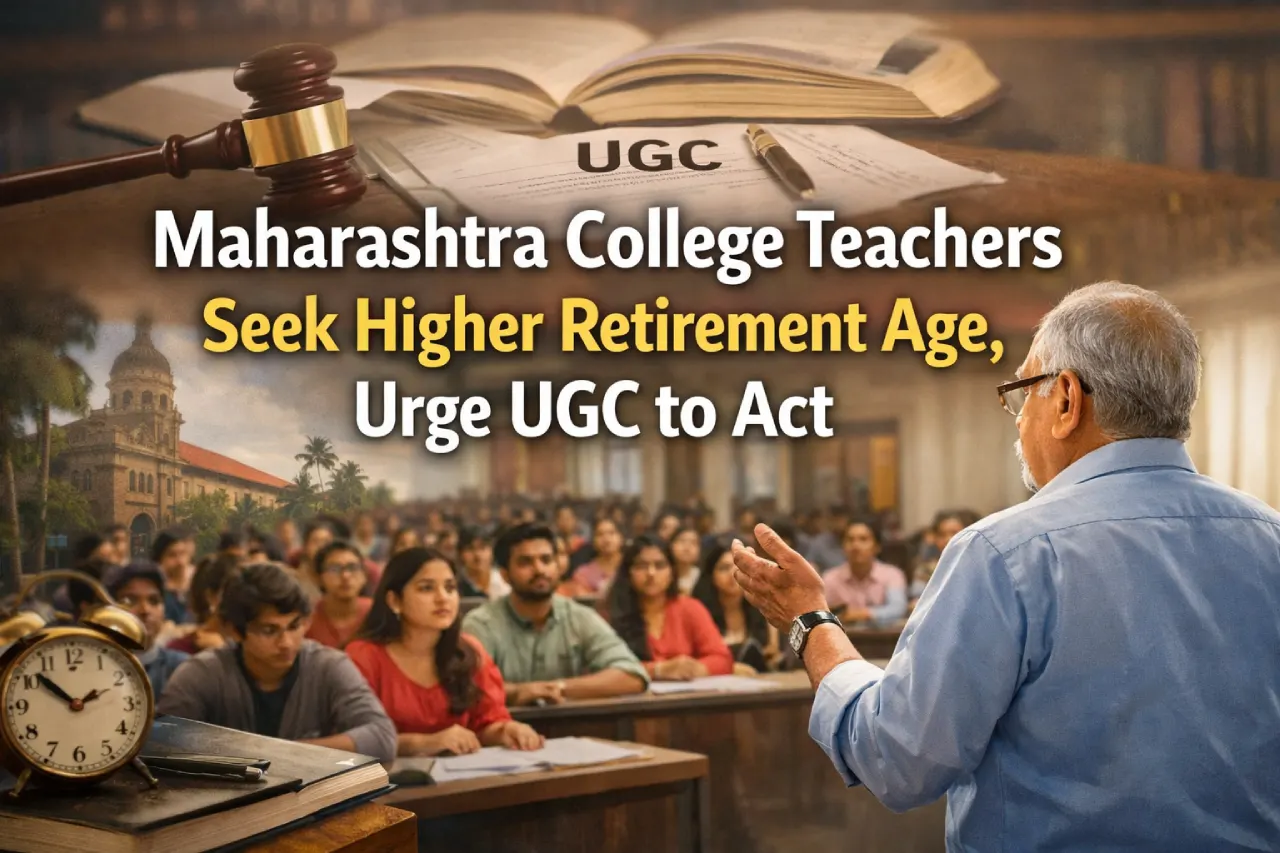
Maharashtra College Teachers Seek Higher Retirement Age, Urge UGC to Act

Maharashtra College Teachers Seek Higher Retirement Age, Urge UGC to Act

Teachers from colleges across Maharashtra have urged the University Grants Commission to raise the retirement age for teaching faculty from the current 60 years to 65 years. The demand has been made by teachers’ associations who argue that experienced educators are being forced to retire too early, even as colleges continue to face staff shortages. They believe extending the retirement age will help retain academic expertise and improve teaching quality in higher education institutions.

I am writing about this issue because it affects not just teachers, but also students and the overall higher education system. At a time when universities are struggling with vacant posts and delayed recruitments, losing senior faculty creates gaps in teaching, research, and mentorship. The demand also raises a larger question about how India values experience in academia and whether policy needs to evolve with changing life expectancy and professional capability.

What Maharashtra Teachers Are Demanding

Teachers’ bodies have formally requested UGC to revise the retirement age for college and university teachers to 65 years, bringing it in line with several central institutions. They argue that many educators remain academically active and physically fit well beyond 60.

According to them, forcing retirement at 60 leads to a loss of institutional memory and teaching continuity.

Why Teachers Want the Age Limit Raised

Teachers say the demand is based on practical realities. Many colleges face:

  • Acute shortage of qualified faculty
  • Delays in permanent recruitment
  • Heavy teaching loads on existing staff

Extending the retirement age would offer immediate relief without additional recruitment costs.

Comparison with Central Institutions

In several central universities and institutions, teachers are allowed to work up to 65 years, and in some cases even longer through re-employment. Maharashtra teachers feel this creates inequality between state and central institutions.

They believe a uniform retirement policy across the country would be fairer and more effective.

Impact on Students and Academic Quality

Senior teachers often play a key role in mentoring young faculty, guiding research scholars, and maintaining academic standards. Their early retirement disrupts this balance and places extra pressure on junior staff.

Students, especially at postgraduate and research levels, are among the biggest losers.

Concerns About Youth Employment

Some critics argue that extending retirement age could limit opportunities for younger aspirants. Teachers’ associations counter this by saying vacant posts already exist and recruitment processes are slow, so extending service will not block new jobs.

They stress that experience and new talent should coexist.

What UGC’s Role Will Be

UGC has the authority to frame regulations related to service conditions in higher education. Any change in retirement age would require policy review and coordination with state governments.

Teachers are hopeful that the commission will consider the request seriously.

Leave a Comment

End of Article

Loading more posts...